
Why a Shared Evening Routine Works
Most households treat bedtime as an individual affair - adults scroll their phones while kids resist lights-out. The result is fragmented, unpredictable evenings that leave everyone overstimulated. A shared wind-down routine changes that dynamic by creating environmental and behavioral cues the entire household moves through together.
Sleep researchers generally agree that the hour before bed plays an outsized role in sleep quality. When the nervous system receives consistent signals - lower light levels, quieter activity, reduced sensory input - it begins down-regulating stress hormones like cortisol and allowing melatonin to rise naturally. This process works the same way for a six-year-old and a forty-year-old, which is why a household-wide routine is both practical and effective.
The goal is not a rigid schedule but a recognizable sequence. Children benefit from predictability because it reduces bedtime anxiety. Adults benefit because routine removes decision fatigue at the end of an already demanding day.
Start Small, Add Gradually
You don't need to implement every element on the first night. Pick one or two changes - like a consistent screen-off time or switching to lamp lighting - and practice those for a week before adding more. Households that try to change everything at once often abandon the routine within days. Small wins build lasting habits.
What You'll Need Before You Start
Before building the routine, take a few minutes to assess your household's current evening patterns and gather a handful of simple supports.
What you will need
Once you have a realistic picture of your starting point, you can build a routine that fits your actual evening - not an idealized one.
Step-by-Step: Building the Routine
Work through these steps once as a planning exercise, then introduce one or two changes per week rather than all at once. Gradual adoption tends to stick far better than overnight overhauls.
Set a consistent wind-down start time
Choose a time 45-60 minutes before your target lights-out that works on most weeknights. Write it down and share it with the household. The exact time matters less than keeping it consistent - the brain learns from repetition, not perfection.
Switch off or filter screens
At the wind-down start time, put phones and tablets on their chargers in a common area (not bedrooms) and turn off the television. For households with older children or teens, negotiate a reasonable screen cutoff rather than imposing an abrupt ban - buy-in matters for consistency.
Lower the lights in shared spaces
Dim overhead lights or switch to lamps with warm-toned bulbs in the living room, hallways, and bathrooms. Bright overhead lighting - especially cool-white or daylight-spectrum bulbs - signals daytime to the brain and can delay natural sleepiness for both adults and children.
Complete hygiene tasks early
Move baths, showers, teeth brushing, and face washing to the middle of the routine rather than the very end. Finishing hygiene tasks while the household still has some energy prevents last-minute rushing, which spikes adrenaline right before bed. A warm bath or shower can also gently lower core body temperature afterward, which supports sleep onset.
Anchor the routine with a shared quiet activity
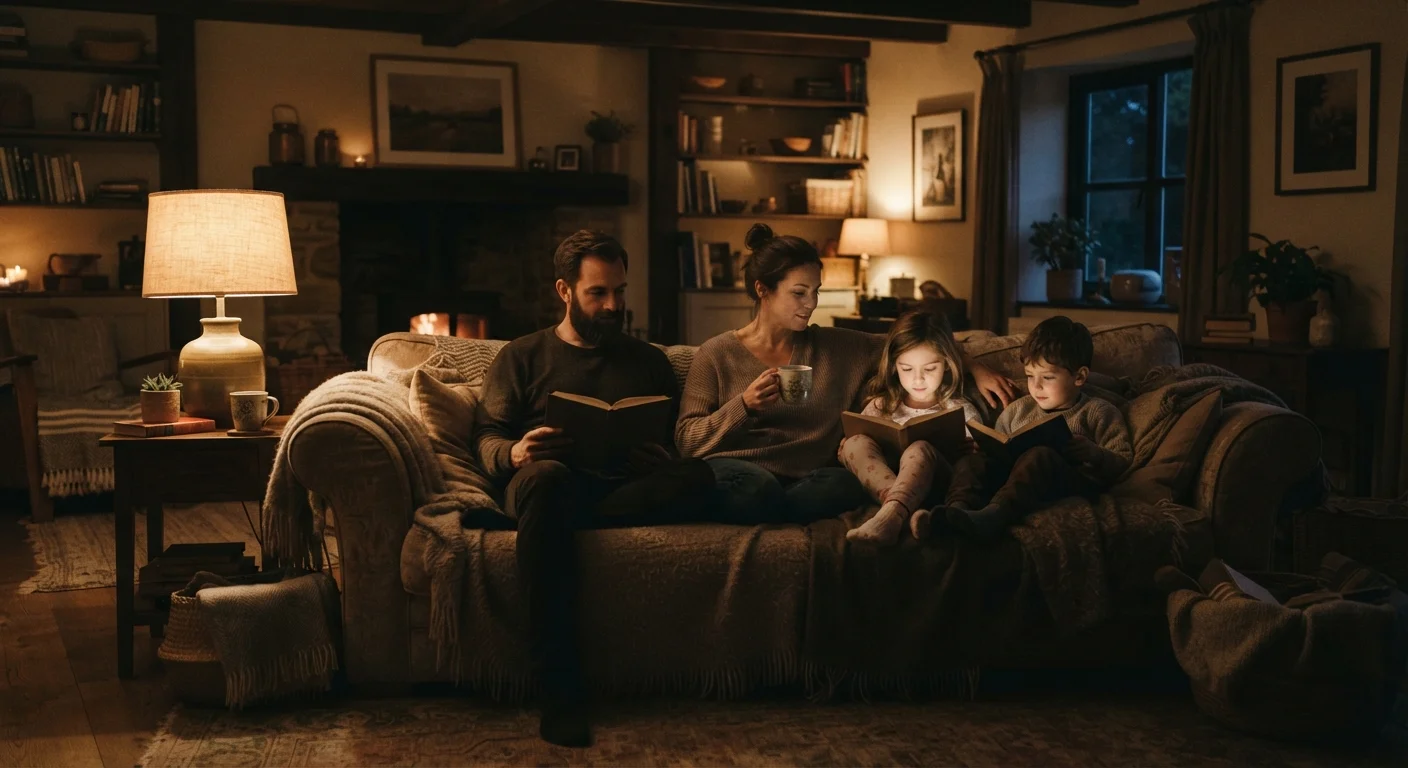
Choose one low-stimulation activity the household does together for 10-15 minutes: reading aloud, a simple card game, light stretching, or quiet conversation about the day. This shared anchor reinforces the routine socially and helps children feel settled before separating for their own bedrooms.
Close out individually and lights-out
After the shared activity, each household member moves to their own bedtime close-out: adults might journal, do a brief breathing exercise, or read independently; children transition to their rooms for any final settling ritual (a song, a brief check-in, or quiet reading). Keep this phase short and predictable - aim for lights-out within 15 minutes.
Persistent Sleep Problems Warrant Professional Guidance
A wind-down routine supports healthy sleep hygiene but is not a treatment for sleep disorders. If a child consistently resists sleep for extended periods, or if an adult experiences ongoing insomnia, excessive daytime fatigue, or suspected sleep apnea, please consult a licensed healthcare provider. Do not delay seeking professional evaluation in favor of lifestyle adjustments alone.
After two to three weeks of consistent practice, most households find the routine feels automatic. At that point, small adjustments - like adding a brief stretching segment or swapping activities for older children - are easy to layer in without disrupting the core sequence.
This article is for general informational purposes only and is not a substitute for advice from a qualified healthcare or sleep professional. If you or a household member experience persistent sleep difficulties, consult a licensed healthcare provider.