Why Hydration Advice Gets Complicated
Few health topics generate as much confident-sounding but contradictory advice as hydration. "Drink eight glasses a day." "You're already dehydrated by the time you feel thirsty." "Coffee doesn't count." These phrases get repeated so often that they feel like settled science - but the reality is more nuanced and, reassuringly, simpler to navigate in practice.
The myths persist partly because hydration is genuinely individual. Body size, activity level, climate, diet, and health status all shape how much fluid a person actually needs. One-size-fits-all rules fill that uncertainty with something easy to remember, even if the rule itself oversimplifies.
This article walks through the most repeated hydration misconceptions and explains what current general guidance actually suggests - so you can stop second-guessing your water bottle and focus on habits that make sense for your household.
This Is General Information, Not Medical Advice
The guidance in this article reflects general health education and is not a substitute for personalized medical advice. Individual hydration needs vary based on health status, medications, age, activity level, and climate. If you have concerns about your fluid intake or health, please consult a qualified healthcare professional.
Common Hydration Myths - Set Straight
The myth-and-fact pairs below cover the claims you're most likely to encounter in everyday conversation, on social media, or from well-meaning family members. Each correction draws on established nutrition guidance rather than any single trending study.
Myth
Everyone needs exactly eight 8-ounce glasses of water per day - no more, no less.
Fact
Eight glasses is a convenient rule of thumb, but actual needs vary significantly by body size, activity level, climate, and diet.
The "8x8" rule is memorable, but it has no single definitive scientific origin. The National Academies of Sciences, Engineering, and Medicine publishes general adequate intake values for total water - from both beverages and food - that differ between men and women and account for age and life stage. A larger, more active person working outdoors in summer has very different needs than a sedentary person in an air-conditioned home. Using thirst, urine color (pale yellow is generally a good sign), and overall wellbeing are more individualized guides than a fixed glass count.
Myth
If you feel thirsty, you're already dangerously dehydrated.
Fact
For most healthy adults, thirst is a timely and reliable early signal - not a sign that dehydration is already severe.
The idea that thirst means you've "waited too long" is widely repeated but overstated for everyday situations. Thirst is the body's normal mechanism for prompting fluid intake before significant dehydration sets in. Research does suggest that older adults may experience a somewhat diminished thirst response, so that population may benefit from drinking on a light schedule rather than relying on thirst alone. For the general healthy adult population, however, responding to thirst is a reasonable strategy for maintaining adequate hydration throughout the day.
Myth
Coffee and tea don't count toward your daily fluid intake because caffeine dehydrates you.
Fact
Moderate caffeine consumption has a mild diuretic effect, but caffeinated beverages still contribute net fluid to your daily total.
Caffeine does cause the kidneys to excrete slightly more water, but studies consistently show that the fluid in coffee and tea more than offsets this effect for habitual consumers. The British Dietetic Association and similar nutrition bodies in the U.S. recognize coffee and tea as contributors to daily hydration. Very high caffeine intake is a different matter and carries its own considerations - but a morning cup of coffee is not working against your hydration goals.
Myth
You should only hydrate by drinking plain water.
Fact
A significant portion of daily fluid intake comes from food, and other beverages also count.
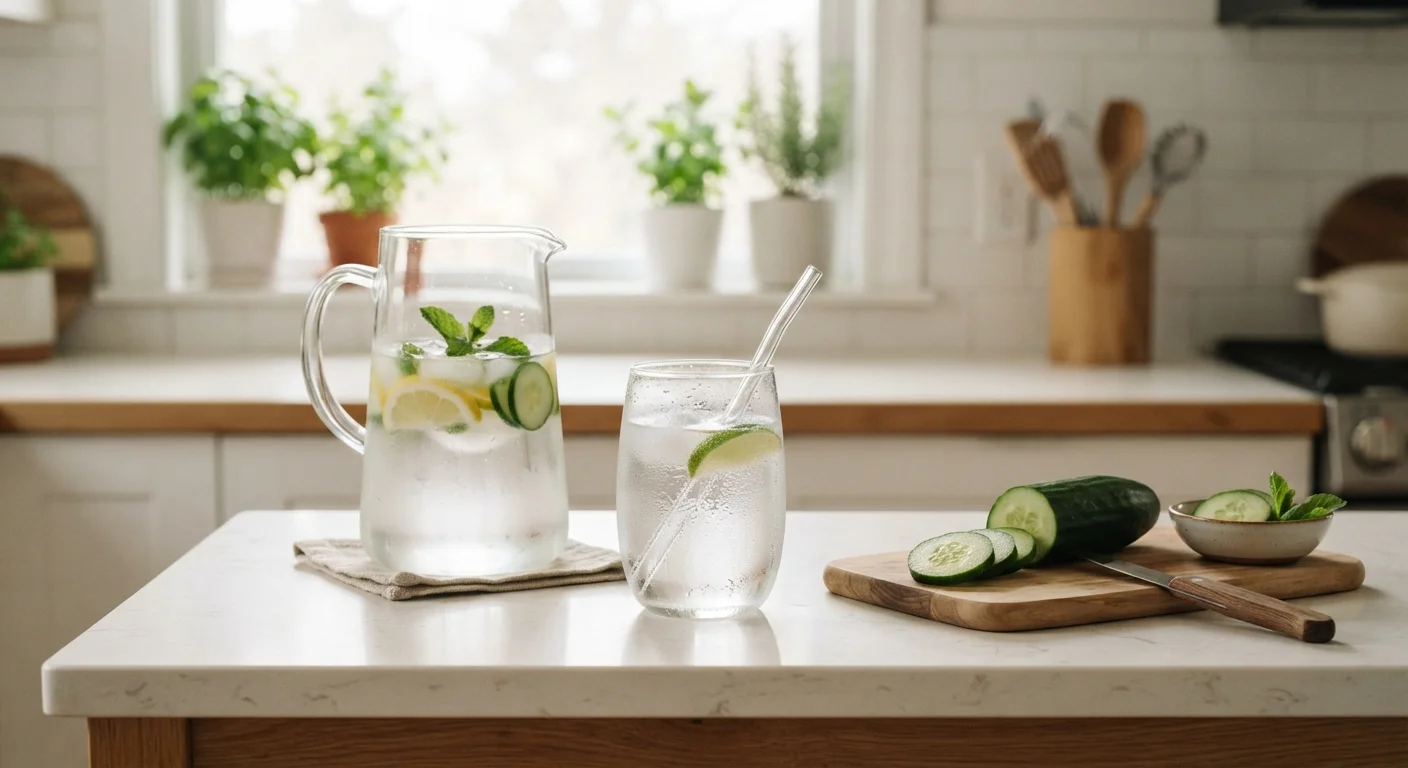
Foods with high water content - cucumbers, celery, watermelon, strawberries, soups, and yogurt, among others - contribute meaningfully to total daily fluid intake. Estimates suggest that food accounts for roughly 20% of total water intake for many people, though this varies with diet. Milk, herbal teas, and even 100% fruit juices add to the total. Plain water remains an excellent, low-calorie choice, but it is not the only path to adequate hydration, and eating a diet rich in fruits and vegetables provides a real hydration benefit.
Myth
Drinking more water will always improve your skin and energy levels.
Fact
Correcting genuine dehydration can help, but drinking beyond your body's needs does not amplify benefits.
When someone who is chronically mildly dehydrated increases their fluid intake, they may notice improvements in energy, concentration, and skin appearance. However, if you are already adequately hydrated, drinking extra water does not appear to produce additional benefits for skin elasticity or alertness. The relationship between hydration and wellbeing is real but not linear - more is not always better, and the goal is adequacy, not excess.
Overhydration Can Be Harmful
Drinking far more water than your body needs can dilute sodium levels in the blood, a condition called hyponatremia. While rare in everyday settings, it is a genuine risk for endurance athletes or anyone dramatically increasing fluid intake in a short period. If you experience symptoms like nausea, headache, or confusion after drinking large amounts of water, seek medical attention promptly.
Practical Hydration Habits for Busy Households
Once the myths are cleared away, staying well-hydrated is genuinely straightforward. A few practical approaches that work for most households:
- Use urine color as a guide. Pale straw-yellow generally indicates good hydration. Dark yellow or amber is a prompt to drink more fluids. Clear urine throughout the day may indicate you're drinking more than necessary.
- Eat water-rich foods regularly. Building meals around vegetables, fruits, soups, and legumes adds meaningfully to daily fluid intake without requiring extra tracking.
- Keep a reusable water bottle visible. Behavioral cues matter - having water within arm's reach during work or household tasks makes incidental drinking easier.
- Adjust for heat and activity. On hot days or during exercise, increase fluid intake and consider foods or beverages that also provide electrolytes, such as a banana or a broth-based soup.
- Older adults may need reminders. Because thirst sensitivity can decrease with age, building scheduled fluid breaks into the day is a sensible precaution for elderly family members.
~20%
Daily fluid from food sources
General nutrition estimates suggest roughly one-fifth of total daily water intake comes from solid foods, particularly fruits and vegetables.
3.7 L / 2.7 L
Total daily water adequate intake (men / women)
The National Academies of Sciences, Engineering, and Medicine lists these as general adequate intake values for total water from all sources for average adults.
This article is for general informational and educational purposes only and does not constitute medical advice. Speak with a qualified healthcare professional for guidance specific to your health circumstances.