
Why a Readiness Check Matters Before You Begin
Starting a home fitness routine sounds simple - clear some floor space, find a YouTube video, and go. But skipping a few key preparation steps is exactly why many routines quietly fade after two or three weeks. A short readiness audit helps you identify gaps in your space, schedule, equipment, and physical baseline before they become reasons to stop.
This checklist is designed for busy homeowners who want to build a durable habit without overspending or overcomplicating things. Work through each group below at your own pace. Check off what you already have in place, and treat any unchecked item as a practical action step - not a barrier.
This Is General Information, Not Medical Advice
The guidance in this article is intended for general educational purposes and does not constitute personal medical advice. Every individual's health circumstances are different. Always consult a licensed healthcare professional before beginning a new exercise program, particularly if you are managing a health condition, recovering from an injury, or have been sedentary for an extended period.
This article provides general fitness information for educational purposes only. It is not a substitute for medical advice. If you have any existing health conditions, injuries, or concerns, consult a qualified healthcare professional before beginning any new exercise program.
Your Preparation Toolkit
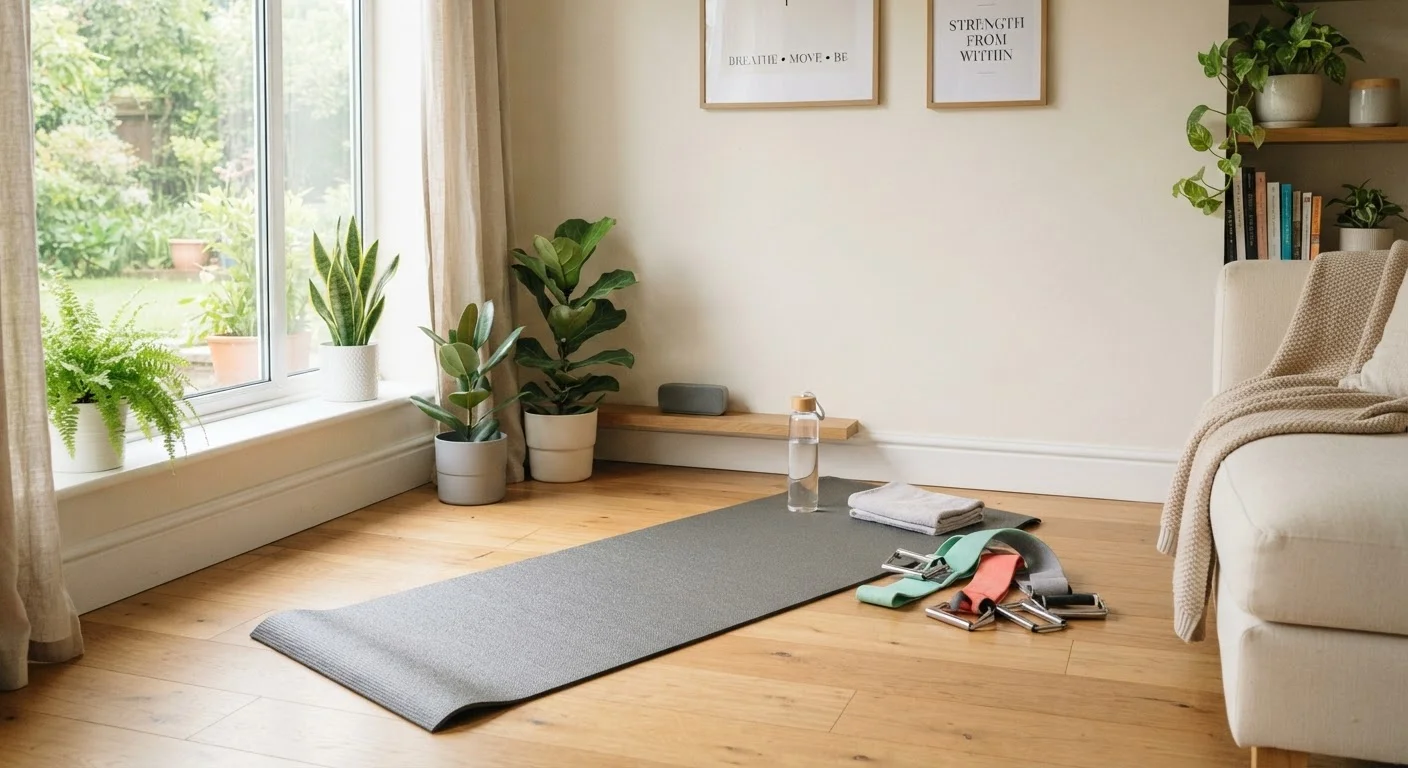
Before diving into the checklist, take a moment to gather what you'll need to complete this assessment. None of these items require a significant investment - in fact, many can be substituted with everyday household objects.
Exercise mat
Provides cushioning and grip for floor-based exercises and stretching.
Resistance bands
Offer low-cost, adjustable resistance for strength exercises without requiring weights.
Timer or smartphone
Used to track workout intervals, rest periods, and overall session length.
Water bottle
Keeps you hydrated throughout each session - essential for safe exercise.
Notebook or tracking app
Records completed sessions and progress notes to help maintain accountability.
Sturdy chair
Supports modified exercises and balance work, especially useful for beginners.
The Full Readiness Checklist
Work through the checklist groups below in order. The first two groups - physical baseline and space setup - are foundational and should be completed before you schedule a single workout.
Physical Baseline
Space Setup
Equipment Essentials
Schedule and Goal Setting
Don't Skip the Physical Baseline Group
The physical baseline items may feel like formalities, but they are the most consequential part of this checklist. Beginning a new exercise routine without accounting for existing conditions or movement limitations is a leading cause of preventable injury. If anything in that group gives you pause, pause - and speak with a healthcare professional before proceeding. There is no fitness goal worth pursuing at the cost of your safety.
Turning Checked Boxes Into a Lasting Habit
Completing this checklist means you've done the groundwork that most people skip. The gap between starting a home fitness routine and sticking to one almost always comes down to three things: a realistic schedule, a usable space, and a goal that actually matters to you. If you've addressed those here, you're better positioned than most beginners.
Start with two to three sessions per week rather than daily workouts. Research consistently shows that moderate frequency with adequate recovery leads to better long-term adherence than aggressive early schedules. Track what you complete - even a simple notebook entry - so you can see genuine progress rather than relying on how you feel on any given day.
If you find yourself stuck on any item in this checklist, treat it as a signal to problem-solve rather than postpone. A smaller space can work. A tighter schedule can work. Lower-cost equipment can work. The goal is to begin with what you have and build from there.