
Why Sodium Matters in Everyday Eating
Sodium is an essential mineral - the body needs it for fluid balance, nerve signaling, and muscle function. The challenge for most Americans isn't getting enough; it's getting far too much. Health authorities, including the U.S. Food and Drug Administration (FDA), have noted that the average American adult consumes significantly more sodium per day than the Dietary Guidelines for Americans recommend for most adults.
| Dietary Guidelines Reference Amount | Less than 2,300 mg sodium/day for most adults (Dietary Guidelines for Americans, 2020-2025) |
| Estimated Average U.S. Adult Intake | Approximately 3,400 mg/day (CDC, Sodium and Health) |
| Share from Packaged & Restaurant Foods | More than 70% of total intake (CDC, Where's the Sodium?) |
| Share from Table Salt Added at Home | Roughly 11% of total intake (CDC, Sodium and Health) |
| FDA Low-Sodium Threshold | 140 mg or less per serving (FDA Nutrition Labeling Definitions) |
| High Sodium %DV Threshold on Labels | 20% DV or more per serving (FDA Nutrition Facts Label Guidance) |
What surprises many people is where that sodium actually comes from. The salt shaker on the dinner table contributes only a small fraction of total intake. The overwhelming majority arrives through packaged, processed, and restaurant foods - often in amounts that aren't immediately obvious from taste alone.
This article is for general informational purposes only and is not a substitute for personalized medical or dietary advice. If you have questions about your sodium intake related to a specific health condition, consult a qualified healthcare professional.
The Major Sources of Dietary Sodium
Research from the Centers for Disease Control and Prevention (CDC) has consistently identified a core group of food categories that together account for the largest share of sodium in the American diet. Understanding these categories helps put label-reading into clearer context.
Sodium
A mineral and electrolyte found naturally in some foods and added to many processed ones. The body requires small amounts for essential functions, but excess intake is associated with elevated blood pressure in some individuals.
Daily Value (DV)
A reference amount established by the FDA used on nutrition labels to indicate how much a nutrient in a serving contributes to a total daily diet, based on a 2,000-calorie reference diet.
Reduced Sodium
An FDA-regulated label term meaning the product contains at least 25% less sodium than the original or standard version of that food. It does not mean the food is low in sodium.
Electrolyte
A mineral that carries an electric charge when dissolved in fluids. Sodium, potassium, and chloride are common electrolytes that help regulate fluid balance, nerve signals, and muscle contractions.
Processed Food
Any food that has been altered from its natural state through canning, curing, freezing, or adding ingredients. Sodium is frequently added during processing for flavor, texture, and preservation.
Top Sodium-Contributing Food Categories
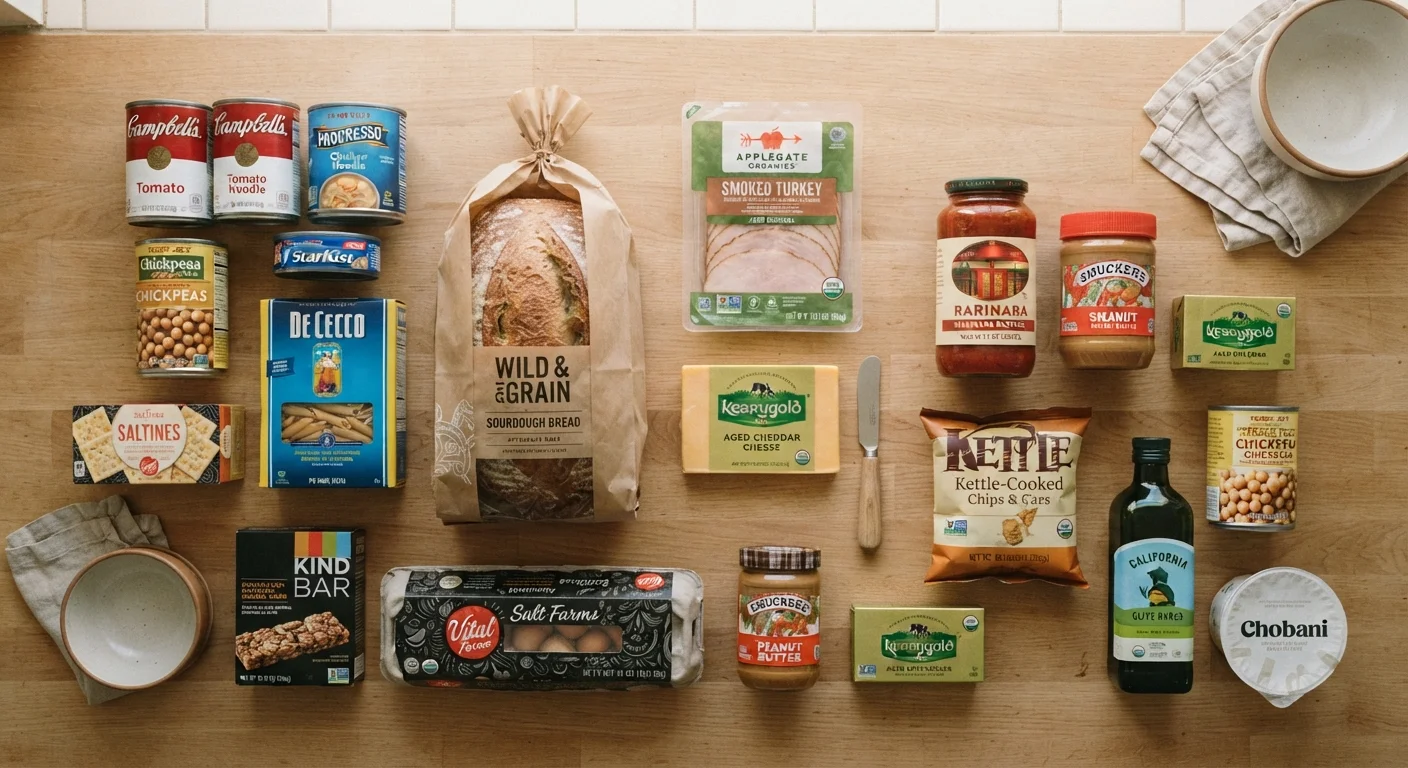
- Bread and rolls: A single slice of sandwich bread can contain 100-200 mg of sodium. Because bread is eaten so frequently throughout the day, it ranks among the highest contributors overall - even though it doesn't taste especially salty.
- Cold cuts and cured meats: Deli meats, bacon, ham, and sausages are heavily salted both for flavor and preservation. A few slices can account for a substantial portion of a day's sodium.
- Pizza: Between the crust, sauce, cheese, and toppings, pizza layers sodium from multiple directions. Restaurant and frozen versions tend to be particularly high.
- Soups: Canned and packaged soups are among the most sodium-dense foods by volume. Even varieties marketed as reduced-sodium can still contain several hundred milligrams per serving.
- Sandwiches: When bread, deli meat, condiments, and cheese combine, a single sandwich can approach or exceed half of a typical daily reference intake.
- Cheese: Natural and processed cheeses vary widely, but most contain significant sodium from both natural milk content and added salt during production.
- Savory snacks: Chips, pretzels, crackers, and popcorn are obvious salt sources - but sodium also hides in flavored nuts, rice cakes, and similar items.
- Condiments and sauces: Soy sauce, ketchup, hot sauce, salad dressings, and marinades can add hundreds of milligrams per tablespoon-sized serving.
Sodium Hides in Unexpected Places
Foods that don't taste salty - such as bread, breakfast cereals, and cottage cheese - can still be significant sodium sources because salt is added during manufacturing for texture and shelf stability, not just flavor. Checking the Nutrition Facts label is the most reliable way to assess sodium content, since taste alone is not a dependable indicator.
Reading Nutrition Labels for Sodium
The Nutrition Facts label is the most reliable tool for comparing sodium content across foods. Here's what to focus on:
>70%
Dietary sodium from packaged and restaurant food
According to the CDC, the majority of sodium Americans consume comes not from home cooking or the salt shaker but from commercially prepared foods.
~3,400 mg
Average daily sodium intake for U.S. adults
This figure is nearly 50% above the 2,300 mg daily reference amount outlined in the Dietary Guidelines for Americans, 2020-2025.
20% DV
FDA threshold for 'high sodium' on a label
The FDA considers any food with 20% or more of the Daily Value for sodium per serving to be high in sodium, regardless of how it tastes.
Key Label Elements
- Serving size
- All sodium figures on the label apply to the listed serving size, not necessarily the whole package. If you eat two servings, double the sodium number.
- % Daily Value (%DV)
- The FDA's %DV for sodium is based on 2,300 mg per day. A food with 5% DV or less is considered low in sodium; 20% DV or more is considered high.
- Sodium descriptor terms
- "Reduced sodium" means at least 25% less sodium than the original product - not necessarily a low-sodium food. "Low sodium" means 140 mg or less per serving. "Lightly salted" means at least 50% less added sodium than the reference amount.
Comparing the sodium %DV across similar products is one of the most practical ways to identify lower-sodium options without needing to memorize milligram targets.