Why Subscription Creep Is a Structural Problem, Not a Willpower Problem
Subscription creep - the gradual accumulation of recurring charges that quietly outpace a household's intention to spend - is not a sign of carelessness. It is a predictable result of how subscription services are designed and marketed. Sign-up is frictionless; cancellation is not. Trials convert automatically. Annual charges appear once and disappear from monthly awareness. The structure itself favors accumulation.
Understanding this removes the self-blame and redirects energy toward the only thing that actually works: a systematic review process. You cannot out-remember a billing system designed by engineers. You can, however, build a simple counter-system that reviews, evaluates, and prunes recurring charges on a schedule.
$219/mo
Average estimated US household subscription spend
Consumer research published by C+R Research found that US consumers significantly underestimate their monthly subscription costs when surveyed without reviewing statements first.
4-6 weeks
Typical delay before a forgotten charge is noticed
Financial behavior researchers have observed that most consumers only catch unrecognized recurring charges during infrequent statement reviews, often weeks after billing.
The mistakes below reflect real patterns that cost households money every month. None of them require unusual negligence - they happen to organized, financially aware people because the environment is designed to let them happen.
Common Subscription Mistakes - and How to Stop Making Them
The following errors appear repeatedly when households examine where their recurring spending actually goes. Each one is correctable with a modest change in habit or process.
Failing to track all active subscriptions in one place, leaving charges scattered across multiple cards and accounts.
Why it happens: Subscriptions are often signed up for opportunistically - a streaming service here, a meal kit trial there - using whichever card is on hand. Over time, charges spread across accounts and no single statement tells the full story.
Keeping subscriptions active because canceling feels like effort, not because the service is actually being used.
Why it happens: Cancellation friction is intentional. Many services bury the cancel button, require a phone call, or present retention offers that stall the process. Inertia kicks in, and the charge quietly continues.
Signing up for free trials without a plan to cancel before billing begins.
Why it happens: Trial sign-ups happen in a moment of curiosity or convenience, and the billing date feels far away. Without a reminder system, the trial period passes unnoticed.
Conflating the value a subscription could provide with the value it actually delivers to your household.
Why it happens: Perceived value is easy to rationalize. A fitness app sounds worthwhile even if it hasn't been opened in weeks. People judge subscriptions by what they might do with them rather than what they actually do.
Allowing household members to sign up for overlapping services that duplicate content or features already being paid for.
Why it happens: In multi-person households, subscriptions are often acquired independently without checking what's already active. Two streaming services with heavily overlapping libraries, or two cloud storage plans, are common examples.
Ignoring annual subscription renewals because they don't appear on monthly statements.
Why it happens: Annual charges only hit once a year, so they don't register as part of a monthly budget. When the charge posts, it can feel unexpected even though the renewal date was known at sign-up.
Your Bank Statement Is the Ground Truth
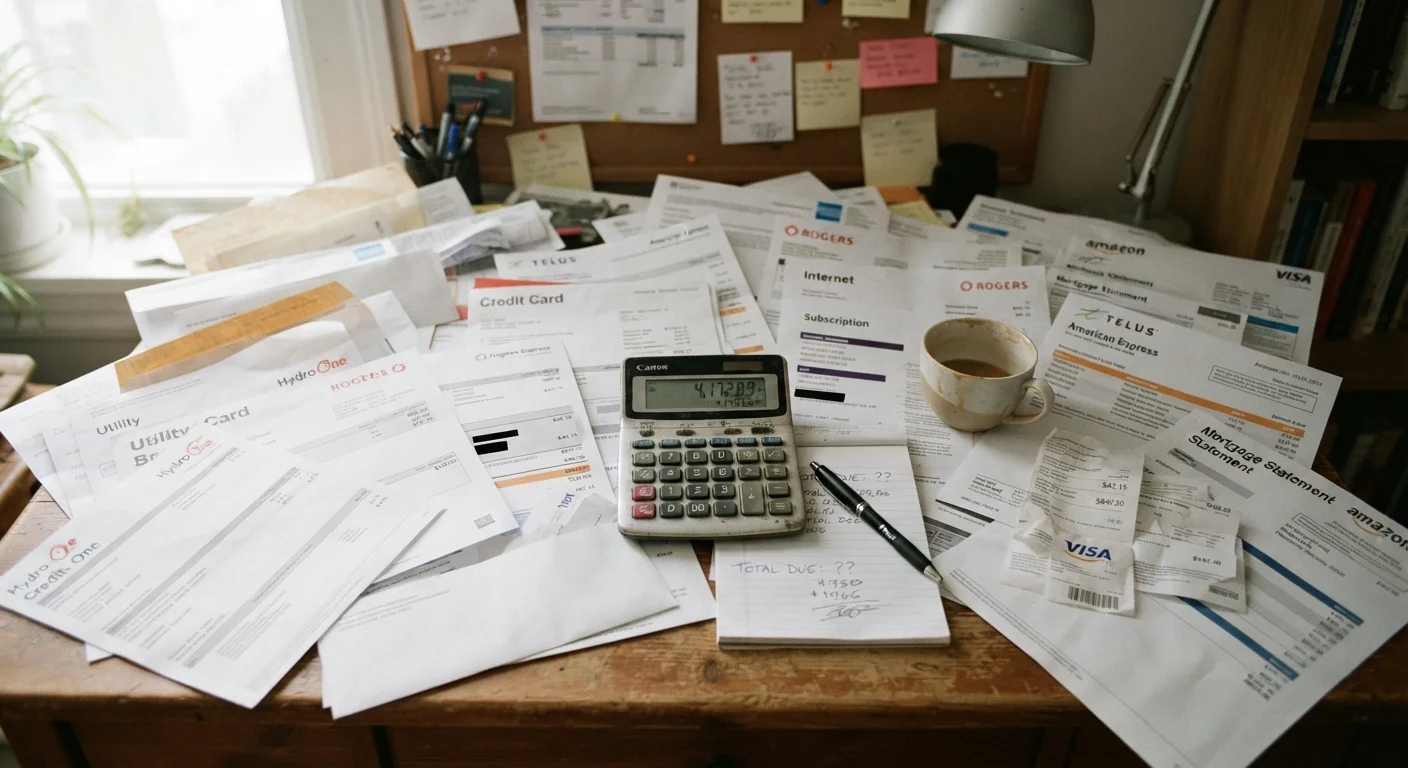
Do not rely on memory or email notifications to track active subscriptions. Pull your actual bank and credit card statements and search for recurring charges - monthly, quarterly, and annual. Many services bill annually at renewal with little notice, making them easy to miss until the charge already posts.
One practical approach: dedicate 20 minutes per quarter to nothing but subscription review. Pull every statement, cross-reference your tracker, and apply the 30-day-use test to each active charge. Most households find at least one or two charges they had genuinely forgotten about - and at least one service that no longer earns its cost.
Free Trials Convert Automatically
Most free trials require a payment method upfront and convert to a paid plan the moment the trial period ends - often without a reminder email. If you sign up for a trial and don't intend to subscribe, set a calendar alert at least two days before the trial ends so you have time to cancel before being charged.
Subscription management is not about radical minimalism. Some recurring services deliver clear, ongoing value and are worth every dollar. The goal is deliberate spending - keeping the subscriptions that genuinely serve your household and removing the ones that survive only on inertia.
This article is for general informational purposes only and does not constitute personalized financial advice. Readers should consult a qualified financial professional for guidance specific to their individual circumstances.