Why a Spending Hierarchy Matters
When money is tight, every purchase competes for the same limited pool. Without a framework, decisions default to emotion - urgency, anxiety, or the momentary appeal of something new. The result is rarely optimal: essential needs get squeezed while discretionary spending slips through unchecked.
A spending hierarchy is a ranked structure that tells you, in advance, which categories of spending take precedence. It replaces guesswork with a consistent decision rule. Think of it as a tiebreaker: when two competing expenses show up in the same budget period, the hierarchy settles the question before stress distorts your judgment.
This isn't about restriction - it's about intention. Readers who already think carefully about smart buying decisions will recognize that a hierarchy is simply the upstream version of that same discipline applied to the whole budget, not just individual items.
Revisit Your Hierarchy Monthly
A spending hierarchy isn't a one-time document - income, obligations, and priorities shift. Build a habit of reviewing your tier assignments at the start of each month, even if only for ten minutes. Small adjustments made proactively are far less painful than reactive cuts made mid-month under pressure.
What You'll Need Before You Start
Before building your hierarchy, gather the inputs that make it accurate rather than abstract.
What you will need
With these in hand, you're building a hierarchy grounded in your actual numbers - not a theoretical template. That specificity is what makes the framework stick month to month.
The Five-Tier Framework
The steps below walk through each tier of the hierarchy in order. Work through them sequentially - each tier must be evaluated before the next one receives any allocation.
Lock In Tier 1 - Non-Negotiable Essentials
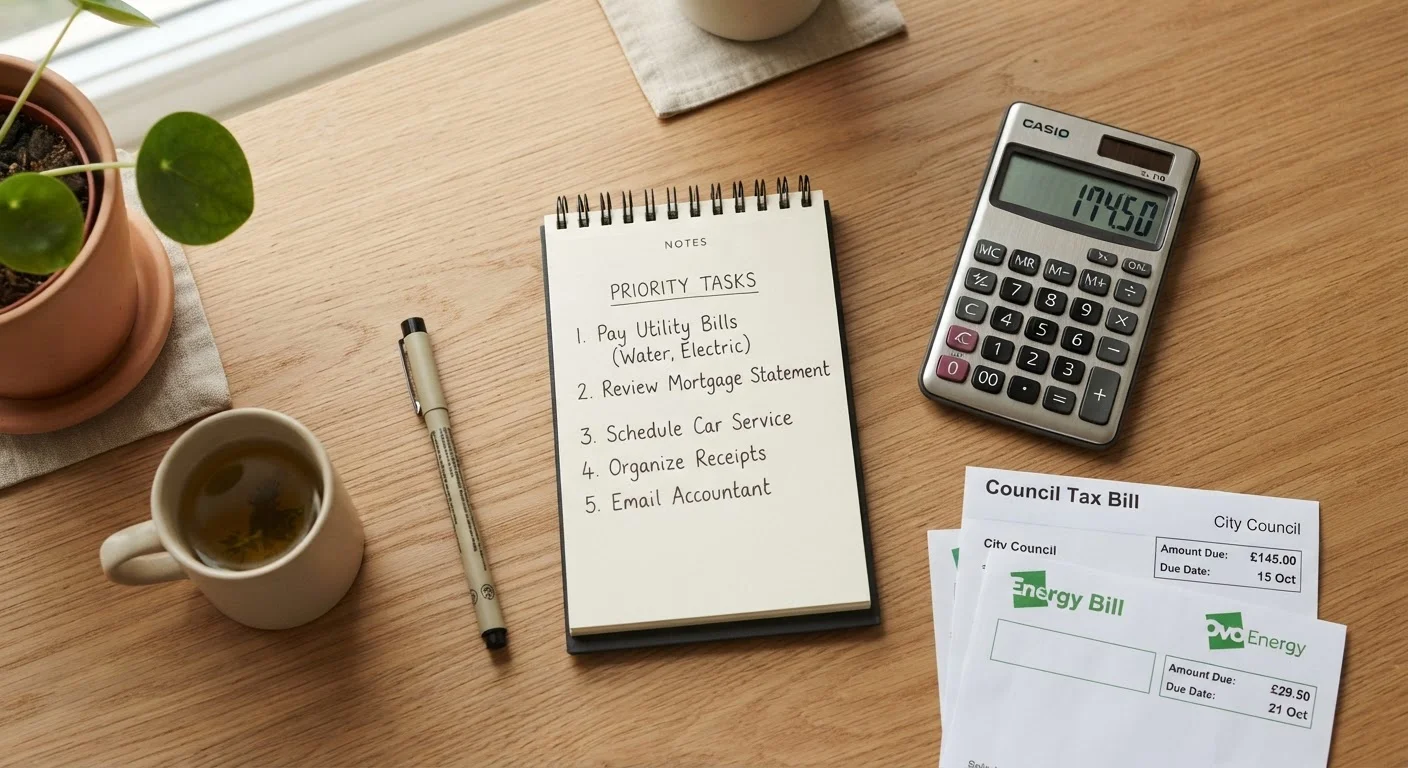
Identify every expense whose non-payment carries an immediate, serious consequence: housing costs, utilities required for health and safety, minimum debt payments that affect your credit standing, and any court-ordered obligations. Write the total. This figure is untouchable - it comes off the top before anything else is considered.
Identify Tier 2 - Health and Safety Spending
Separate out spending that directly maintains physical wellbeing and household safety: prescription medications, basic groceries (not dining out), necessary medical appointments, and any household maintenance that poses a safety risk if deferred (a broken furnace in winter, for instance). This tier sits above comfort and convenience but below only the hard contractual obligations in Tier 1.
Allocate Tier 3 - Quality-of-Life Spending With Clear Utility
These are expenses that meaningfully support daily functioning but aren't life-or-safety critical: a reliable internet connection for remote work, childcare costs, transportation beyond bare minimum if it enables income, and household supplies that prevent larger problems. Evaluate each on genuine utility, not habit. Ask whether removing it would materially impair your ability to work, parent, or maintain your home.
Weigh Tier 4 - Discretionary Spending With Deliberate Justification
Subscriptions, clothing beyond replacement need, home décor, entertainment, and dining out all live here. None of these are automatically cut - but each one requires a deliberate "yes" rather than a passive continuation. Review this tier line by line and ask: does this item deliver enough consistent value to retain given the remaining budget after Tiers 1-3? Pause or cancel anything that fails that test this month.
Reserve Tier 5 - Savings and Future Spending
Whatever remains after Tiers 1-4 are funded should be directed toward a short-term savings buffer before any additional discretionary spending. Even a small fixed amount - treated as a non-negotiable line like Tier 1 - builds the financial cushion that prevents next month's tight patch from becoming a crisis. If nothing remains, that signals a Tier-4 cut hasn't gone far enough.
Once you've applied this framework once, subsequent months go faster. The categories stay the same; only the amounts shift. For a structured way to identify where your existing spending actually falls across these tiers, a room-by-room spending audit is a useful companion exercise.
Avoid Skipping Tiers Under Pressure
When a compelling discretionary purchase appears - a sale, a social occasion, a moment of fatigue - the temptation is to fund it before completing the tier review. Doing so consistently is how Tier-1 and Tier-2 obligations end up underfunded. Treat the sequence as a rule, not a suggestion, especially in months when cash flow is already strained.
Applying the Hierarchy to Real Decisions
A framework only works if it's applied consistently. Two practical rules help bridge the gap between theory and habit.
The 48-hour rule: For any non-Tier-1 purchase above a threshold you set (many households use $50), wait 48-72 hours before buying. Most impulse decisions evaporate in that window without any willpower required.
Cost-per-use recalibration: When Tier-3 or Tier-4 spending feels justified because an item is "on sale," run a quick cost-per-use calculation instead of anchoring to the price tag. A cheaper item used twice is rarely a better deal than a durable one used daily.
For households navigating a genuinely difficult month - where even Tier-1 items are creating pressure - managing bills during a tight month covers how to approach creditors and prioritize penalty-carrying obligations before others.
Finally, once you've internalized a hierarchy, the natural next step before any significant purchase is a structured pre-purchase review. The consumer's pre-purchase checklist operationalizes that review in a repeatable format.
This article provides general financial information for educational purposes and does not constitute personalized financial advice. Consult a qualified financial professional for guidance specific to your circumstances.