
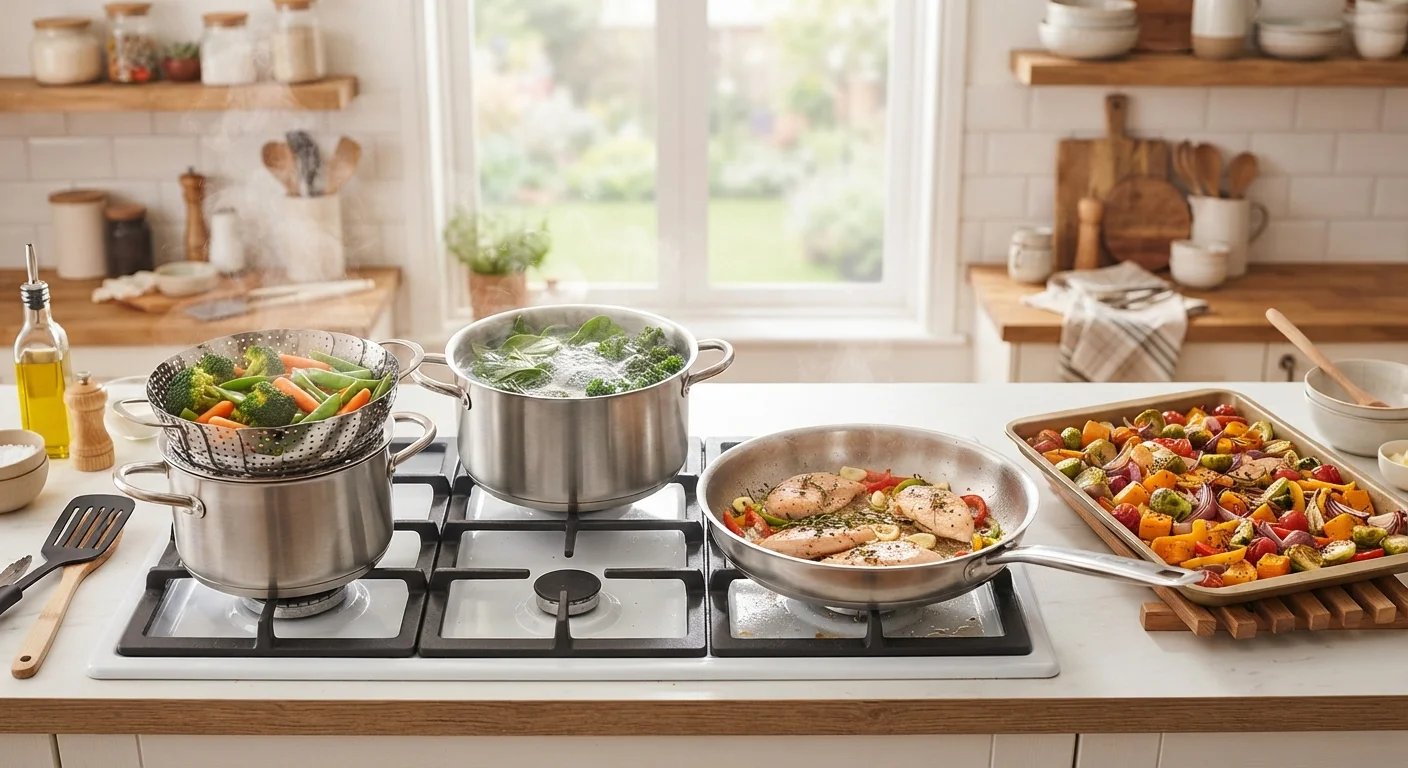
Why Cooking Method Matters Nutritionally
Cooking transforms food in ways that go far beyond taste and texture. Heat, water, and oxygen each interact with vitamins, minerals, and other compounds - sometimes breaking them down, sometimes making them easier for the body to use. Understanding these effects doesn't mean you need to overthink every meal. It simply gives you more information to work with when deciding how to prepare what's already in your kitchen.
Nutrients fall into two broad categories relevant here: water-soluble (like vitamins B and C) and fat-soluble (like vitamins A, D, E, and K). Water-soluble vitamins are more vulnerable to heat and leach into cooking liquid. Fat-soluble vitamins, on the other hand, often become more bioavailable - meaning more absorbable by your body - when cooked with a small amount of dietary fat. Cooking also breaks down plant cell walls, which can make certain nutrients easier to access.
As with most nutrition topics, context matters. What nutritious eating looks like in practice varies by household, and the same is true for cooking methods.
Comparing the Most Common Cooking Methods
Here's a side-by-side look at how four widely used cooking methods affect nutrient retention, and what each approach does well.
| Boiling | Steaming | Roasting | Sautéing/Stir-Frying | |
|---|---|---|---|---|
| Water-soluble vitamin retention | Low - vitamins leach into water | High - no water contact | Moderate - heat causes some loss | Moderate to high - quick cooking |
| Fat-soluble vitamin availability | Low - little fat present | Low - little fat present | Moderate - some fat often added | High - fat aids absorption |
| Effect on fiber | Softens, largely preserved | Softens, largely preserved | Preserved, slightly concentrated | Largely preserved |
| Added fat required | None | None | Small amount typical | Small to moderate amount |
| Practical ease | Very easy, minimal equipment | Easy, requires steamer basket | Easy, mostly hands-off | Quick, requires attention |
| Flavor impact | Mild, can dilute flavor | Clean, natural taste | Rich, caramelized flavors | Savory, slightly charred edges |
A few clarifications worth noting: microwaving, often overlooked, is actually among the gentler methods for preserving water-soluble vitamins, largely because it uses short cook times and little to no water. Pressure cooking similarly tends to retain more nutrients than prolonged boiling. The key variables across all methods are temperature, cooking time, and how much water is involved.
Boiling and Blanching: Useful But Not Without Trade-Offs
Boiling is convenient and widely used, but it can significantly reduce water-soluble vitamins. Research has found that boiling vegetables can reduce vitamin C content by 50% or more, depending on the vegetable and cooking time. Minerals like potassium also leach into the water.
That said, boiling isn't without merit. It softens fibrous vegetables, making them easier to digest, and is important for food safety with certain starchy foods. Blanching - briefly boiling and then transferring to ice water - minimizes nutrient loss while preserving color and texture, making it a useful middle ground.
Don't Discard Your Cooking Water
When boiling vegetables, a significant portion of water-soluble vitamins transfers into the cooking liquid. Rather than pouring it down the drain, save that liquid to use as a base for soups, stews, or sauces. It's a simple habit that captures nutrition you'd otherwise lose.
One practical strategy: if you boil vegetables, consider saving the cooking liquid for soups or sauces. Many of the leached nutrients remain in the water.
Steaming, Roasting, and Sautéing: A Closer Look
Steaming is widely regarded as one of the most effective methods for retaining water-soluble vitamins, since food doesn't come into direct contact with water. It works especially well for broccoli, leafy greens, and other delicate vegetables.
Roasting uses dry heat, which concentrates flavor and caramelizes natural sugars - making many vegetables more palatable. The trade-off is that prolonged high heat can degrade some heat-sensitive vitamins. Roasting at moderate temperatures and avoiding overcooking helps minimize losses.
Sautéing and stir-frying with a small amount of oil can actually enhance fat-soluble nutrient absorption. A modest amount of fat paired with carrots, tomatoes, or leafy greens helps the body absorb vitamins A and K more efficiently. These methods also tend to be quick, which limits heat exposure.
Ultimately, variety in cooking methods across the week is likely more beneficial than optimizing any single technique. Rotating approaches helps ensure a broader range of nutrients make it to the plate - and to the body.
This article is for general informational and educational purposes only and is not a substitute for advice from a registered dietitian or qualified healthcare professional. Consult a professional before making significant changes to your diet, especially if you have a medical condition.