Why the '8 Glasses' Figure Persists
Few health recommendations have had the staying power of 'drink eight glasses of water a day.' It is easy to remember, feels actionable, and has been repeated often enough that many people treat it as settled science. The problem is that it was never really a research-backed prescription to begin with.
The figure appears to trace back to mid-20th-century nutrition guidance that described total daily water needs - including water from food - not glasses of drinking water alone. Somewhere along the way the food-source portion disappeared from popular memory, and the number stuck. For a closer look at other hydration claims that have quietly outlasted their evidence, see hydration myths that keep getting repeated.
The persistence of the rule is not entirely without value - it nudges people toward thinking about fluid intake. But treating it as a precise target can be misleading, and it can cause unnecessary anxiety for people who naturally drink less or more.
“The idea that we should all drink eight glasses of water a day is not supported by scientific evidence. Fluid needs are highly individual and change with activity, diet, and environment.”
— Heinz Valtin, Physiologist and professor emeritus, Dartmouth Medical School, writing in the American Journal of Physiology (2002)
What Actually Shapes Your Fluid Needs
Your body's water requirements are dynamic, not fixed. Several well-established factors push that number up or down throughout the day and across different life stages.
- Body size and composition: Larger bodies generally need more water, and muscle tissue holds more water than fat tissue, so two people of the same weight may still have different needs.
- Physical activity: Exercise increases fluid loss through sweat. Duration and intensity both matter, and conditions like high humidity compound that effect.
- Climate and temperature: Hot weather accelerates sweat production even at rest. People in dry climates also lose moisture through respiration more readily.
- Diet composition: A diet rich in fruits, vegetables, soups, and dairy naturally delivers more fluid. Conversely, a high-sodium or high-protein diet may modestly increase water requirements.
- Health status and medications: Fever, vomiting, diarrhea, and certain medications can significantly affect fluid balance. People managing chronic conditions should discuss hydration with their healthcare provider.
~20%
Daily water intake from food
The National Academies estimate that roughly one-fifth of most people's total daily water intake comes from food rather than beverages.
3.7 L / 2.7 L
General adequate intake: men vs. women
These total daily water reference values (from all sources combined) from the National Academies are population averages, not individual prescriptions, and vary by age, pregnancy, and activity.
1-2%
Body water loss before thirst is noticeable
Research suggests thirst typically becomes apparent after about 1-2% of body weight is lost as water, meaning mild dehydration can occur before you feel it during exercise.
Practical Ways to Track Hydration Without Counting Glasses
For most healthy adults, rigid glass-counting is unnecessary. The body has built-in feedback systems that work reasonably well when you pay attention to them.
Urine color is one of the most practical self-checks available. Pale straw-yellow generally signals adequate hydration; darker shades suggest you may need more fluids. Colorless urine is not necessarily ideal - it can indicate overhydration in some cases, though this is uncommon in everyday settings.
Thirst is a fairly reliable guide for most healthy adults, but it has limits. Research indicates that thirst can lag behind actual need during intense exercise, and older adults often experience a reduced thirst sensation, making more deliberate fluid habits important as people age.
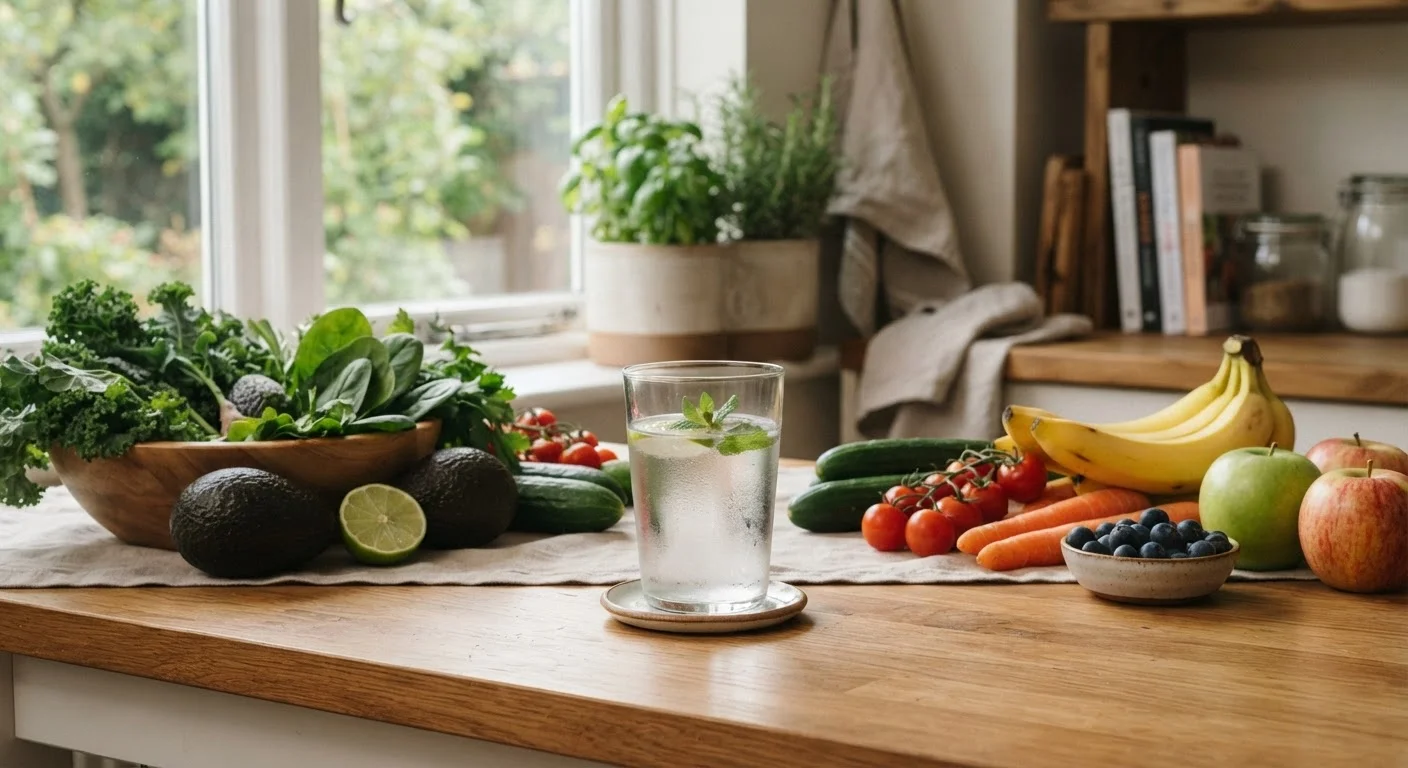
Food choices matter more than most people realize. Cucumbers, watermelon, strawberries, celery, and dairy foods like yogurt all have very high water content. Building meals around produce and whole foods is a natural way to support hydration without tracking every drink.
A Simple Daily Hydration Habit
Rather than counting glasses, try drinking a cup of water with each meal and one between meals. Adding fluid-rich foods - such as a piece of fruit with breakfast or a vegetable-based soup at lunch - naturally supports your intake without any tracking. Adjust upward on active days or in warm weather.
This article is for general informational purposes only and does not constitute medical or nutritional advice. Individual hydration needs vary; consult a qualified healthcare professional for guidance specific to your health circumstances.