The Price Gap Is Real - But So Are the Myths
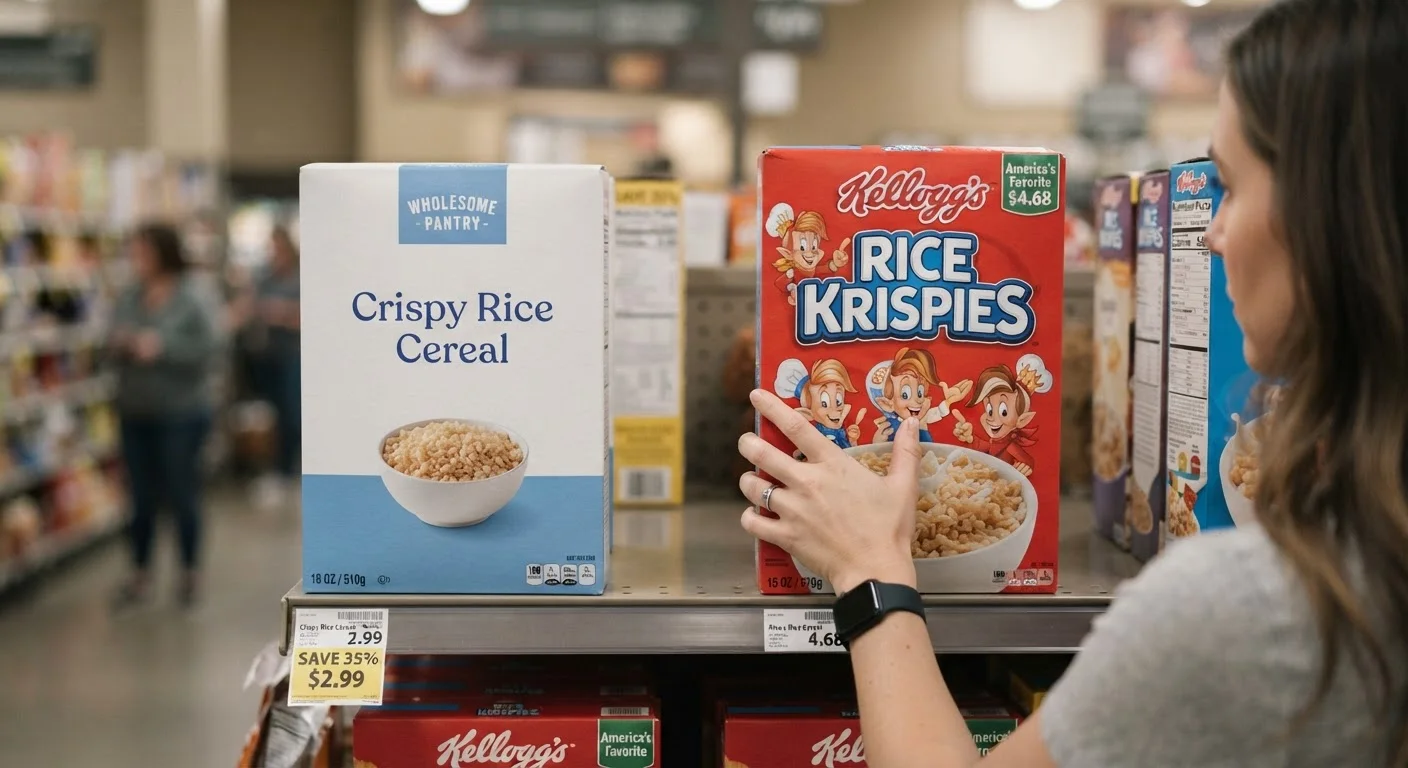
Store brands typically cost 20% to 30% less than their name-brand counterparts, according to Consumer Reports research. That's a meaningful difference across a full shopping cart. Yet a persistent myth keeps many shoppers paying more: the assumption that a higher price signals meaningfully higher quality.
In reality, many store-brand products are manufactured in the same facilities as name-brand equivalents - just with different labels. This is especially common in grocery, where large food processors often produce both the branded and private-label versions of the same item. The label changes; the contents frequently don't.
That said, brand differentiation isn't always marketing theater. Some name-brand products do have proprietary formulations, tighter quality controls, or longer track records of consistent performance. The challenge for shoppers is knowing which category they're in before they pay the premium.
How to Read Past the Packaging
Flip the product over and compare the ingredient list or active-ingredient panel directly, not the front-of-package claims. For OTC drugs, the active ingredient and dosage are the only details that determine therapeutic equivalence - everything else is branding. For food, a shorter ingredient list with recognizable items is often a better quality signal than the brand name itself.
Categories Where Generic Almost Always Wins
Certain product types are essentially interchangeable regardless of label, making generic the rational default.
- Over-the-counter medications: The FDA requires generic drugs to contain the same active ingredient at the same dosage as brand-name counterparts. An ibuprofen tablet is an ibuprofen tablet - inactive fillers may differ, but therapeutic effect is legally required to be equivalent.
- Pantry staples: Flour, sugar, salt, baking soda, canned beans, and similar commodities have minimal variation between brands. Taste tests repeatedly show consumers cannot reliably distinguish store-brand versions from premium alternatives in blind comparisons.
- Cleaning supplies: Bleach, basic dish soap, and multi-surface sprays have simple formulations. The active cleaning agents are identical or functionally equivalent across most price tiers.
- Paper products: Generic paper towels and tissues may have minor texture differences, but for everyday use the performance gap rarely justifies a significant price premium.
If you're also evaluating food ingredients more broadly, understanding what's actually in a product matters - including how different types of sugars are labeled. See our guide to added sugar vs. natural sugar for a closer look at ingredient labels.
| Category | Generic / Store Brand | Name Brand | |
|---|---|---|---|
| OTC Medications | Same active ingredients, FDA-regulated | Same efficacy, higher cost | |
| Pantry Staples | Functionally identical, lowest cost | Minimal quality advantage | |
| Cleaning Products | Equivalent active agents | Marginal performance edge | |
| Infant Formula | Regulated; consult pediatrician | More established track record | |
| Safety Equipment | Verify certification marks | Often wider certification options | |
| Personal Care (sensitive skin) | Store-brand options improving | Established ingredient histories |
Where Name Brands Can Justify the Premium
Not every category rewards automatic switching. There are legitimate reasons to spend more in specific situations.
- Infant formula: The FDA regulates infant formula strictly, but formulations do vary. Parents should consult a pediatrician rather than switching brands based solely on price.
- Safety equipment: Smoke detectors, carbon monoxide alarms, child car seats, and similar products involve certified testing standards. Stick to products with verified certification marks, which may limit your options regardless of brand preference.
- Allergy-sensitive personal care: If you have documented sensitivities, fragrance-free or hypoallergenic name-brand products with well-established ingredient lists may reduce guesswork - though many store brands now offer comparable options.
- Complex appliances and tools: Warranty support, parts availability, and documented durability records matter more in higher-stakes purchases. Here, brand history provides information that price alone doesn't.
The common thread: where safety certifications, complex formulations, or personal health factors are involved, the label carries actual informational weight - not just marketing value.
A Practical Framework for Smarter Decisions
Rather than defaulting to either extreme, apply a consistent decision filter at the shelf.
- Check the ingredient or active-ingredient list first. If the formulation is identical or equivalent, the generic is almost always the rational choice.
- Compare unit prices, not sticker prices. A larger name-brand package can occasionally undercut a smaller store-brand container on a per-ounce basis.
- Consider your tolerance for variation. If you've used a name-brand product for years and a switch would require adjustment - whether in taste, texture, or result - factor that real cost in honestly.
- Try generics incrementally. Switch one category at a time rather than overhauling your entire cart. This lets you identify where quality differences actually show up in your household versus where you assumed they would.
The goal isn't to buy generic across the board - it's to spend deliberately, reserving the name-brand premium for situations where it genuinely earns its keep.
This article is for general informational purposes only and does not constitute medical, financial, or professional advice. Consult a qualified professional for decisions specific to your circumstances.