
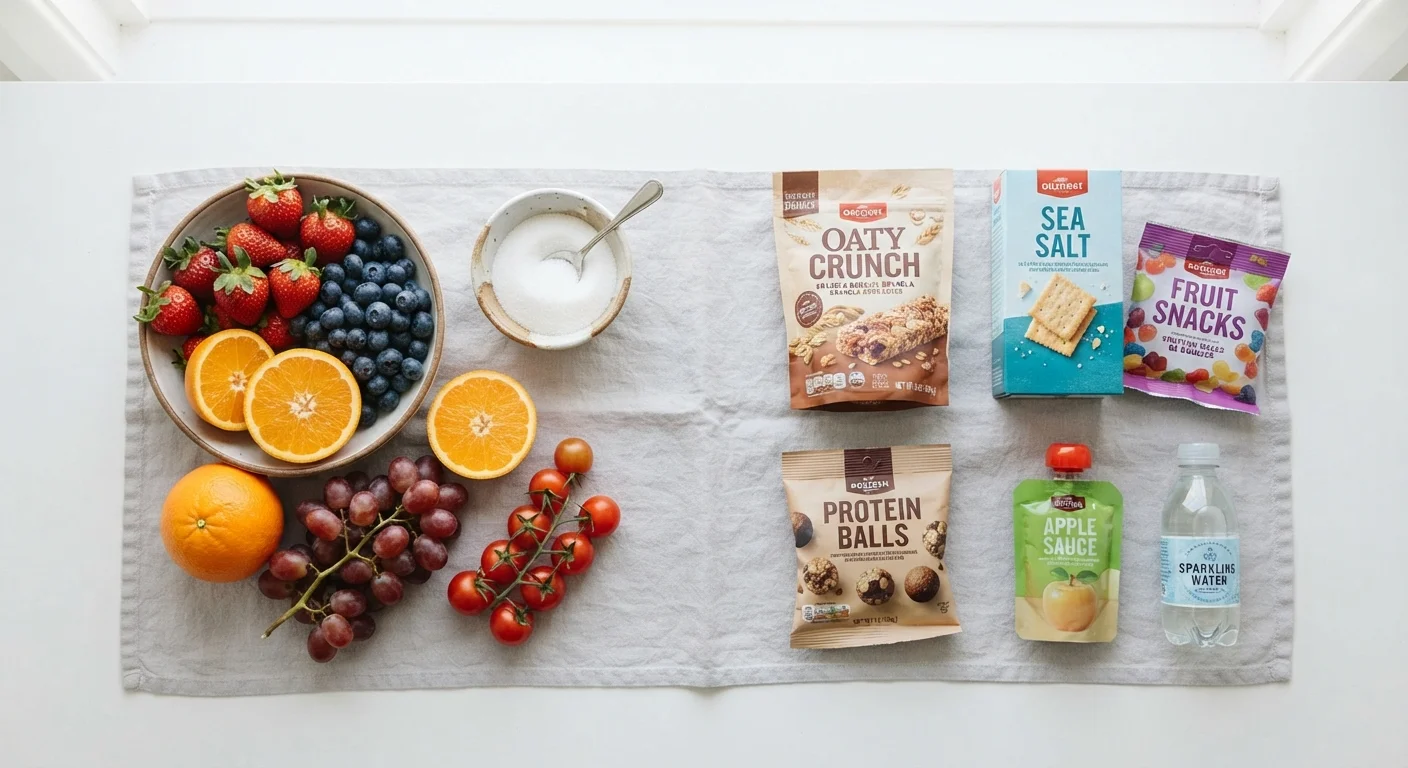
What Makes a Sugar 'Natural' or 'Added'?
The words natural sugar and added sugar describe the same molecules - glucose, fructose, sucrose - but in entirely different contexts. Natural sugars are those found intact inside a whole food. The fructose in a strawberry, the lactose in a glass of milk, the glucose in a banana: none of these were put there by a food manufacturer. They are part of the food's original structure.
Added sugars, by contrast, are any sugars or caloric sweeteners introduced to a food or drink during processing, preparation, or at the table. This includes white cane sugar, high-fructose corn syrup, honey stirred into yogurt, and even 100% fruit juice concentrate used to sweeten a product. The FDA's current Nutrition Facts label rules require manufacturers to list added sugars as a distinct line item, which makes them easier to identify than ever. For a practical primer on reading that panel, see how to decode the Nutrition Facts label.
| Criterion | Natural Sugar | Added Sugar |
|---|---|---|
| Origin | Inherent to whole foods | Added during processing or prep |
| Common examples | Fructose in fruit, lactose in milk | Cane sugar, corn syrup, honey in products |
| Accompanying nutrients | Fiber, vitamins, minerals | Generally few or none |
| Effect on fullness | Fiber aids satiety | Less filling per calorie |
| Listed separately on label? | No - included in Total Sugars | Yes - "Includes X g Added Sugars" |
| Dietary guidance focus | Not typically restricted | Recommended to limit |
Why the Source Changes Everything
When you eat an apple, its natural sugars come bundled with fiber, water, vitamins, and antioxidants. That fiber slows digestion, which moderates how quickly glucose enters the bloodstream. You also feel full faster, making it harder to eat a surplus of fruit sugar unintentionally.
Added sugar in, say, a sweetened beverage or a packaged pastry arrives largely alone - stripped of the fiber and micronutrients that would otherwise slow its absorption. The result is a quicker spike in blood glucose. Over time, consistently high intakes of added sugars have been associated in research with increased risk of weight gain, elevated triglycerides, and other markers linked to metabolic health. This does not mean one cookie causes harm; it means the overall pattern matters.
17 tsp
Average daily added sugar intake for US adults
CDC data suggest American adults consume roughly 17 teaspoons of added sugar per day, well above the American Heart Association's general guidance.
6-9 tsp
AHA general added sugar limit per day
The American Heart Association suggests limiting added sugars to about 6 teaspoons for women and 9 teaspoons for men daily as a general population guideline.
~70%
Share of US added sugar from packaged foods and beverages
Research published in nutrition surveillance studies estimates the majority of added sugar Americans consume comes from processed and packaged products, not home cooking.
This is the same logic behind the distinction between whole grains and refined grains. See how that grain comparison plays out at the dinner table - the principle of processing removing protective components applies equally to sugar.
This article is for general nutrition education and is not a substitute for personalized medical or dietary advice. If you have specific health concerns, consult a registered dietitian or qualified healthcare professional.
Practical Ways to Tell Them Apart at the Store
Spotting natural versus added sugars on a label takes a two-step approach: check the Nutrition Facts panel and scan the ingredients list.
- Nutrition Facts panel: The "Total Sugars" line includes both natural and added sugars combined. Directly below it, "Includes X g Added Sugars" tells you how many grams were put in by the manufacturer. A plain container of milk might show 12 g total sugars but 0 g added - all lactose, naturally present.
- Ingredients list: Added sugars hide under many names - corn syrup, dextrose, maltose, cane juice, agave nectar, fruit juice concentrate, and more. If any sweetener appears in the ingredient list, the product has added sugar. Food packaging claims like "no sugar added" have specific regulated meanings - knowing them prevents common misreads.
A food labeled "no sugar added" can still contain natural sugars from its ingredients; it simply means nothing extra was stirred in during production. These details reward careful label reading rather than quick assumptions based on front-of-pack language.