Why the Distinction Actually Matters
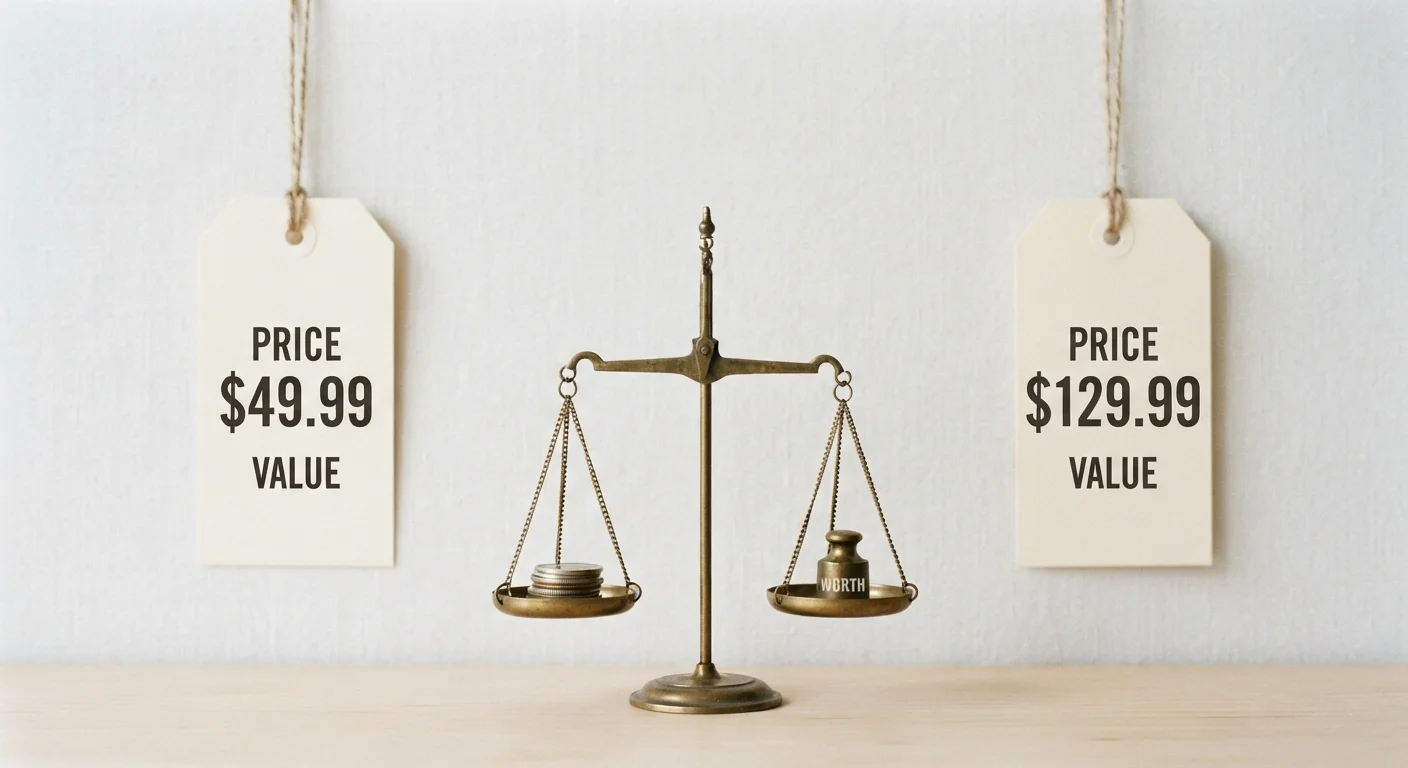
Most spending decisions get made on price because price is easy: it's a single, visible number. Value is harder to see because it lives in the future - in how often you'll use something, how long it lasts, and whether it actually does what you needed it to do.
This gap between what you pay and what you get is where most buyer's remorse lives. Shoppers who train themselves to ask what am I actually getting for this? before asking how much does it cost? tend to make fewer regret purchases - and often spend less in the long run, not more.
It's also where savvy budgeting lives. Understanding this distinction doesn't mean spending more. It means spending deliberately, so that every dollar delivers something real. For a deeper look at how this plays out across different categories, the Smart Buying hub covers evaluation frameworks across product types.
~50%
Purchases reported as regretted by consumers
Multiple consumer surveys suggest roughly half of non-essential purchases are later viewed as poor value, citing low usage or unmet expectations as primary reasons.
3-4x
Typical lifespan gap between quality tiers
Consumer durability testing across product categories routinely finds that mid-to-higher quality items last significantly longer than entry-level alternatives, often shifting the true cost comparison.
What 'Value' Is Really Made Of
Value isn't a single thing - it's a combination of factors that vary by purchase and by person. When you buy a tool, a kitchen appliance, or a piece of furniture, value is built from:
- Durability: Will it still be working in two years, or in ten?
- Frequency of use: Daily-use items absorb higher upfront costs over time; rarely-used items don't.
- Performance: Does it actually do what it claims, at the level you need?
- Fit for purpose: A feature-rich item is only valuable if those features serve your real-world use case.
- Opportunity cost: Spending more on one thing means spending less on another - that trade-off is part of the value equation too.
Notice that price doesn't appear in that list. Price is the input; value is the output. As covered in what 'value for money' actually means, measuring true value means weighing all of these factors against cost - not reading the sticker and stopping there.
How Marketing Distorts the Picture
Retailers and brands understand that consumers use price as a shortcut for quality - and they price accordingly. Premium packaging, round-number anchoring, and inflated 'was' prices all exploit the tendency to equate cost with worth.
The result is that perceived value and actual value can drift far apart. A product can feel premium because it's presented that way, even when its performance is indistinguishable from a lower-priced alternative. As the evidence suggests in why 'higher price means better quality' is mostly a myth, the assumed price-quality link is much weaker than most shoppers expect.
Similarly, discount framing can make something feel like good value when the baseline was inflated to begin with. Understanding these dynamics is a prerequisite for evaluating any deal honestly. Pricing psychology and how it affects judgment is worth understanding before your next significant purchase.
Applying the Mindset to Real Spending Decisions
Shifting from price-first to value-first thinking is a habit, not a one-time insight. Here's how it shows up in practice:
For everyday purchases: Ask whether you're buying something because it's inexpensive or because it genuinely serves a recurring need. Low-cost consumables that underperform can cost more in aggregate than a better-performing version used less frequently.
For larger purchases: The cost-per-use framework is one of the most practical tools available. Dividing the purchase price by realistic use frequency converts an abstract sticker price into a concrete per-use cost - which makes comparisons across price points much more honest.
For discretionary spending: Value isn't purely functional. Enjoyment, experience, and personal fit are legitimate parts of the equation - especially when distinguishing genuine wants from needs. That line can be blurrier than it sounds, as explored in wants, needs, and the blurry line in between.
Build a Simple Value Check Into Every Purchase
Before buying, pause and answer two questions: How often will I actually use this? and What happens if it fails or disappoints in six months? These two questions surface the key drivers of value - frequency and durability - without requiring any formal analysis. If you can't answer either confidently, that uncertainty is itself useful information.
None of this requires complex analysis for every purchase. The goal is to replace the automatic price reflex with a short, deliberate pause: What am I actually getting here, and is that worth this to me? That question alone filters out a surprising number of poor-value purchases before they happen.