
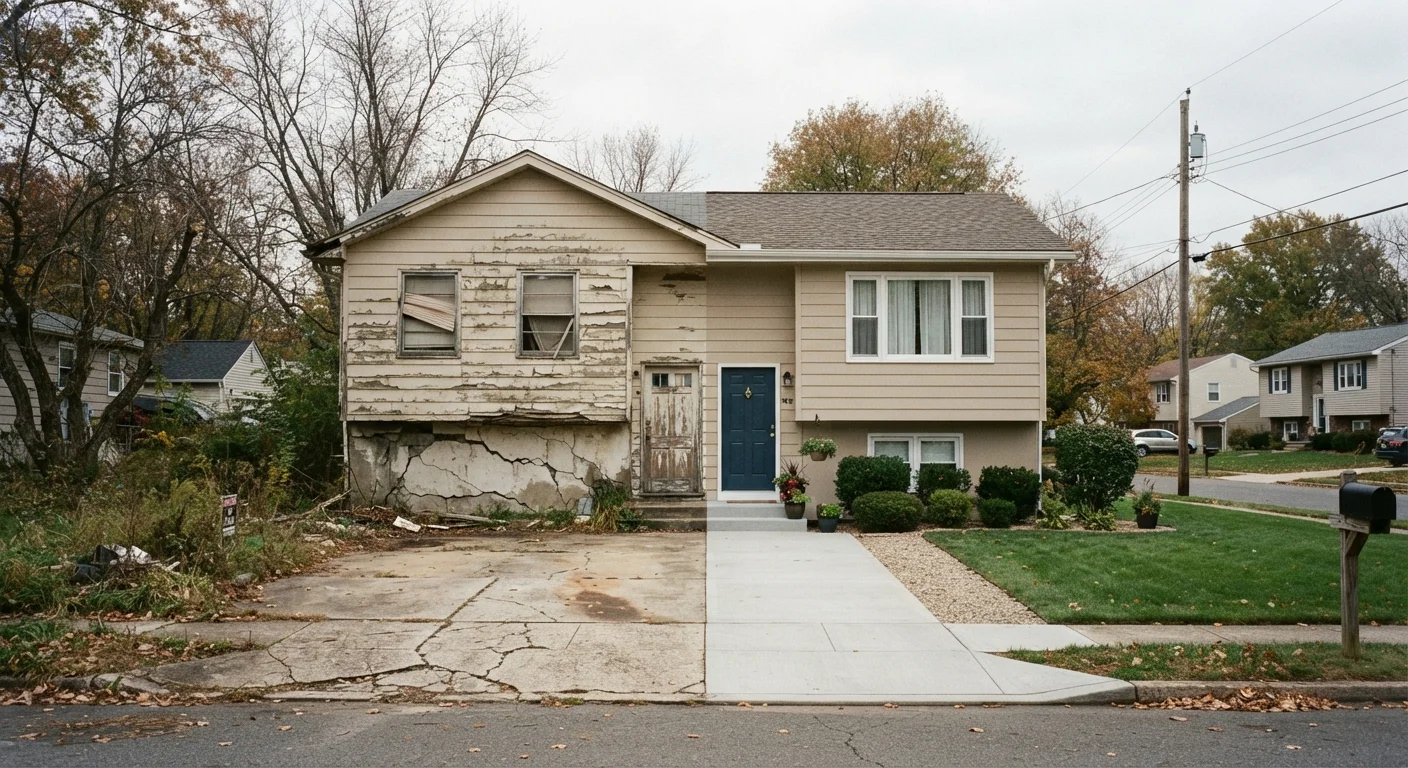
Why Equity Can Quietly Disappear
Home equity - the portion of your home's value you actually own, free of mortgage debt - feels stable when property values are rising. But equity isn't a locked vault. It responds to market conditions, borrowing decisions, and the physical state of the property itself. Some of the choices that erode it most efficiently don't look like financial mistakes at all; they look like routine life decisions.
Understanding the patterns that quietly chip away at equity is the first step toward protecting what you've built. For a broader look at how equity can shrink through factors beyond your control as well, see why home equity can shrink.
Deferring routine maintenance until problems become emergencies.
Why it happens: Maintenance costs feel optional when money is tight, and the consequences are invisible until they aren't. Homeowners often underestimate how quickly small defects escalate into structural or systemic failures.
Making only interest payments on a home equity line of credit (HELOC).
Why it happens: During a HELOC's draw period, minimum payments are often interest-only, which feels manageable. Many homeowners don't realize they're not reducing the principal balance - or that a repayment period with higher payments follows.
Over-improving the home beyond what the local market will support.
Why it happens: Renovation projects can feel like guaranteed investments, especially when home values are rising. Homeowners often anchor to national statistics about renovation returns without checking local comparable sales.
Carrying inadequate homeowners insurance relative to rebuild cost.
Why it happens: Premiums are a visible, recurring expense, so some homeowners opt for lower coverage limits to reduce costs. Others simply don't update their coverage as construction costs rise, leaving a growing gap between policy limits and actual rebuild costs.
Repeatedly refinancing and resetting the amortization clock.
Why it happens: Cash-out refinancing can feel like accessing 'free' money, particularly when home values have appreciated. The equity drain and the return to early amortization - where most of each payment is interest - are less emotionally salient than the lump sum received.
Building Habits That Protect Your Position
None of the mistakes listed above require a dramatic financial crisis to do serious damage. A leaky roof deferred for two seasons, a HELOC draw treated as spending money, a renovation that overshoots the neighborhood - each decision seems manageable in isolation. Cumulatively, they can subtract tens of thousands from your net worth without a single missed mortgage payment.
Equity Borrowing Carries Real Risk
Your home is collateral for any equity-backed loan or line of credit. If you cannot repay, you risk foreclosure regardless of how much equity you held at the time of borrowing. Treat equity draws as secured debt - not as a savings account withdrawal. Always consult a licensed financial professional before making significant borrowing decisions tied to your home.
The antidote is routine: schedule annual property inspections, review your equity position whenever you consider borrowing, and stress-test renovation budgets against comparable sale prices in your area before committing. For a structured look at principles that financially sound homeowners rely on, see responsible equity use principles. And if you're weighing a specific equity draw, work through a pre-decision checklist before signing anything.
This article is for general informational and educational purposes only. It is not personalized financial, legal, or investment advice. Consult a qualified financial professional before making decisions about your home equity or borrowing.