How Each Method Works
Understanding the mechanics of each approach makes it easier to decide which one fits your household - or whether a blend of both makes more sense.
Envelope Budgeting
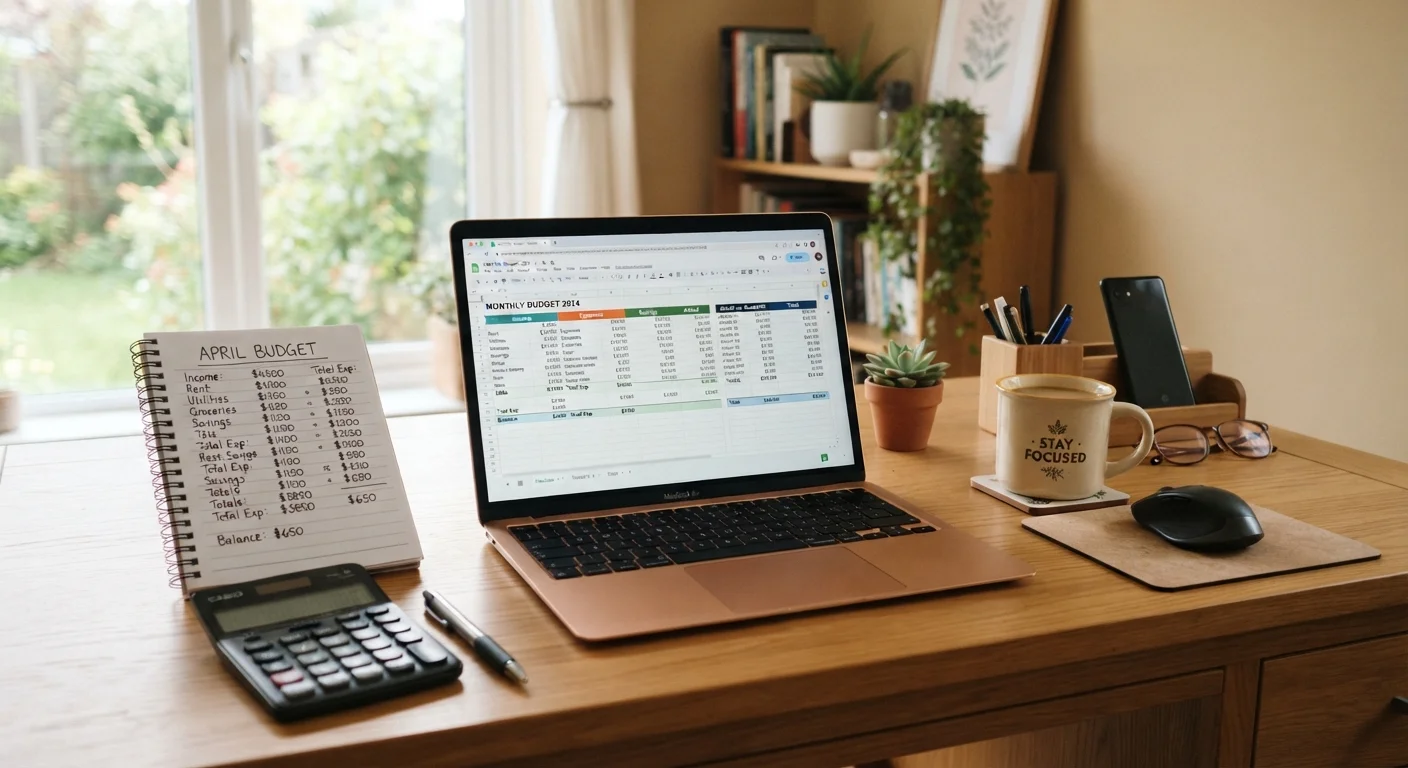
The envelope method divides your take-home income into spending categories - groceries, utilities, gas, dining out, household supplies - and allocates a fixed cash amount to each. Traditionally, you'd fill physical envelopes with cash; when an envelope is empty, spending in that category stops for the month. Digital versions replicate this using budgeting apps or spreadsheet tabs. The discipline is built into the structure: you can see exactly what's left in any category at any moment.
Zero-Based Budgeting
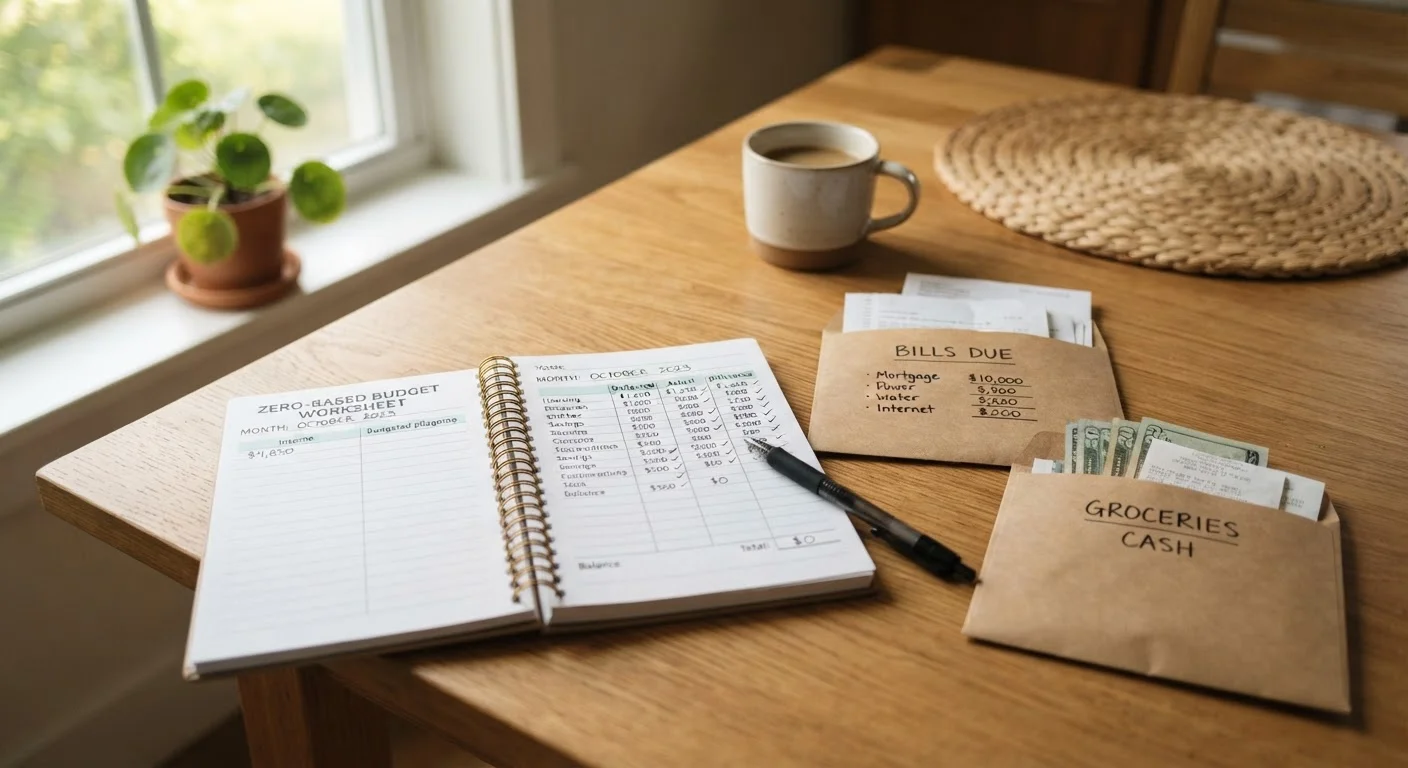
Zero-based budgeting (ZBB) starts with your total monthly income and subtracts every planned expense - mortgage, utilities, groceries, insurance, savings contributions, debt payments - until you reach zero. The goal isn't to spend everything; it's to give every dollar a deliberate destination before the month begins, including dollars earmarked for savings or an emergency fund. If income minus assigned expenses doesn't equal zero, you adjust categories until it does. See how to build your first home budget for a practical walkthrough of this process.
How Homeowner Costs Fit Into Each System
Homeownership introduces cost categories that renters rarely face: a fixed mortgage payment, property taxes (often escrowed), homeowners insurance, HOA fees, and unpredictable repair bills. How each budgeting method handles these categories matters.
| Criterion | Envelope Budgeting | Zero-Based Budgeting | ||
|---|---|---|---|---|
| Monthly setup time | Envelope Budgeting | Low - once categories are set, minimal upkeep | Zero-Based Budgeting | Higher - rebuilt from scratch each month |
| Handles irregular home expenses | Envelope Budgeting | Requires a dedicated envelope | Zero-Based Budgeting | Built-in via monthly category assignment |
| Fixed mortgage payment | Envelope Budgeting | Easy to accommodate | Zero-Based Budgeting | Easy to accommodate |
| Curbs discretionary overspending | Envelope Budgeting | Very effective - hard stops | Zero-Based Budgeting | Effective if reviewed regularly |
| Suits variable income | Envelope Budgeting | Can be difficult to adjust mid-month | Zero-Based Budgeting | More adaptable with conservative estimates |
| Long-term savings planning | Envelope Budgeting | Possible but requires intentional design | Zero-Based Budgeting | Naturally encourages forward planning |
| Ease for beginners | Envelope Budgeting | Simple concept, low learning curve | Zero-Based Budgeting | More involved, steeper initial setup |
Mortgage payments are fixed and slot naturally into either system. The real test is irregular costs - a furnace repair, a roof inspection, or a sudden appliance replacement. Zero-based budgeting handles these more gracefully because you can pre-assign dollars each month to a home maintenance reserve category, building a buffer before problems arise. With envelope budgeting, you'd need a dedicated "home repair" envelope and the discipline to leave it untouched during calm months.
For a deeper look at where homeowner money actually flows, the anatomy of a household budget breaks down typical spending patterns by category.
Strengths and Limitations of Each Approach
Envelope Budgeting: What It Does Well
Envelope budgeting makes spending limits concrete and immediate. There's no arithmetic required mid-month - you look in the envelope and see the answer. This tactile feedback loop is particularly effective for households working to curb discretionary spending on dining, entertainment, or clothing. The simplicity also reduces the time commitment: once envelopes are funded, day-to-day management is minimal.
The limitation is rigidity. When an unexpected home expense hits - and it will - envelope budgeting doesn't naturally accommodate reallocation without a deliberate mid-month reset. It also doesn't inherently encourage long-term planning; saving for a roof replacement five years out requires intentional envelope design that many users don't build in.
Zero-Based Budgeting: What It Does Well
ZBB forces you to confront the full picture of your finances every single month. Nothing hides in a vague "miscellaneous" category. This intentionality is powerful for homeowners juggling a mortgage, building an emergency fund, and trying to reduce utility costs simultaneously. The homeowner's financial playbook covers how ZBB fits into broader financial planning.
The drawback: ZBB takes time. Rebuilding a budget from scratch each month - accounting for income variation, seasonal utility swings, and shifting household needs - can feel burdensome. Households with irregular income (self-employment, freelance work) face an added layer of complexity in projecting the starting number.
Seed a Home Repair Reserve First
Before allocating discretionary spending, assign at least one budget line - in either system - to a home maintenance reserve. Many financial educators suggest targeting roughly 1% of your home's value annually as a repair buffer, though your actual needs will vary by home age and condition. Building this reserve consistently, even in small monthly increments, reduces the disruption when an unexpected repair arrives.
Choosing the Right Fit - or Combining Both
The honest answer is that neither method is perfect in isolation for homeowners. Consider your household's primary pain point:
- Overspending on everyday categories? Envelope budgeting's hard stops are more effective than willpower alone.
- Struggling to plan ahead for irregular expenses? Zero-based budgeting's deliberate allocation structure serves you better.
- Income varies month to month? ZBB with a conservative baseline income estimate reduces the risk of over-allocating.
A hybrid approach works well in practice: use zero-based planning to build the monthly blueprint - assigning dollars to mortgage, utilities, savings, and home maintenance reserves - then apply envelope-style limits within your discretionary categories. This gives you strategic control plus the behavioral guardrails that envelopes provide.
Whichever method you choose, a monthly review keeps it working. The end-of-month review process walks through how to catch overspending early and reallocate surplus funds before they evaporate. And if you're still deciding how to track your budget - pen and paper, spreadsheet, or app - weighing your tracking options covers the trade-offs for each format.
This article provides general financial information for educational purposes and does not constitute personalized financial advice. Consult a qualified financial professional before making decisions about your household finances.