
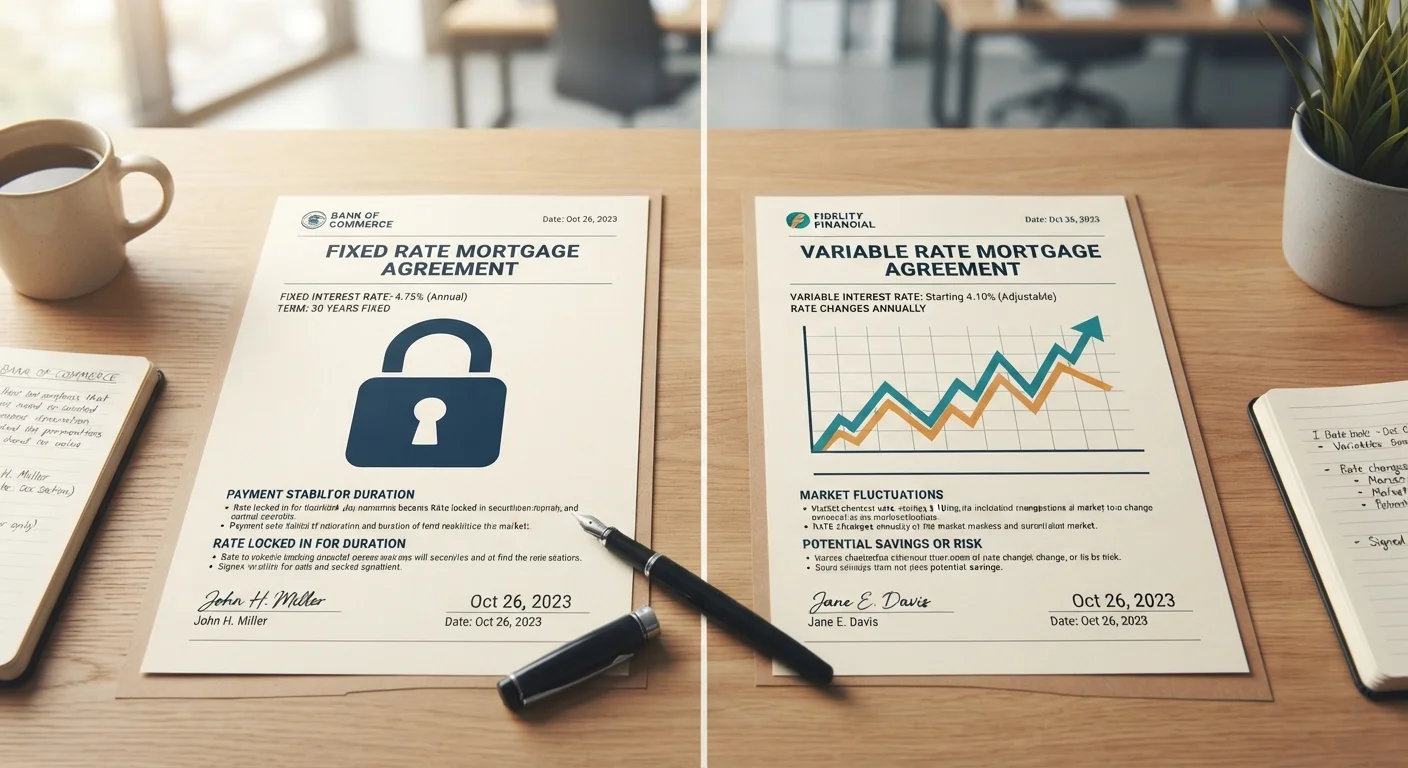
How Each Rate Structure Works
When you borrow against your home's equity, the interest rate structure you choose shapes everything from your monthly payment to your total repayment cost. There are two primary structures: fixed-rate home equity loans and variable-rate home equity lines of credit (HELOCs).
A fixed-rate home equity loan delivers a lump sum at closing. The interest rate is set at origination and stays the same for the entire repayment term - commonly 5 to 30 years. Your monthly principal-and-interest payment never changes, regardless of what happens in the broader interest rate market.
A variable-rate HELOC works differently. Rather than receiving a lump sum, you get a revolving credit line you can draw from as needed during a draw period - often 10 years - followed by a repayment period. The interest rate is tied to a benchmark index (such as the prime rate) plus a margin set by the lender. As the benchmark moves, so does your rate and, by extension, your payment.
For a broader look at how these two products differ beyond just rate structure, see Home Equity Loan vs. HELOC: Choosing the Right Borrowing Structure.
Comparing the Two Structures Side by Side
The table below summarizes how fixed-rate and variable-rate structures differ across several key dimensions.
| Fixed-Rate Home Equity Loan | Variable-Rate HELOC | |
|---|---|---|
| Rate structure | Set at closing, never changes | Tied to benchmark index, fluctuates |
| Fund disbursement | Lump sum at closing | Revolving credit line, draw as needed |
| Payment predictability | Fully predictable | Varies with rate changes |
| Initial rate level | Typically higher than HELOC intro rate | Often lower at outset |
| Best use case | One-time, defined expense | Ongoing or flexible funding needs |
| Rate risk | None - borrower is protected | Rates can rise significantly over time |
| Repayment structure | Principal + interest from day one | Interest-only during draw period common |
One number that affects both structures is your loan-to-value ratio (LTV). Lenders use LTV to determine how much equity you can actually access, regardless of whether you choose a fixed or variable product. How Loan-to-Value Ratio Shapes What You Can Borrow before applying.
The Real Cost Difference: Predictability vs. Flexibility
Ask About Rate Caps Before Signing
When evaluating a variable-rate HELOC, always ask the lender for both the periodic cap (how much the rate can change per adjustment) and the lifetime cap (the maximum it can ever reach above your starting rate). These figures define your worst-case payment scenario and are essential for accurate budgeting.
Fixed-rate loans eliminate rate risk, but that certainty comes at a price. Lenders typically charge a somewhat higher starting rate for fixed products compared to initial HELOC rates, because they absorb the risk of future rate increases on your behalf.
Variable-rate HELOCs often look attractive at the outset, especially when benchmark rates are low. However, rate caps - which limit how much a HELOC rate can increase per adjustment period or over the life of the loan - vary by lender and product. It's important to understand both the periodic cap and the lifetime cap on any HELOC before signing.
10-25 yrs
Typical HELOC draw + repayment span
HELOC structures commonly include a draw period of around 10 years followed by a repayment period of 10-15 years, extending rate exposure significantly.
2%
Common per-period rate cap on HELOCs
Many variable-rate HELOCs include a periodic adjustment cap of around 2 percentage points per rate change, though terms vary widely by lender.
The practical implication: if rates rise sharply after you open a HELOC, your borrowing costs increase. If rates fall, you benefit without refinancing. A fixed-rate loan insulates you from both scenarios - for better or worse.
It's also worth comparing home equity borrowing to other ways of accessing your equity. Cash-Out Refinancing vs. Home Equity Borrowing is a separate option with its own rate structure and cost implications.
Factors to Weigh Before Deciding
No single rate structure suits every situation. Consider these factors:
- How you'll use the money: A defined, one-time expense (kitchen renovation, debt consolidation) is a natural fit for a fixed-rate lump sum. Ongoing or uncertain funding needs - like a multi-phase home improvement project - may benefit from HELOC flexibility.
- Your repayment timeline: Short repayment windows reduce the time a variable rate can move against you. Longer timelines increase exposure to rate shifts.
- Your income stability: If your household budget has limited room to absorb payment increases, a fixed rate provides important protection.
- Current rate environment: This matters, but predicting future rate movements is genuinely difficult. Be cautious about making a major borrowing decision based on rate forecasts alone.
Before borrowing against your home in any form, it's worth understanding the full picture of risks involved. Weighing the Trade-Offs of Borrowing Against Your Home covers what's at stake when your home serves as collateral.
This article is for general informational purposes only and does not constitute personalized financial, tax, or legal advice. Consult a licensed financial adviser or mortgage professional before making decisions about home equity borrowing.