
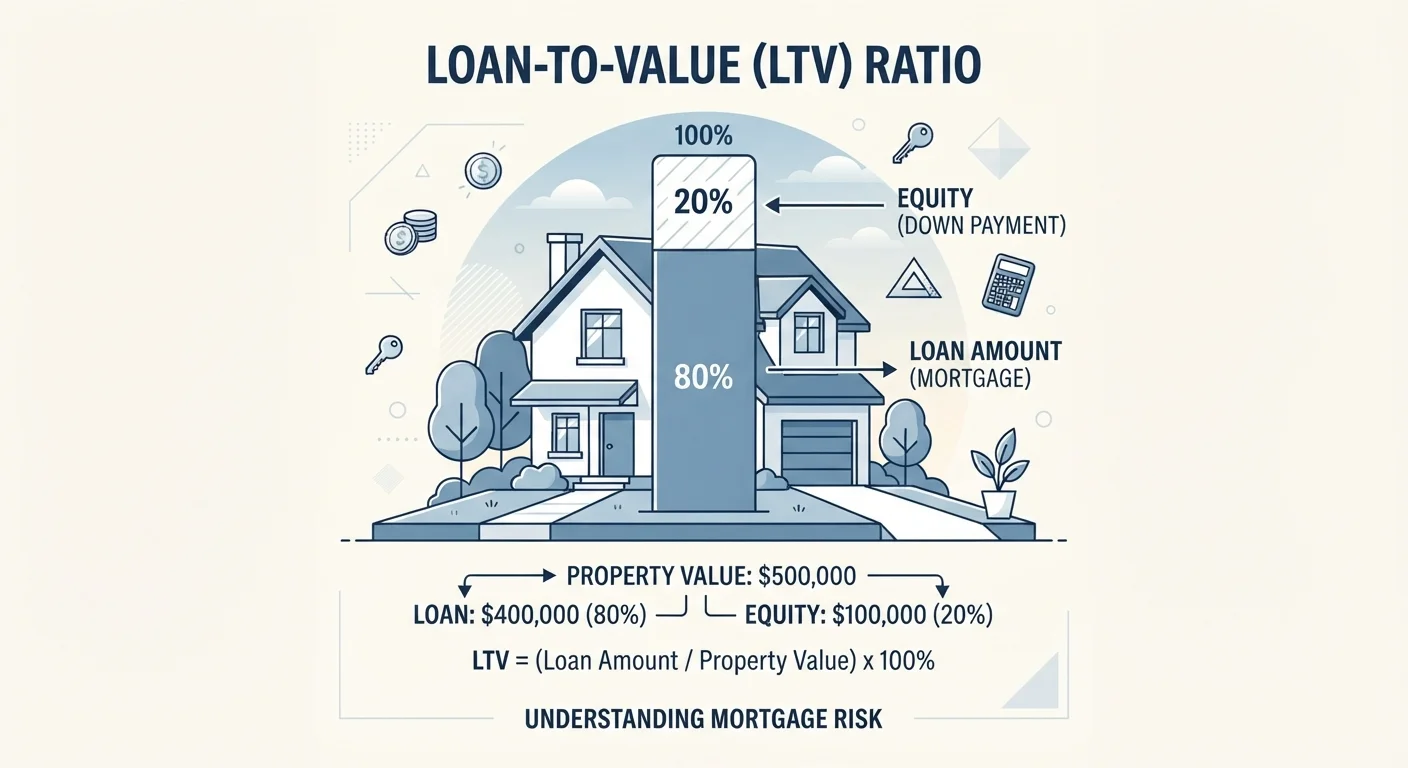
The Basic Calculation Behind LTV
The math is straightforward. Divide your outstanding mortgage balance by your home's current appraised value, then multiply by 100 to get a percentage.
Example: If you owe $150,000 on a home appraised at $250,000, your LTV is 60%. That means you've built up 40% equity - a strong position from a lender's perspective.
The key word is appraised. Lenders commission a formal appraisal to establish value; they won't use your gut estimate or an online home-value tool. The appraiser's number is what drives your borrowing limit. For more on what the numbers mean once you run this calculation, see our guide on calculating your home equity.
80%
Typical CLTV cap for home equity products
Many U.S. lenders use a combined loan-to-value ceiling of 80%-85% when evaluating home equity loan or HELOC applications.
60%-70%
LTV range often associated with better rate offers
Borrowers with lower LTVs generally face less pricing risk; lenders view a larger equity cushion as meaningfully lower default exposure.
Why Lenders Set LTV Limits
Lenders care about LTV because it measures their exposure. If a borrower defaults and the home goes into foreclosure, the lender needs to recover the outstanding balance through a sale. A lower LTV gives them a larger cushion - the home could sell for less than expected and the lender still recoups the loan.
For home equity loans and lines of credit, most lenders apply a combined loan-to-value (CLTV) cap. This adds your primary mortgage balance plus the new equity loan together, then divides by the appraised value. A common ceiling is 80%-85% CLTV. So if your home is worth $300,000 and you owe $200,000 on your mortgage (roughly 67% LTV), a lender capping at 80% CLTV might allow an equity loan of up to $40,000 - bringing the combined balance to $240,000.
Understanding how home equity works is the foundation for making sense of these limits.
“Loan-to-value ratio is one of the most fundamental risk metrics in mortgage lending. It tells us, in a single number, how much of the property's value is actually at stake for the borrower versus the lender.”
— Consumer Financial Protection Bureau, U.S. federal agency overseeing consumer financial products and mortgage lending practices
How LTV Affects Your Loan Terms
LTV doesn't just determine whether you qualify - it also influences the terms you're offered. Borrowers with lower LTVs generally receive more favorable interest rates because lenders perceive less risk. A borrower at 65% CLTV is likely to see better pricing than one at 85% CLTV, all else being equal.
This relationship between LTV and rate matters over the life of a loan. Even a small rate difference can add up significantly in total interest paid, especially on larger equity draws. That's one reason paying down your mortgage - or simply holding the home while its value appreciates - can expand both your access to credit and the quality of terms available.
For a comparison of how rate structures interact with equity borrowing, see fixed-rate equity loans vs. variable-rate lines of credit.
What Can Change Your LTV Over Time
Your LTV isn't fixed. Several factors can push it up or down:
- Mortgage payments: Every payment that reduces your principal lowers your LTV, slowly but steadily.
- Home value changes: Rising property values reduce your LTV even if you haven't paid down much debt. Falling values do the opposite - and can leave homeowners with less equity than they expect.
- Cash-out refinancing or new liens: Taking on additional debt secured by the home increases your CLTV, potentially pushing you past a lender's limit.
Because market conditions affect home values, LTV is a moving target. This is also why lenders order a fresh appraisal each time you apply for equity financing - the number from three years ago may no longer reflect reality.
If you're weighing whether to tap your equity, it's worth reading about the trade-offs of borrowing against your home before committing. And for a broader look at how homeowners put equity to work, see common uses of home equity in practice.
This article is for general informational purposes only and does not constitute personalized financial or lending advice. Consult a licensed financial professional before making decisions about your home equity or any loan product.