Why Low-Cost Engagement Works Better Than You'd Think
Every parent who has watched a tablet battery die somewhere in rural Kansas knows the panic. The good news: generations of kids survived long drives before screens existed, and the strategies they used still hold up remarkably well today. Research on child development consistently supports the idea that open-ended, imagination-based play builds attention span and creative thinking - both of which make car rides more manageable for everyone.
The key insight is that kids don't need expensive entertainment; they need variety and structure. Swapping activities every 20 to 30 minutes prevents the mental fatigue that triggers whining and squirming. The list below draws on time-tested techniques and a few simple prep strategies that cost next to nothing.
Time Your Activity Rotations
Set a phone timer for 25-minute intervals and introduce a new activity when it goes off. This keeps the pace moving before restlessness sets in, and kids start to look forward to 'what's next' rather than fixating on how long remains. The timer does the managing so you don't have to.
10 Engaging Activities That Won't Break the Budget
The Alphabet Game
Players scan highway signs, billboards, and storefronts for words beginning with each letter of the alphabet in order. The first person to spot a word calls it out and claims the letter. It's purely free, works for readers of most ages, and can be played competitively or cooperatively depending on your family's vibe that day.
Zero cost, zero prep - just eyes on the road and a little friendly competition.
Travel Bingo
Print a few travel bingo cards before you leave - templates are easy to find online and free to print. Fill squares with common road trip sightings: water tower, semi-truck, cow, rest stop, license plate from a specific state. Kids mark off squares as they spot items. You can laminate cards and use dry-erase markers to reuse them on every trip.
Laminated bingo cards are a one-time small cost that pays off on every future road trip.
Collaborative Storytelling
One person starts a story with a single sentence, and each passenger adds the next sentence in turn. The plot veers into absurdity quickly, which is exactly the point. This works for ages four and up, requires nothing except imagination, and often produces stories the family talks about for years. Set a loose theme - space adventure, talking animals, mystery - if kids need a launching pad.
Collaborative storytelling builds language skills while keeping kids genuinely laughing.
License Plate Challenge
Keep a running tally of how many different state license plates you spot during the trip. A small notepad and pencil is all you need. Older kids can manage the list themselves, which gives them a sense of responsibility. The challenge naturally stretches across the entire drive and can be revisited after pit stops to see if the count has climbed.
Spotting all 50 states on a single long trip is a genuine, memorable family challenge.
20 Questions (Travel Edition)
The classic guessing game gets a road trip twist when you limit answers to things visible from the car window or things related to your destination. One player thinks of an object; others ask yes-or-no questions to narrow it down in 20 tries. It builds deductive reasoning, keeps everyone mentally active, and requires absolutely nothing to set up.
Limiting the game to travel themes adds a layer of challenge that older kids especially enjoy.
Audiobooks from the Library
Many public libraries offer free digital borrowing through apps that work offline after download. Before the trip, let each child pick one audiobook. Chapter-by-chapter listening gives everyone a shared experience to discuss at rest stops. Middle-grade adventure and humor titles tend to hold the widest age range of listeners. This approach costs nothing beyond a library card.
A gripping audiobook can carry a family quietly through two or three hours of driving.
Cloud and Scenery Spotting
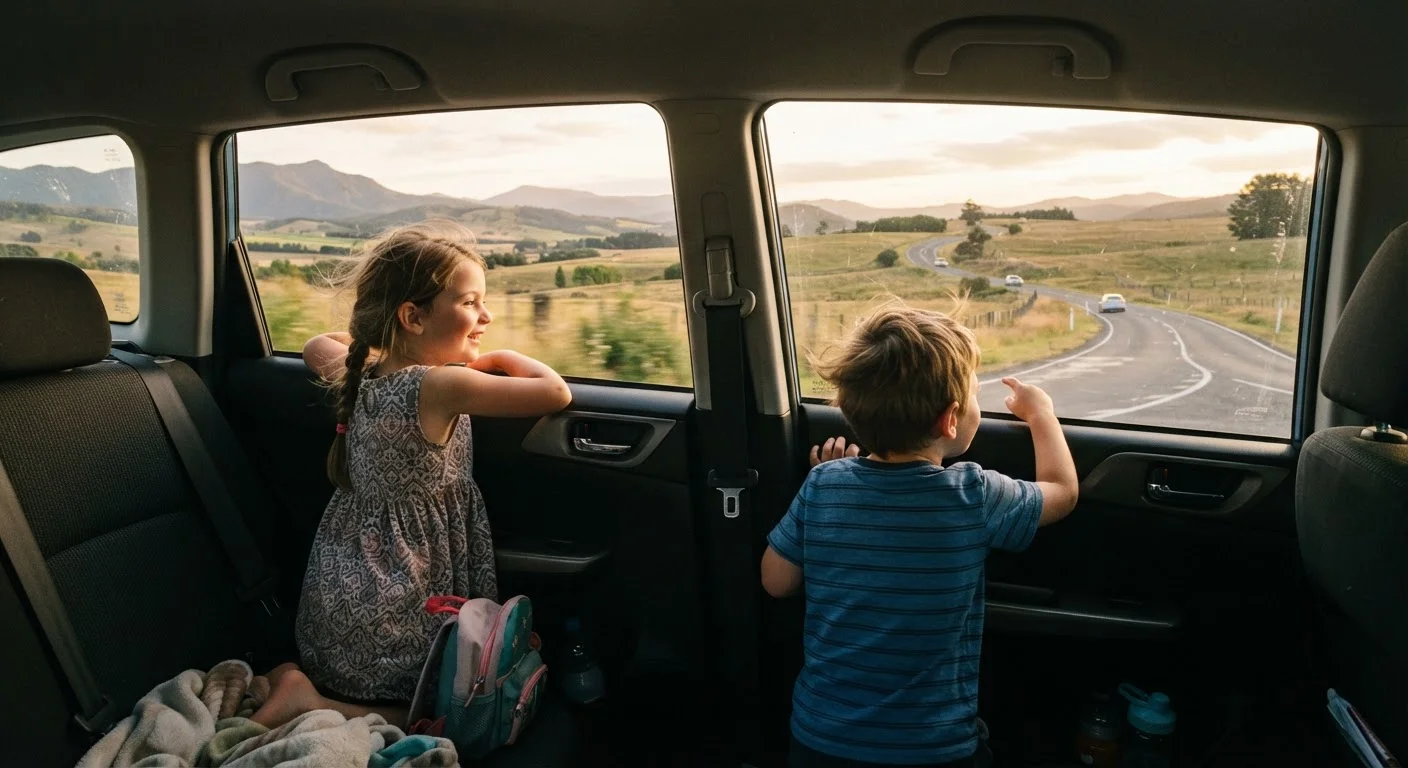
Challenge kids to identify cloud formations (cumulus, stratus, cirrus are easy to learn) or spot specific landscape features you've described before departure - a grain elevator, a river bridge, a mountain silhouette. This works especially well in the American West and Midwest where the big sky gives kids plenty to observe. It doubles as a quiet geography lesson.
Turning the landscape into a scavenger hunt keeps curious kids naturally engaged for miles.
Travel Journals
Give each child a small blank notebook and encourage them to sketch, write, or paste in receipts and maps as a trip journal. Even young children who can't write yet can draw pictures of what they've seen. Journals become cherished keepsakes and keep hands and minds busy without any screen time. A pack of basic colored pencils rounds out this activity inexpensively.
A travel journal transforms a car ride into an ongoing creative project kids revisit for years.
Math and Word Puzzle Books
Dollar stores and discount bins commonly stock activity books filled with crosswords, word searches, dot-to-dots, and simple math puzzles appropriate for different ages. Grab a few before the trip. These provide structured solo activity time that gives other passengers a break from interactive games - useful when energy levels vary across the backseat.
Quiet solo puzzle time gives siblings a natural, low-friction break from each other.
Route Involvement and Map Reading
Print a simple paper map of your route and assign an older child the role of navigator. Let them track progress, identify upcoming towns, and call out when a rest stop is approaching. Kids who feel involved in the journey are measurably less likely to ask the dreaded question every 20 minutes. This builds geography awareness and a sense of purpose at zero cost.
Giving kids a real role in navigation transforms them from passengers into active participants.
Age Matters - Adjust Accordingly
Activities that delight a seven-year-old may bore a twelve-year-old or frustrate a four-year-old. Where possible, choose games that scale - collaborative storytelling and license plate challenges work across a wide age range, while puzzle books can be selected at age-appropriate levels. Mixing solo and group activities also prevents older kids from feeling dragged into 'baby games.'
Building Your Own Road Trip Activity Kit
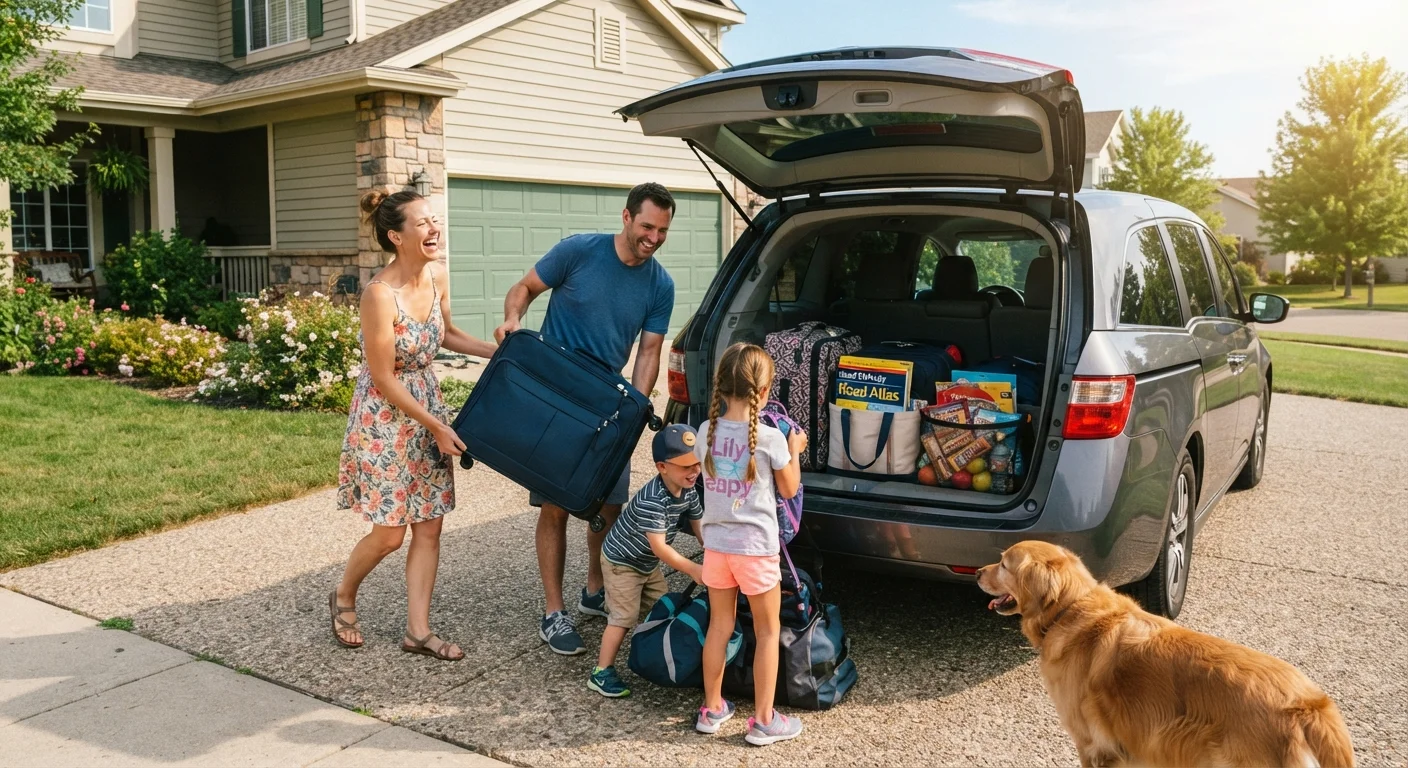
Before you pull out of the driveway, spend 15 minutes assembling a small activity kit per child. A gallon zip-lock bag works perfectly: toss in a small notepad, a few colored pencils, a printed travel bingo card, a deck of cards, and a couple of their favorite small toys. The physical act of having their own kit creates a sense of excitement and ownership that can carry you through the first two hours without a single complaint.
Rotate access to items rather than dumping everything at once. Hand over one activity, let it run its course, then introduce the next. This pacing strategy is free, effective, and turns the backseat into something that feels more like an adventure than a waiting room. Involve kids in choosing a few items the night before departure - the buy-in alone is worth the extra five minutes.