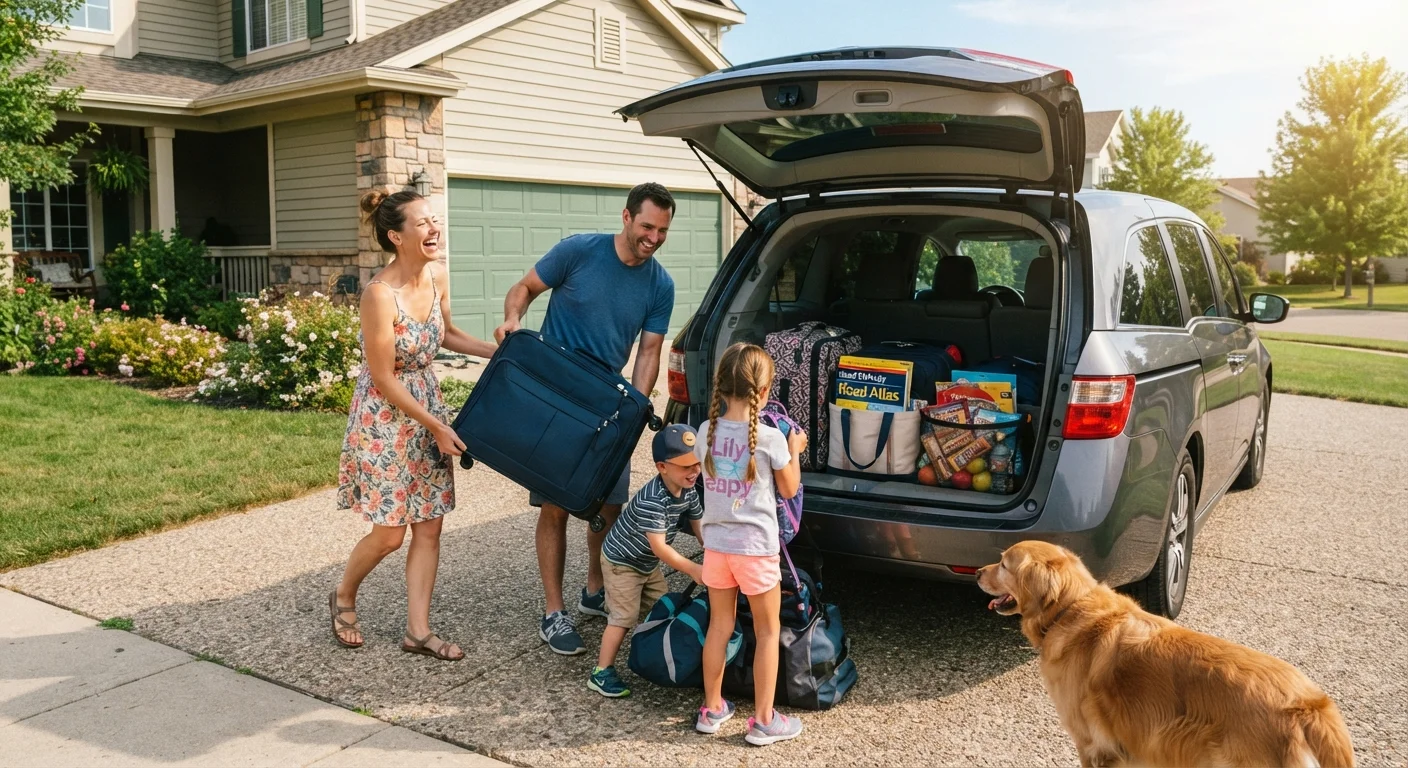
A practical pre-departure checklist covering fuel estimates, food prep, emergency funds, and documentation so nothing catches you off guard.
Key Takeaways
Estimating fuel costs before departure prevents budget surprises at the pump.
A dedicated emergency fund - separate from your trip budget - is essential for road trips.
Prepping food and snacks at home can meaningfully reduce daily spending on the road.
Vehicle maintenance checks before leaving protect both safety and your wallet.
Keeping all travel documents organized in one accessible place saves headaches mid-trip.
Why a Budget Checklist Beats Winging It
Road trips are one of the most flexible, affordable ways for American families to travel - but "affordable" only holds true when you plan for it. Without a clear picture of what you'll spend, it's easy to arrive home with a credit card bill that doesn't match the memories you made.
This checklist walks you through every major cost category before the engine turns over: fuel, food, lodging, entertainment, and the unexpected. Work through it the week before you leave, and you'll pull out of the driveway with confidence rather than crossed fingers.
And once your budget is locked in, don't forget the other half of pre-trip prep. Our family packing checklist covers clothing, documents, and entertainment essentials so nothing gets left behind.
Fuel & Driving Costs
Calculate your estimated fuel cost by dividing total miles by your vehicle's average MPG, then multiplying by a conservative per-gallon price for your route.Must
Check your vehicle's tire pressure and inflate to the recommended PSI - properly inflated tires improve fuel efficiency.Must
Research toll roads on your planned route and budget for toll costs or plan alternate toll-free roads if costs are significant.Should
Note parking fees at any destination cities or national parks along your route - these add up quickly in urban areas.Should
Vehicle Safety & Maintenance
Confirm your oil level and oil change status - if you're within 500 miles of your next scheduled change, get it done before you leave.Must
Check that your spare tire is present, properly inflated, and that you have a jack and lug wrench accessible in the vehicle.Must
Verify that wiper blades, brake lights, headlights, and turn signals are all functioning correctly.Must
Confirm your roadside assistance membership or coverage is active and that the contact number is saved in your phone.Should
Food & Snack Planning
Set a daily food budget per person and write it down - this single step prevents the most common road trip overspending.Must
Pack a cooler with prepared meals, fruit, cheese, and drinks for at least the first two days of travel.Should
Pre-portion snacks into individual bags so kids can self-serve without creating waste or constant stops.Should
Identify one or two grocery stores along your route where you can restock the cooler mid-trip rather than relying solely on gas stations.Nice to have
Lodging & Entertainment Budget
Confirm and print reservations for every overnight stay, including confirmation numbers and cancellation policies.Must
Set a clear daily entertainment budget covering admission fees, activities, and souvenirs before you leave home.Must
Look up free or low-cost options - state parks, scenic overlooks, public beaches - as built-in alternatives on each day's itinerary.Should
Give each child a small, fixed cash allowance for souvenirs so spending decisions stay with them and within limits.Nice to have
Documents & Insurance
Gather driver's license, vehicle registration, and proof of auto insurance into a single envelope or folder kept in the glove compartment.Must
Carry basic health insurance cards and any prescription information for every family member.Must
Save digital copies of all documents to a secure cloud folder accessible from your phone in case physical copies are lost.Should
Emergency Fund & Contingency
Set aside a dedicated emergency reserve - roughly 10-15% of your total trip budget - and keep it in a separate account or envelope.Must
Confirm that at least one credit card with available credit is accessible for genuine emergencies like mechanical repairs.Must
Write down the contact number for your auto insurer's claims line so it's ready if you need it on the road.Should
Tools You'll Need to Work Through This Checklist
You don't need anything fancy - most of these tools are free and take just minutes to set up. Having them ready before you sit down with this checklist will make the process much faster.
Required
Fuel cost calculator (GasBuddy or similar free tool)
Estimate total fuel spend based on your vehicle's MPG and your planned route distance.
Required
Spreadsheet or notes app
Track your per-category budget and log actual spending each day of the trip.
Optional
Printed or offline maps
Backup navigation in areas with limited cell coverage - common in national parks and rural stretches.
Required
Portable cooler
Store prepped meals and drinks to reduce restaurant and gas station food spending.
Optional
Cloud storage app (Google Drive, iCloud, etc.)
Store digital copies of insurance cards, registration, and reservations for easy access anywhere.
Don't Rely on Gas Station Prices for Budgeting
Fuel prices vary considerably by state, region, and even neighborhood - sometimes by 30-50 cents per gallon within the same metro area. Use a free route-based fuel estimator tool and build in a 10% buffer above your estimate to account for price swings and any unplanned detours. Locking in an exact figure without that buffer is a common mistake that strains budgets mid-trip.
A Note on Emergency Funds and the Unexpected
Even the most carefully planned road trip can encounter a flat tire, an urgent care visit, or a night in an unplanned motel because the weather turned. These aren't worst-case scenarios - they're normal road trip math.
Financial planners generally suggest setting aside a contingency reserve of roughly 10-15% of your total trip budget specifically for unplanned expenses. Keep this amount separate from your day-to-day spending envelope so you're not tempted to dip into it for an impulse stop at a roadside attraction.
Never Merge Your Emergency Fund With Trip Spending
Keeping your contingency money in the same account or envelope as your daily spending budget almost guarantees it will get used on non-emergencies. A blown tire, an urgent care co-pay, or an unplanned overnight stop can easily cost $300-$500 or more. Treat your emergency reserve as truly off-limits unless something unexpected forces your hand - your future self will be grateful.
The goal of this checklist isn't to squeeze all the fun out of spontaneity - it's to make sure you have enough financial cushion that the fun stays fun, even when things don't go according to plan.
Travel & Getaways Editorial Team is the collective byline for our editorial team and contributor network. Articles published under this byline or an editorial pen name are researched, written, and reviewed according to our editorial standards for clarity, consistency, and independence before publication.
The content provided on our blog site traverses numerous categories, offering readers valuable and practical information. Readers can use the editorial team’s research and data to gain more insights into their topics of interest. However, they are requested not to treat the articles as conclusive. The website team cannot be held responsible for differences in data or inaccuracies found across other platforms. Please also note that the site might also miss out on various schemes and offers available that the readers may find more beneficial than the ones we cover.