Why the First Year Sets the Pattern
The routines you build during your first year of car ownership tend to stick. Driving style, maintenance schedules, and habits like idling while parked all become second nature quickly - for better or worse. The good news is that fuel-saving behaviors are among the easiest to establish early, and they compound over time.
New drivers often focus exclusively on the sticker fuel economy rating - the number the manufacturer advertises - without realizing that real-world economy depends heavily on how the car is operated. Two drivers in identical vehicles can see dramatically different fuel costs simply based on habits. Getting the fundamentals right in year one puts you on a trajectory of lower running costs for the life of the vehicle.
Rolling resistance
The friction that occurs as a tire rolls along the road surface. Higher rolling resistance means the engine must work harder - and burn more fuel - to maintain speed.
Aerodynamic drag
The air resistance a moving vehicle pushes against. Drag increases sharply at higher speeds, which is why highway fuel economy tends to drop significantly above around 60-65 mph.
Engine load
How hard the engine is working at any given moment. Rapid acceleration, heavy cargo, steep grades, and accessories like air conditioning all increase engine load and fuel consumption.
MPG (miles per gallon)
The standard U.S. measure of fuel efficiency - how many miles a vehicle travels on one gallon of fuel. Higher MPG means less fuel burned per mile driven.
Cold start
The initial period when an engine first starts up and has not yet reached its normal operating temperature. Engines run less efficiently during cold starts, burning more fuel per mile in the first few minutes of a trip.
How You Drive Matters More Than the Car
The most impactful fuel-saving changes cost nothing. They involve adjusting your inputs - throttle, brake, and speed - to reduce the energy the engine must produce.
- Accelerate gradually. Hard acceleration from a stop burns disproportionately more fuel. Ease onto the throttle and reach cruising speed steadily.
- Anticipate stops. Lifting off the accelerator early and coasting toward a red light - rather than braking hard at the last moment - recovers energy the engine has already burned. It also reduces brake wear.
- Keep highway speeds in check. Aerodynamic drag increases with the square of speed. The difference in fuel consumption between 65 mph and 80 mph is substantial on a long trip.
- Minimize unnecessary idling. A parked engine burning fuel is pure waste. Modern fuel-injected engines do not need extended warm-up periods in most climates.
Use Your Cruise Control on the Highway
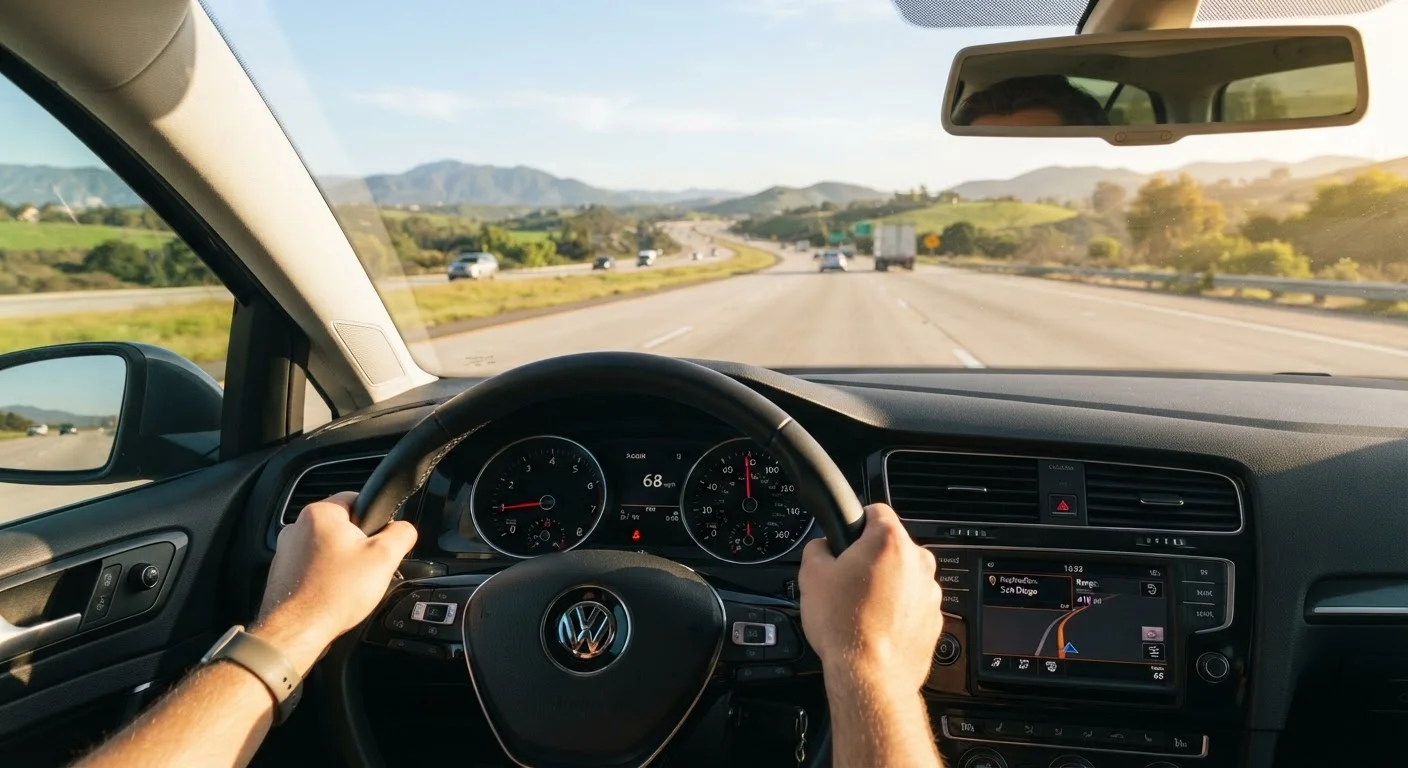
Maintaining a steady speed is more efficient than the subtle speed fluctuations most drivers make unconsciously. On open highways with gentle grades, cruise control typically results in better fuel economy than manual throttle management. Avoid it in hilly terrain, where it may hold speed by downshifting - which can increase fuel use.
Maintenance Habits That Protect Fuel Economy
A well-maintained engine burns fuel more efficiently. Several routine tasks directly affect how cleanly and completely combustion happens.
- Tire pressure
- Underinflated tires increase rolling resistance - the engine works harder to move the car. Check pressure monthly using the figure on your door jamb sticker, not the tire sidewall maximum.
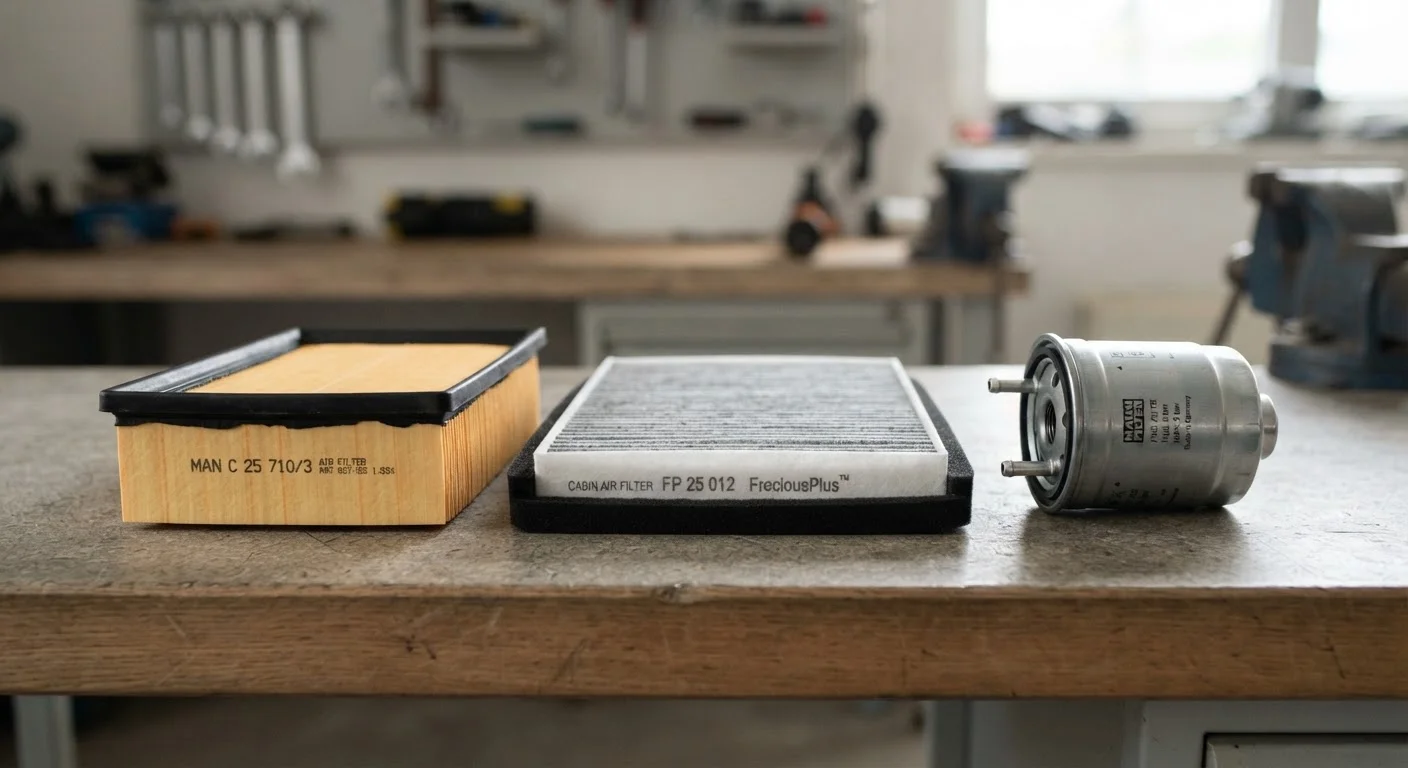
- Engine air filter
- A clogged air filter restricts airflow into the engine. Replace it on the interval in your owner's manual, or inspect it at each oil change.
- Motor oil grade
- Using the viscosity grade specified by the manufacturer (e.g., 5W-30 rather than a heavier grade) reduces internal friction. Check your owner's manual - not the oil cap, which sometimes lists a range.
- Spark plugs
- Worn spark plugs cause incomplete combustion, which wastes fuel. Most modern vehicles use long-life iridium or platinum plugs, but they still have service intervals - typically 60,000-100,000 miles.
Pre-Trip Planning and Load Management
What you put in and on your car, and how you plan your routes, affects how hard the engine works on every trip.
- Remove unnecessary cargo. Every 100 pounds of added weight increases fuel consumption. Clear out heavy items you are not actively using.
- Remove roof racks and cargo carriers when not in use. A roof-mounted cargo box dramatically increases aerodynamic drag, especially at highway speeds. If it is only needed occasionally, store it off the vehicle.
- Combine errands. A cold engine operates less efficiently than a warm one. Completing multiple stops in a single trip - rather than several short trips from home - keeps the engine at operating temperature longer.
- Use navigation for real-time conditions. Sitting in preventable traffic burns fuel with no progress. When a slightly longer route avoids prolonged stop-and-go, it can be the more fuel-efficient choice overall.
Air Conditioning vs. Open Windows
At low city speeds, turning off the AC and opening windows is usually more fuel-efficient because the aerodynamic penalty is small. At sustained highway speeds above roughly 50-55 mph, open windows create enough drag that running the AC becomes the comparable or better choice. Adjust your approach based on the type of driving, not a single rule.
Tracking Your Progress
Habits are easier to sustain when you can see their effect. Tracking fuel economy also helps you catch mechanical problems early - a sudden unexplained drop in economy is often the first signal that something needs attention.
The simplest method: at each fill-up, reset your trip odometer, then divide miles driven by gallons used at the next fill-up. Many vehicles display a running average in the instrument cluster, though these can be optimistic - the manual calculation is more reliable.
If your economy drops noticeably without a change in driving conditions or habits, that is worth investigating with a mechanic before assuming it is a behavior issue. Fuel system problems, failing oxygen sensors, or low tire pressure can all appear as a fuel economy decline before any warning light triggers.