Why Car Ownership Costs More Than the Sticker Price
Most first-time car owners focus on the loan payment and stop there. That's an expensive mistake. The purchase price - whether financed or paid in cash - is only one layer of what you'll actually spend to keep a vehicle on the road.
According to data from the American Automobile Association (AAA), the average annual cost of owning and operating a new midsize sedan has historically exceeded $10,000 when all expenses are factored in. For pickup trucks and SUVs, that figure climbs higher. These numbers include insurance, fuel, maintenance, registration, and depreciation - costs that don't show up on a window sticker.
Understanding this full picture before you commit to a vehicle is the single most valuable thing a new owner can do. A car that fits your loan budget may not fit your real-world budget once every cost is accounted for.
Depreciation
The reduction in your vehicle's market value over time. Cars typically lose the most value in their first few years, regardless of condition.
Total cost of ownership
Every dollar you spend on a vehicle over a defined period - purchase price, financing, insurance, fuel, maintenance, and fees combined.
Equity
The portion of your car's current market value that you actually own, calculated as the car's value minus any loan balance still owed.
Underwater (on a loan)
A situation where you owe more on your car loan than the vehicle is currently worth, sometimes called being "upside down" on the loan.
Routine maintenance
Scheduled, predictable service tasks - like oil changes and filter replacements - that keep a vehicle running properly and help prevent larger repairs.
The Core Costs Every New Owner Must Account For
These are the expenses you'll face every month or every year, reliably:
- Loan payment or financing cost: If you financed the vehicle, this is your most visible fixed cost. Interest paid over the loan term adds meaningfully to the vehicle's total price - a 60-month loan at a higher interest rate can add thousands in interest alone.
- Auto insurance: Required by law in nearly every U.S. state, premiums vary by your driving history, location, vehicle type, and coverage level. Younger drivers typically pay more. Get quotes before you finalize a vehicle choice, not after.
- Fuel: Estimate your monthly mileage, divide by your vehicle's MPG rating, and multiply by the current average fuel price in your area. This number fluctuates but gives a working baseline.
- Registration and licensing fees: These vary by state and sometimes by vehicle value or weight. Budget for annual renewal, not just the initial registration.
- Routine maintenance: Oil changes, air filters, wiper blades, and scheduled service intervals are predictable costs. Most manufacturers publish recommended service schedules - use them to estimate annual spending.
Get Insurance Quotes Before You Decide
Insurance premiums can vary by hundreds of dollars per year between vehicle models, even at the same price point. Pull quotes for any vehicle you're seriously considering before signing a purchase agreement. A vehicle with a lower sticker price but significantly higher insurance cost may not be the savings it appears to be.
Hidden and Irregular Costs That Catch People Off Guard
Beyond the monthly predictables, several costs appear less frequently but hit hard when they do:
- Tires: A full set typically costs $400-$800 for standard passenger vehicles, and more for trucks or performance tires. Budget for replacement every 3-5 years depending on mileage and driving conditions.
- Brakes: Brake pads and rotors wear at different rates based on driving style and terrain. A front brake service commonly runs $150-$350 per axle at an independent shop.
- Depreciation: Not a cash expense, but a real financial loss. New vehicles depreciate fastest in the first two to three years. If you're financing, depreciation can put you "underwater" - owing more than the car is worth - which has direct consequences if the car is totaled or you need to sell.
- Parking and tolls: Often zero for suburban drivers, but a significant cost in urban areas. Factor these in honestly if they apply to you.
- State inspection fees: Many states require annual safety or emissions inspections. Failed inspections mean additional repair costs before you can legally renew your registration.
Depreciation Can Leave You Financially Exposed
If your vehicle is totaled or stolen shortly after purchase, your insurance payout is based on market value - not what you paid or what you still owe. On a new vehicle with a small down payment, this gap can be substantial. Ask your insurer about gap coverage options before finalizing your policy, and consult a financial professional if you're uncertain what's right for your situation.
Building Your Monthly Car Budget in Four Steps
Rather than guessing, build your budget systematically:
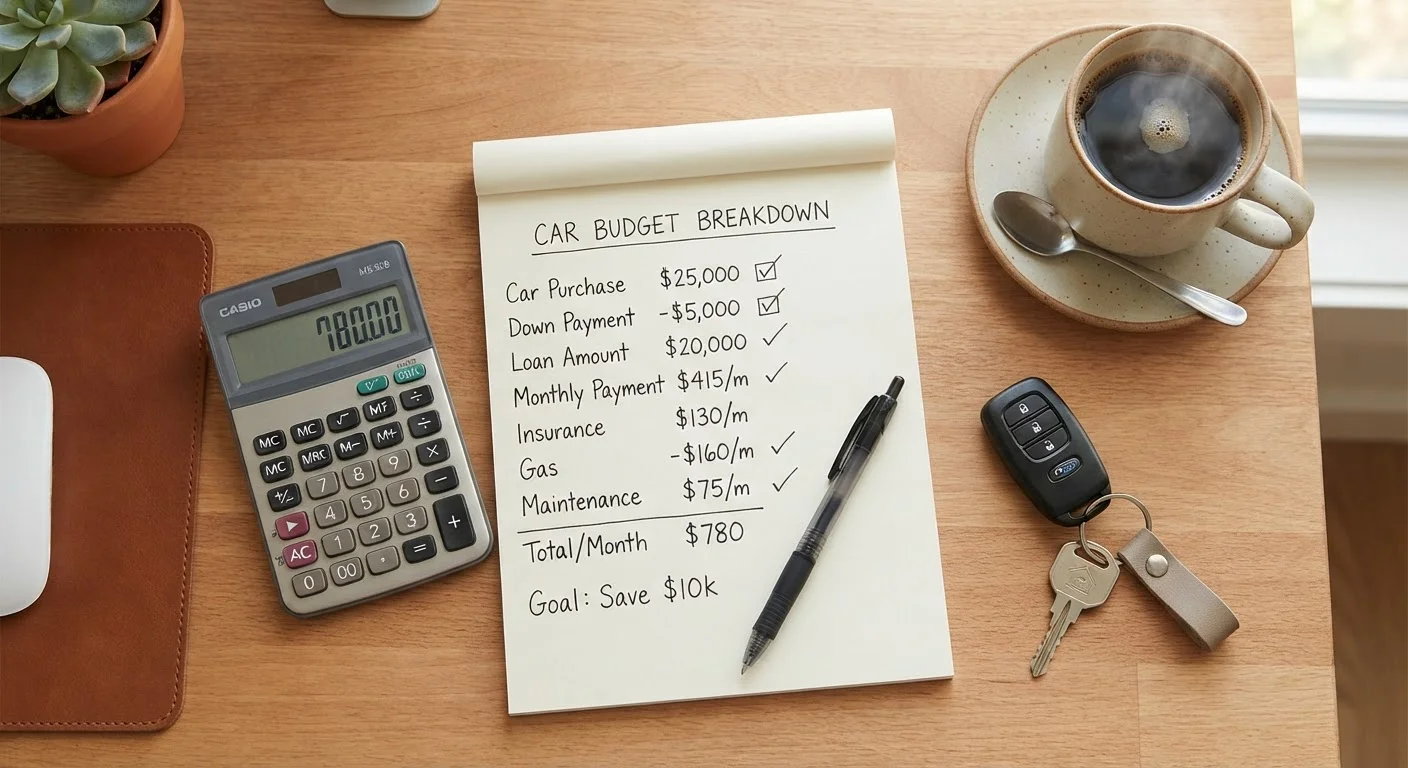
- List every cost category from the sections above. Don't skip the irregular ones - convert them to a monthly equivalent by dividing annual estimates by 12.
- Research your actual numbers. Get insurance quotes for the specific vehicle you're considering. Look up your state's registration fees. Check the manufacturer's maintenance schedule. Use your estimated annual mileage to calculate fuel costs honestly.
- Add a repair buffer. Even if you buy a reliable vehicle with low miles, set aside $50-$100 per month into a dedicated car savings account. Over a year, that's $600-$1,200 available when something goes wrong - and something eventually will.
- Compare total monthly cost to your income. If the all-in number exceeds roughly 15-20% of your take-home pay, reconsider the vehicle choice, the loan term, or both before signing anything.
This approach won't predict every expense with precision, but it gives you a defensible baseline - one that won't leave you scrambling the first time a repair bill arrives.
This article is for general informational purposes only and does not constitute financial advice. Consult a qualified financial professional for guidance specific to your personal situation.