Why the Sticker Price Is Just the Beginning
When most people shop for a vehicle, they anchor to one number: the purchase price. But for the roughly 85% of new car buyers who finance their purchase, that figure is only a starting point. The amount you actually pay depends on three compounding factors - the interest rate, the loan term, and the fees embedded in the deal.
Interest is charged on the outstanding loan balance each month. Because early payments are weighted heavily toward interest rather than principal, you pay for the privilege of borrowing before you make a meaningful dent in what you owe. Over a 60- or 72-month term, that structure can cost several thousand dollars on a mid-priced vehicle.
~85%
New car buyers who finance their purchase
Industry surveys consistently show the vast majority of new vehicle purchases in the U.S. involve some form of financing.
72 months
Most common new car loan term in the U.S.
Average loan terms have lengthened significantly over the past decade as lenders and dealers have promoted longer terms to make payments appear affordable.
$6,000+
Potential interest on a mid-sized vehicle loan
On a $30,000 vehicle financed at 7% APR over 72 months, total interest paid can exceed $6,800 before fees or add-ons are considered.
How Loan Terms Amplify the Total Cost
Loan term length is the single most controllable variable in total financing cost, yet it's frequently treated as an afterthought. Dealers routinely present payment options in terms of monthly amounts, which makes longer loans look appealing - a 72-month loan on a $28,000 vehicle might run $80 to $100 less per month than a 48-month option. But that lower payment comes at a price.
Stretched over six years instead of four, interest accumulates across 24 additional months. At a 7% APR, that difference can add more than $2,000 to the total repaid. Buyers who focus only on fitting a payment into their monthly budget often overlook how much the overall cost has grown.
There's also a depreciation risk embedded in long terms. Vehicles lose value faster than many loan balances decline in the early years - a situation known as being underwater or negative equity, meaning you owe more than the car is worth. If the vehicle is totaled or you need to sell, that gap becomes a real out-of-pocket problem.
Use an Amortization Calculator Before You Sign
Free amortization calculators (available through most banks and credit unions) let you input the loan amount, APR, and term to see your total interest cost upfront. Running two or three term-length scenarios before negotiating can clarify exactly what each option costs over the full loan period - not just per month.
Fees and Add-Ons: The Hidden Line Items
Beyond interest, several fees can quietly inflate the true cost of financing. Documentation fees, origination charges, and title or registration costs are often rolled directly into the loan balance - meaning you pay interest on them for the life of the loan. A $500 documentation fee financed at 7% over 60 months costs meaningfully more than $500 by payoff.
Dealer financing markups are another factor. When a dealer arranges your loan through a lender, they may add a percentage to the rate the lender quoted - this is sometimes called a dealer reserve. It's legal and common, but it's also negotiable if you come prepared with competing loan offers.
Optional products like GAP insurance (which covers the difference between what you owe and the vehicle's value if it's totaled) or extended service contracts can provide real value, but when financed rather than paid upfront, they increase the loan principal you're paying interest on for years.
Practical Steps to Reduce What You Actually Pay
Understanding the cost structure is the first step; acting on it is what protects your budget. A few straightforward approaches can make a meaningful difference:
- Get pre-approved before visiting a dealership. A loan offer from your bank or credit union gives you a benchmark rate and real negotiating leverage.
- Choose the shortest term your budget can support. Even moving from 72 to 60 months at the same rate reduces total interest paid.
- Increase your down payment if possible. Reducing the amount borrowed cuts both principal and total interest charged.
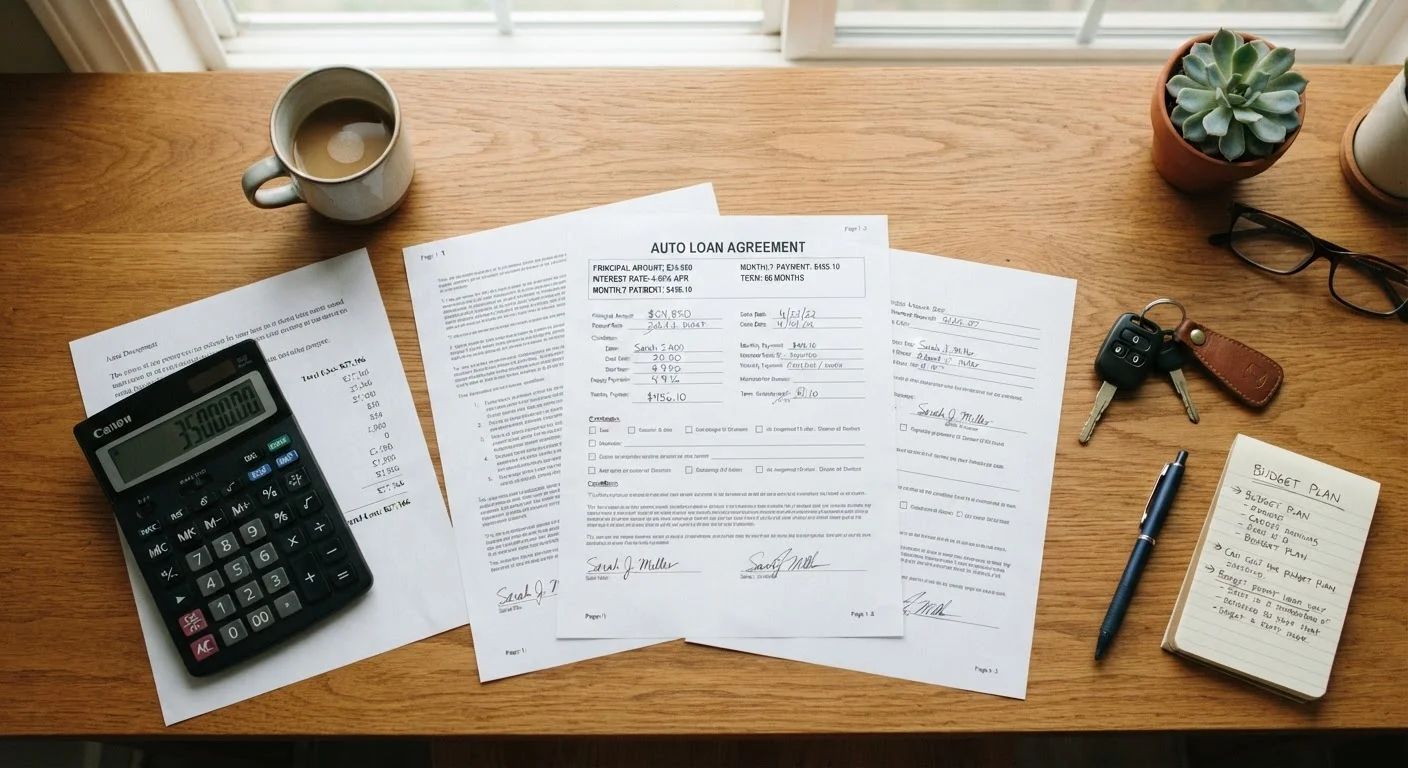
- Read the full loan disclosure. Review the APR, total amount financed, total of all payments, and any fees before signing.
- Pay optional add-ons separately. If you decide you want GAP insurance or a service contract, paying out of pocket avoids financing a fee over several years.
None of these steps eliminates financing costs entirely, but each one puts more of the vehicle's value in your hands rather than the lender's. The goal is not to avoid borrowing altogether - it's to borrow with a clear-eyed view of what it actually costs.
This article provides general financial information for educational purposes and does not constitute personalized financial or lending advice. Consult a qualified financial professional before making borrowing decisions based on your individual circumstances.