
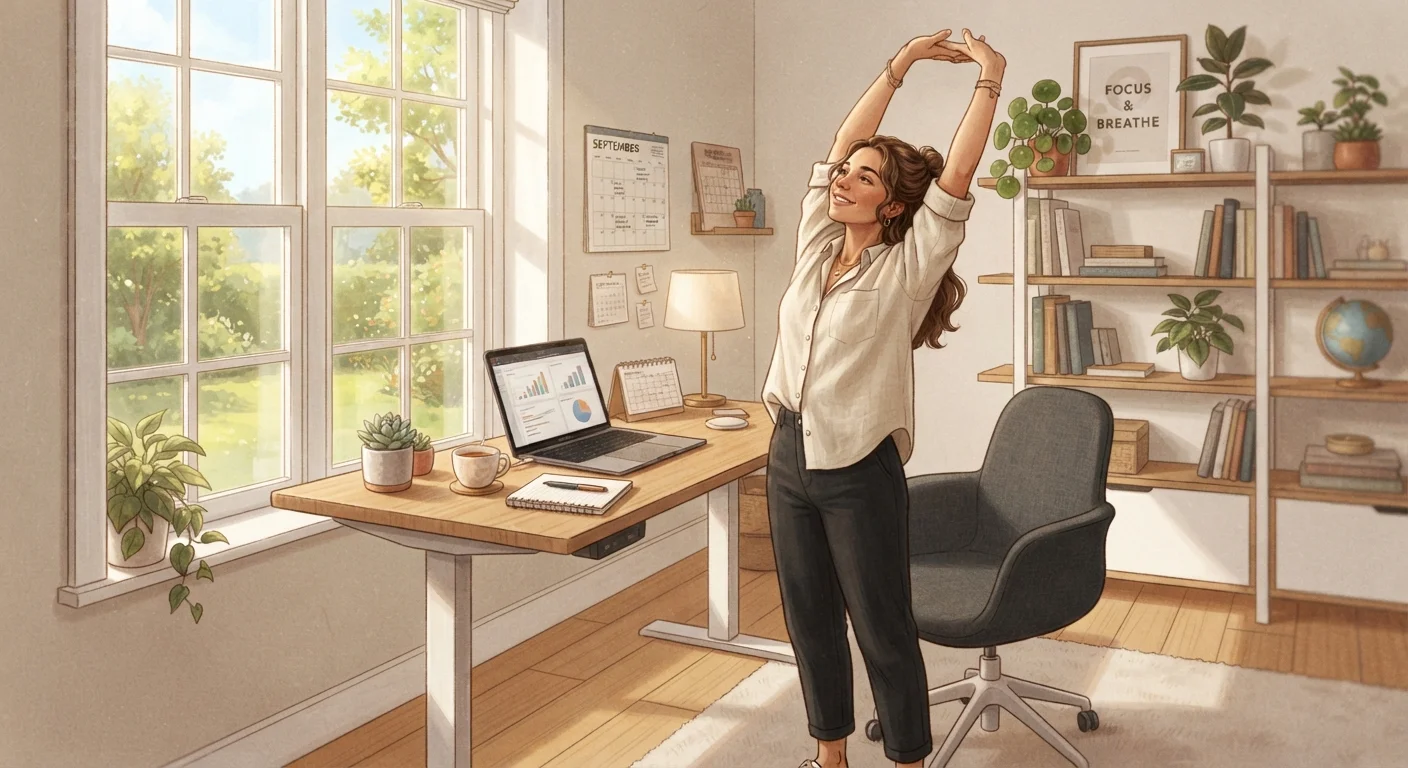
Why Sitting All Day Is Worth Taking Seriously
Many people who work from home or in office environments spend the majority of their waking hours seated - often without realizing just how little they move. Research consistently links extended, uninterrupted sitting with increased risk of cardiovascular concerns, blood sugar dysregulation, and musculoskeletal discomfort. This holds true even for people who exercise regularly at other times of day.
The good news is that you don't need a gym membership, expensive equipment, or a complete schedule overhaul to make a meaningful difference. As explored in our article on how short movement breaks compare to long uninterrupted sitting, even brief, frequent activity can shift your daily movement profile in a positive direction.
This guide focuses on practical, space-conscious strategies that fit realistically into a desk-based day - especially for homeowners juggling work, household tasks, and limited free time.
What you will need
Setting Up Your Movement Environment
Before building new habits, a small amount of intentional setup makes a big difference. You don't need to redesign your workspace - just reduce the friction between you and movement.
Interval timer or reminder app
Prompts you to stand and move at regular intervals throughout the workday.
Resistance band
Enables a wider range of seated and standing strengthening exercises without taking up storage space.
Foam roller or tennis ball
Used for simple myofascial release and back tension relief during breaks.
Adjustable standing desk or a stable elevated surface
Allows you to alternate between sitting and standing postures during the workday.
Consider clearing a small floor area near your desk - even a 3-by-4-foot patch is enough for stretching, bodyweight moves, or stepping in place. If you work from home, the kitchen, hallway, or living room can serve as your movement zones between tasks. For ideas on tidying your space to support this, the Home Organization hub offers practical room-by-room guidance.
How to Build Movement Into Your Workday
The most effective approach treats movement as a scheduled, non-negotiable part of the workday - not something you squeeze in when you remember. Here's how to make that happen systematically.
Set a movement timer
Use your phone, computer, or a simple kitchen timer to alert you every 30 to 60 minutes. When it goes off, stand up - no matter what. Even a 90-second stand-and-stretch interrupts prolonged sitting effectively.
Choose two or three go-to desk-break moves
Keep your rotation simple. Good options that require no equipment and minimal space include: calf raises while standing, seated spinal twists, shoulder rolls, marching in place, or a short walk around your home. Having a pre-decided list removes decision fatigue when the timer sounds.
Convert low-stakes tasks to standing or walking activities
Phone calls, audio-only meetings, listening to voicemails, and reading documents are all tasks you can do while standing or pacing. Identify two or three recurring daily tasks that don't require typing and reassign them to a standing position.
Add a short movement block at the start and end of your workday
Bookending your desk hours with five to ten minutes of intentional movement - a brisk walk outside, a light stretching sequence, or a few bodyweight exercises - creates a consistent rhythm and signals to your body that sitting time has boundaries.
Use household chores strategically
Chores like vacuuming, unloading the dishwasher, doing laundry, or wiping down countertops all involve standing, bending, and walking. Spreading these across the day - rather than batching them in one long session - turns routine tasks into built-in movement opportunities.
For a broader look at how planned movement stacks up against everyday activity, see our guide on structured vs. incidental exercise at home. And if you're not yet in a consistent movement routine, getting started with daily movement when you're not an exercise person offers a gentle on-ramp.
Keeping the Habit Going
Starting a movement routine is easier than sustaining one. A few principles help it stick without relying on willpower alone.
Anchor movement to existing cues. Pair a standing stretch with every cup of coffee, or a short walk with every phone call. Habit-stacking - attaching new behaviors to established ones - dramatically improves follow-through.
Track streaks, not perfection. Missing one day is not failure. What erodes the habit is missing multiple days in a row. Aim for consistency over the week, not flawless daily execution.
Scale to your energy. On high-energy days, a 10-minute bodyweight circuit between meetings is achievable. On exhausting days, a two-minute stretch at your desk still counts. Sustainable habits for long-term home fitness covers this flexibility principle in depth.
If you want to go further and add short structured workouts to your week, making short workouts count for busy homeowners shows how to maximize brief exercise sessions without a gym.
Small Moves Add Up More Than You Think
Research in exercise science suggests that breaking up sitting with light-intensity activity - even brief episodes of two to five minutes - can have measurable effects on blood sugar and circulation compared to remaining seated for hours. You don't need a dedicated workout to benefit from movement; frequency and regularity matter alongside intensity.
This article provides general health information and is not a substitute for personalized medical advice. If you have a health condition that may be affected by changes to your activity level, consult a qualified healthcare professional before making significant changes to your routine.