
Defining the Two Approaches
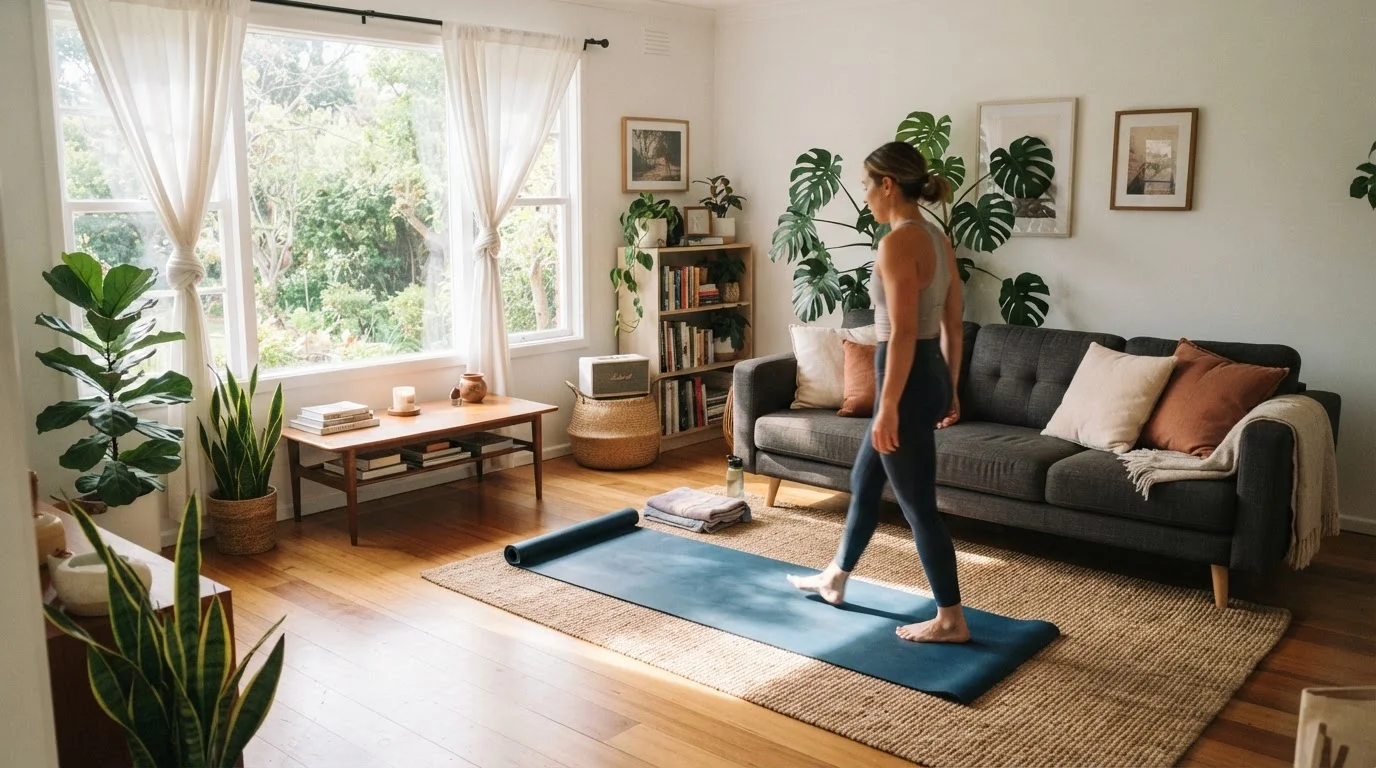
Structured exercise is intentional physical activity that you plan in advance. It has a defined start and end time, a purpose (such as improving cardiovascular fitness or building strength), and usually follows some kind of format - a bodyweight circuit, a walk of set duration, or a yoga session. You decide to do it, you set time aside, and you do it.
Incidental exercise, by contrast, is movement that happens as a byproduct of your normal day. Carrying laundry upstairs, gardening, walking to your mailbox, vacuuming, or standing at the kitchen counter while cooking all count. It is not planned as exercise, but it contributes to your total daily movement nonetheless.
Both matter. And understanding the distinction can help you make smarter use of your time at home - especially if a full workout session feels out of reach on a given day. For a deeper look at how everyday movement breaks compare to long periods of sitting, see what research says about movement breaks and sedentary time.
What Structured Exercise Offers
Planned workouts give you control. When you schedule a session, you can choose the type of activity, the intensity, and how long it lasts. This makes structured exercise particularly useful for working toward specific health goals - improving aerobic capacity, building muscular endurance, or maintaining joint flexibility.
At home, structured exercise does not require equipment or a dedicated room. A cleared patch of floor, a sturdy chair, or even a wall can be enough. For ideas on what household items can support a real workout, see everyday objects that double as workout tools.
The challenge is consistency. Structured sessions depend on motivation, scheduling, and follow-through - all of which fluctuate. That is why pairing them with reliable incidental movement can help fill the gaps.
Short Sessions Still Count
Even brief structured sessions - as few as 10 to 15 minutes - can be meaningful when done consistently. You do not need a long block of free time to make structured exercise work at home. Focus on regularity over duration, especially when you are first establishing the habit.
Even short structured sessions - as brief as 10 to 15 minutes - can be meaningful when done regularly. You do not need a long block of free time to make structured exercise work at home. See how short workouts can count for practical strategies.
What Incidental Exercise Contributes
Incidental movement may feel too modest to matter, but general health research consistently suggests that total daily movement - not just dedicated workout time - plays a meaningful role in physical wellbeing. Reducing the amount of time spent sitting has been associated with better metabolic health, even in people who also exercise formally.
For homeowners especially, the opportunities are built into the day: taking the stairs, doing active chores, standing while on a phone call, or walking during a lunch break. These moments accumulate. Movement strategies for people who sit most of the day offer a useful starting point for making incidental activity a deliberate habit without disrupting your schedule.
If formal exercise feels unappealing or overwhelming, leaning into incidental movement first is a reasonable and evidence-supported entry point. See getting started with daily movement for a gentle approach.
Side-by-Side Comparison
Understanding how these two approaches differ across key practical dimensions can help you decide how to balance them in your own routine.
| Structured Exercise | Incidental Exercise | |
|---|---|---|
| Planning required | Yes - scheduled in advance | No - happens within daily tasks |
| Intensity control | High - you set the pace and type | Low - varies by activity |
| Equipment or space needed | Minimal; a clear floor area suffices | None - uses existing environment |
| Time commitment | Defined block of time required | Spread across the day in small amounts |
| Effectiveness for specific goals | Strong - targeted and progressive | Moderate - supports general health |
| Barrier to entry | Moderate - requires motivation and routine | Low - built into existing habits |
| Consistency over time | Depends on scheduling discipline | Easier to maintain daily |
It is worth noting that neither approach is inherently superior. The value of each depends on your current health status, schedule, available space, and personal goals. If you have a specific condition or are returning to activity after a health event, consult a qualified healthcare professional before significantly changing your activity level.
Building a Realistic Home Routine Around Both
The most practical home fitness approach for busy homeowners is usually one that treats structured and incidental exercise as partners. A planned session a few times per week provides the intensity and focus needed to build fitness over time, while incidental movement keeps you active on the days when a formal workout is not possible.
If you are newer to exercise or prefer lower-impact options, low-impact exercise can be an accessible starting point for structured sessions. And once a routine begins to form, sustaining the habit over time becomes the real challenge - one that is easier when you are not relying solely on motivation to get through the door.
Remember: structured exercise benefits from proper preparation. Even brief home sessions should include a warm-up and cool-down. See why skipping either is a mistake for the reasoning behind those steps.
This article is for general informational purposes only and is not a substitute for professional medical advice. Please consult a qualified healthcare provider before beginning any new exercise program, particularly if you have an existing health condition.