
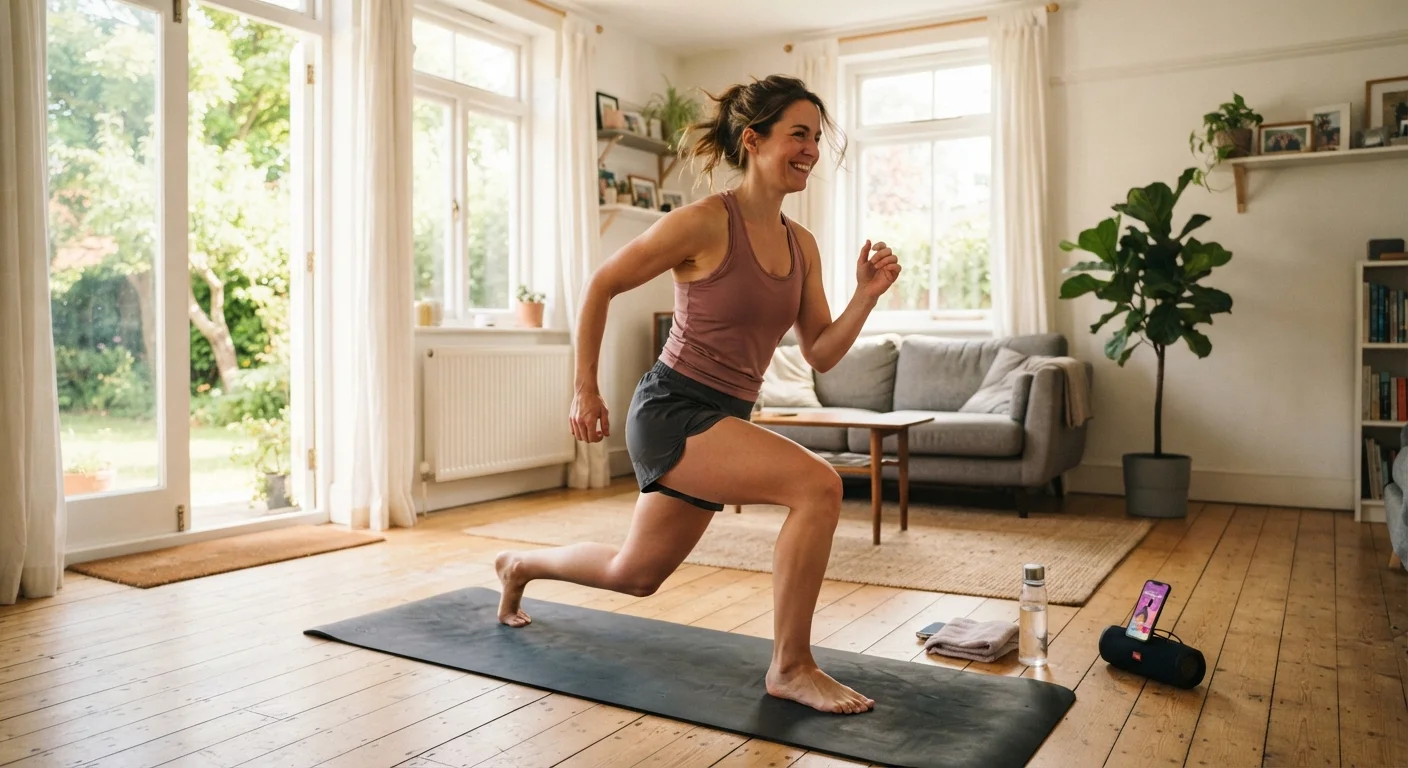
Why Short Workouts Actually Work
The idea that exercise only counts if it lasts an hour is one of the most persistent myths keeping busy people sedentary. Current public health guidance from bodies such as the U.S. Department of Health and Human Services recognizes that physical activity can be accumulated in shorter bouts throughout the day and still contribute to overall health goals.
The underlying reason is straightforward: your muscles, heart, and lungs respond to the demand you place on them - not to how long a session lasts on a timer. A focused 15-minute session that genuinely elevates your heart rate or challenges your muscles produces a physiological response. Done consistently several times a week, those responses add up.
This is especially relevant for homeowners juggling jobs, household maintenance, and family schedules. The mental shift from "I need a full hour" to "I can do something useful in 15 minutes" removes the most common barrier to getting started at all. See our guide to structured vs. incidental exercise to understand how planned short sessions compare with everyday movement.
Habit stacking
A technique where you attach a new behavior - like a short workout - directly to an existing daily routine, making it easier to remember and follow through.
Bodyweight training
Exercise that uses your own body's weight as resistance, requiring no gym machines or weights. Examples include push-ups, squats, and lunges.
Progressive overload
Gradually increasing the challenge of your workouts over time - by adding repetitions, slowing movements, or reducing rest - so your body continues to adapt and improve.
Accumulated activity
The idea that multiple short bouts of movement throughout the day can add up to the same health benefits as one longer continuous session.
Warm-up
A few minutes of gentle movement before more intense exercise that prepares your muscles and joints and gradually raises your heart rate.
Finding Time in a Packed Day
For most busy homeowners, the challenge is not knowing what to do - it is finding a reliable slot to do it. Rather than searching for a free hour that may never appear, look for existing gaps you can repurpose.
- Before the household wakes up: Even 10-15 minutes before the morning rush gives you a consistent window with minimal interruption. Our article on morning routines that actually hold up on busy weekdays has practical tips for making this work.
- During transitions: The gap between finishing work and starting dinner, or after dropping kids at school, is often unused. A brief workout there requires no rearranging of your schedule.
- Habit stacking: Link exercise to something you already do reliably - put on your workout clothes right after brushing your teeth, or do a round of squats while your coffee brews. Pairing a new behavior with an established one dramatically improves follow-through.
If formal exercise feels like a stretch right now, getting started with daily movement is a gentler entry point worth reading first.
Set a Non-Negotiable Minimum
Decide on the shortest version of your workout you are always willing to do - even on your worst days. For many people that is just five minutes. Committing to this floor removes the all-or-nothing thinking that causes people to skip sessions entirely when time is short.
What to Do in 10-20 Minutes
The most space-efficient, cost-free approach for homeowners is bodyweight training - exercises that use your own body as resistance. No membership, no bulky equipment, and no dedicated room required. Our companion piece The Floor Is Your Gym covers how to structure this room by room.
A simple structure for a short session:
- 2-3 minutes warm-up: March in place, arm circles, gentle hip rotations. This prepares joints and raises body temperature before harder effort.
- 10-12 minutes of work: Cycle through three to four exercises - such as squats, push-ups, reverse lunges, and a plank hold - performing each for a set time or number of repetitions before moving to the next.
- 2-3 minutes cool-down: Slow walking in place, basic stretches for the legs and back.
Everyday items around the house can extend variety without cost. A sturdy dining chair supports step-ups and incline push-ups; a filled backpack adds resistance to squats. See household objects that double as workout tools for a practical breakdown. If you work from home and sit for long stretches, movement strategies for desk workers offers targeted approaches.
Making It Stick Without a Gym
Starting is easy; continuing past the first two weeks is where most people stall. A few evidence-informed principles help bridge that gap.
Make progress visible. A simple log - even a tally on a notepad - helps you notice improvement and creates a mild sense of accountability. Over time, movements that felt hard become manageable, which is your cue to make them slightly harder. Our article on progressive overload without equipment explains how to apply this principle safely using only your bodyweight.
Design your environment. If you need to search for workout clothes and clear the floor before you can begin, friction accumulates and sessions get skipped. Keeping a small, ready-to-use space helps enormously - even a cleared corner works. Setting up a dedicated workout corner offers practical, space-conscious guidance for exactly this.
Expect dips and plan for them. Motivation naturally fluctuates with seasons, stress, and schedule changes. Having a fallback plan - a five-minute version of your routine for difficult days - keeps the habit alive even when full sessions are not realistic. For a deeper look at sustaining momentum over the long term, see Keeping Momentum: Sustainable Habits for Long-Term Home Fitness.
Know When to Slow Down
Sharp pain, dizziness, chest tightness, or unusual shortness of breath during exercise are signals to stop immediately and seek medical guidance. These are not normal sensations to push through. If you have a known health condition, have been inactive for a long time, or are unsure whether exercise is appropriate for you, speak with a healthcare professional before beginning.
This article provides general health and fitness information for educational purposes only. It is not a substitute for professional medical advice. If you have any health condition, injury, or concern, please consult a qualified healthcare professional before starting any new exercise program.