
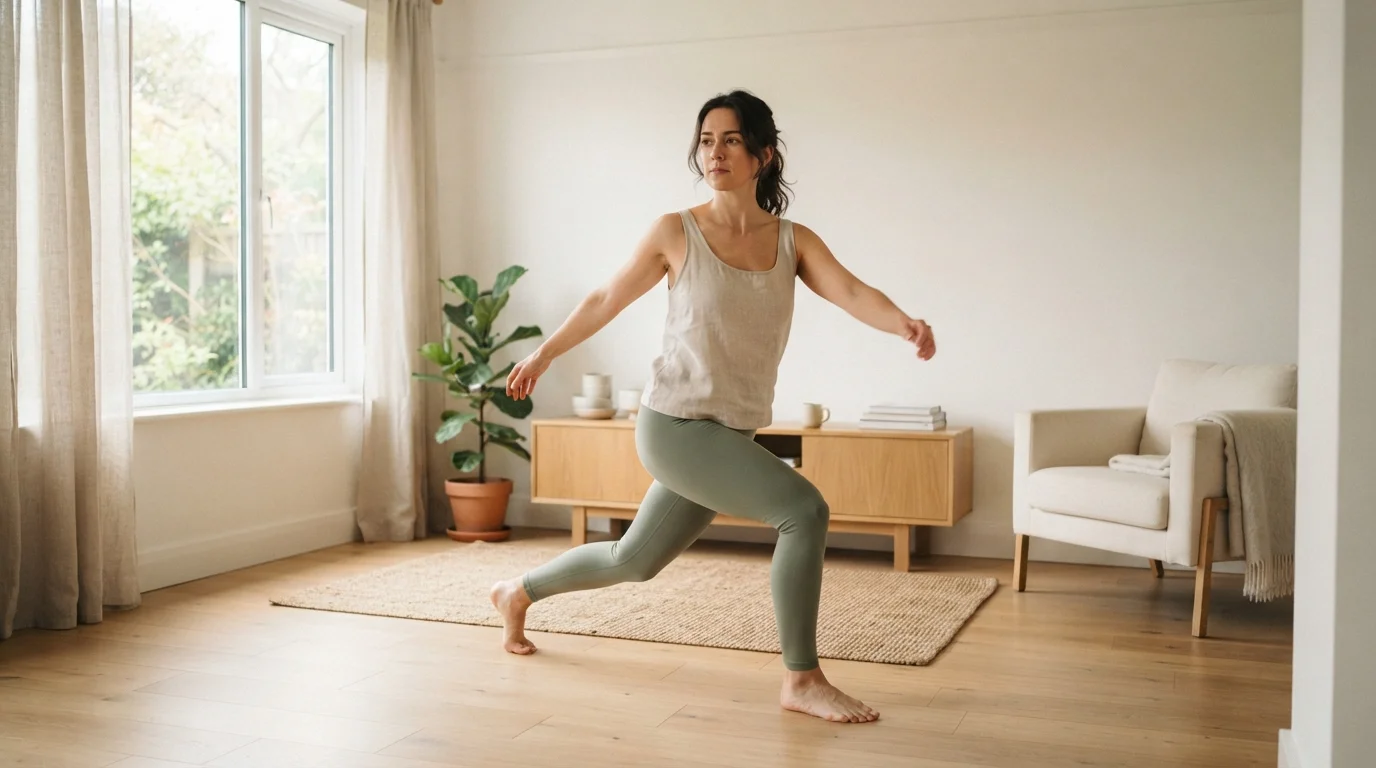
What Actually Happens When You Skip the Warm-Up
Jumping straight into a run, a strength circuit, or a fast-paced home workout without warming up first puts your body at an abrupt disadvantage. At rest, blood is distributed fairly evenly across your organs and tissues. Your muscles receive less than a quarter of your total cardiac output. Begin intense exercise without preparation, and your heart, muscles, and connective tissue are asked to perform at full capacity before they've had time to adapt.
Warm muscle tissue is more pliable than cold muscle tissue. When muscles haven't been primed, they have reduced elasticity - which means the risk of strains and pulls is meaningfully higher during the first few minutes of hard effort. Tendons and ligaments, which are slower to warm than muscles, are especially vulnerable during abrupt transitions from rest to vigorous movement.
Beyond injury risk, skipping the warm-up typically means a harder-feeling workout early on. Your cardiovascular system needs a few minutes to dial up oxygen delivery; without that ramp-up, the early portion of a session will feel disproportionately strenuous. A structured warm-up smooths that transition. For homeowners fitting short sessions into a busy day, this matters - starting the workout feeling capable rather than winded is a meaningful difference.
Start Simpler Than You Think
A warm-up doesn't need to be elaborate. For most home sessions, 5 minutes of progressive movement - beginning gently and gradually building toward workout intensity - is all that's required. Marching in place, slow bodyweight squats, and arm circles cover the basics without any equipment or extra space.
The Physiology Behind an Effective Warm-Up
An effective warm-up does several things simultaneously. It raises core and muscle temperature, which speeds up the chemical reactions that fuel muscular contraction. It increases heart rate and breathing rate gradually, improving oxygen delivery before intensity rises. It also activates the neuromuscular connections between your brain and the muscles you're about to use - essentially getting your movement patterns online before you need them at full force.
Dynamic movements are the most effective warm-up tool. These are controlled, movement-based exercises - think hip circles, arm swings, marching in place, or bodyweight squats performed slowly. Unlike static stretching (holding a position for 30 seconds or more), dynamic movement maintains and improves circulation rather than temporarily reducing muscle force, which is why most sports and exercise science guidelines favor dynamic warm-ups before activity.
A good home warm-up doesn't require equipment or much space. Five to ten minutes of progressive movement - starting gently and building toward the intensity of the workout ahead - is enough for most sessions. If you're curious about adapting this to a compact environment, training in small spaces covers practical approaches to movement when floor space is limited.
5-10 min
Warm-up duration sufficient for most home sessions
Exercise physiology guidelines generally indicate that 5 to 10 minutes of progressive, dynamic movement is adequate preparation for moderate-intensity exercise.
24-48 hrs
Typical onset window for post-exercise muscle soreness
Delayed onset muscle soreness (DOMS) commonly peaks within one to two days after unaccustomed or intense effort; cool-down stretching may help moderate its severity.
~20%
Muscle blood flow at rest vs. during exercise
At rest, skeletal muscles receive roughly 15-20% of cardiac output; during vigorous exercise, that share can rise to 80-85%, illustrating why a gradual transition matters.
Why the Cool-Down Deserves Equal Attention
The cool-down is frequently the first thing cut when someone is short on time - but it serves purposes that directly affect how you feel in the hours and days after a workout. During vigorous exercise, blood vessels in the working muscles dilate significantly to accommodate increased blood flow. Stopping abruptly doesn't give that system time to adjust; blood can temporarily pool in the legs, which can cause lightheadedness or dizziness.
A gradual reduction in intensity - even just 3 to 5 minutes of slow walking or gentle movement - allows the cardiovascular system to wind down safely. Heart rate and breathing return toward baseline in a controlled way, and the body begins the transition into recovery mode more efficiently.
Cool-downs also provide the ideal window for static stretching. Muscles are warm and pliable after exercise, making them more receptive to lengthening. Holding stretches for 20 to 30 seconds in this window can support flexibility over time and may help reduce delayed onset muscle soreness (DOMS) - the achiness that typically appears 24 to 48 hours after unfamiliar or intense effort. For anyone building a consistent home fitness routine, managing soreness well is part of staying consistent. Sustainable habits for long-term home fitness explores how recovery practices like this contribute to staying on track.
Delayed Onset Muscle Soreness (DOMS)
DOMS refers to the muscle achiness that typically appears 24 to 48 hours after exercise, particularly after introducing new movements or increased intensity. It's a normal physiological response to muscular stress, not a sign of injury. While cool-downs and stretching may help moderate it, some degree of DOMS is expected when progressing an exercise routine. If pain is sharp, localized, or persistent, consult a healthcare professional.
Making Both Work in a Short Home Workout
The most common objection to warm-ups and cool-downs is time. If you've carved out 20 minutes for exercise, spending a third of it on preparation and recovery can feel counterproductive. But consider the alternative: skipping both phases doesn't make the workout more effective - it makes the working minutes riskier and your recovery slower.
The practical solution is proportional allocation. For a 20-minute session, a 4-minute warm-up and a 4-minute cool-down leave 12 minutes of actual working time. That's still enough for a meaningful bout of movement, especially if the workout is structured well. Making short workouts count outlines how to structure those core minutes effectively.
Both phases can be done in the same space as the workout itself - no equipment, no gym, no dedicated room required. Warm-up options like marching in place, slow air squats, shoulder rolls, and gentle torso rotations take up minimal floor space. Cool-down stretches for the major muscle groups - quads, hamstrings, hip flexors, chest, and shoulders - require only enough room to lie down or stand comfortably.
Framing warm-ups and cool-downs as non-negotiable parts of the session - not optional add-ons - is the mindset shift that makes the biggest difference. They're not extras. They're the structure that allows the middle part of your workout to be done safely and with full effort.
This article is for general informational purposes only and is not a substitute for professional medical advice. Consult a qualified healthcare provider before beginning any new exercise program, particularly if you have an existing health condition or injury.