
Why Macronutrients Matter
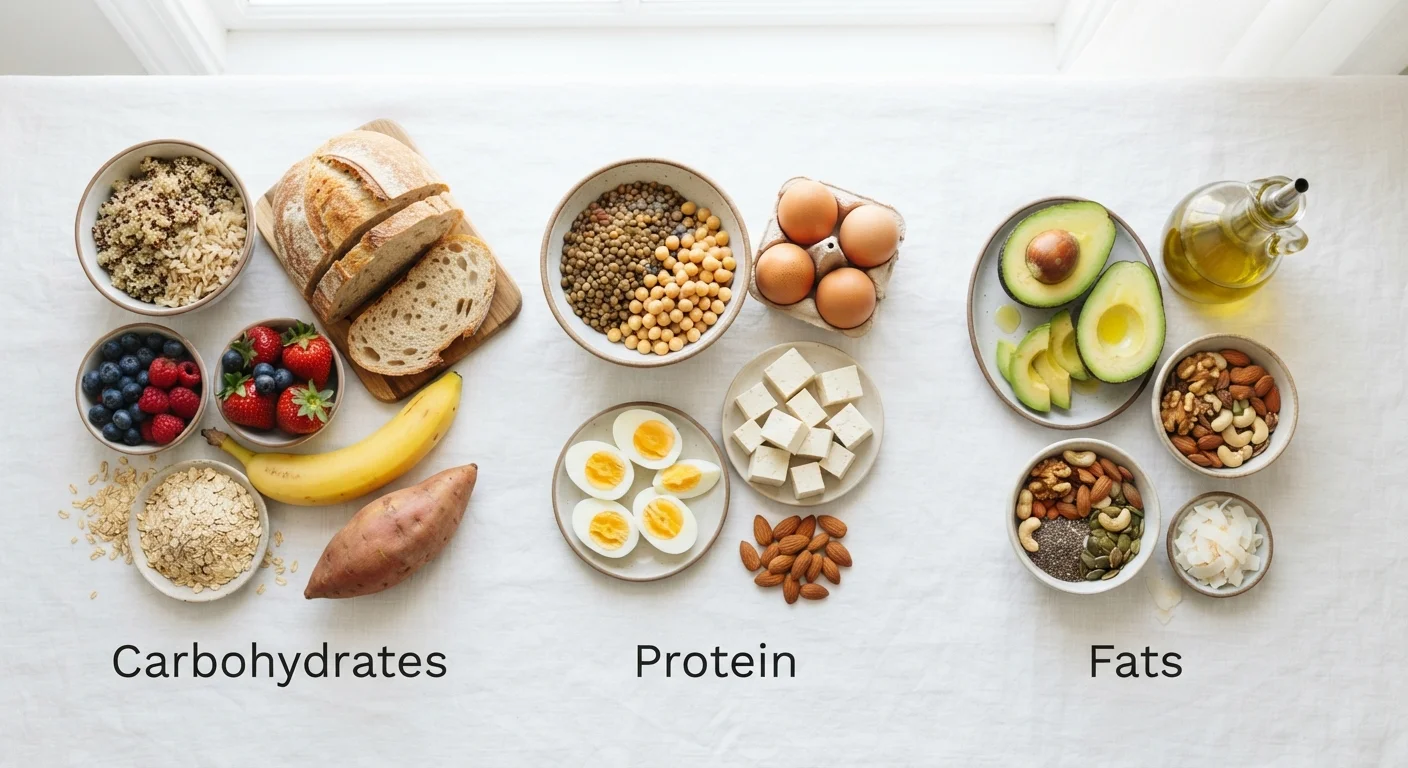
Every time you eat, your body sorts incoming nutrients into categories and puts them to work. Macronutrients are the big three your body uses in the largest quantities - carbohydrates, proteins, and fats. Together they supply energy, build structures, and regulate processes ranging from immune function to hormone balance.
Despite what popular diets often suggest, none of the three is the enemy. Each has specific jobs that the others can't fully replace. Understanding what those jobs are is one of the most practical steps toward making confident, calm food choices - without overthinking every meal. For a broader look at how this fits together, see our guide on what a balanced diet actually means.
45-65%
Recommended daily calories from carbohydrates
According to the Dietary Guidelines for Americans, carbohydrates should make up roughly 45-65% of total daily calorie intake for most adults.
10-35%
Recommended daily calories from protein
The Dietary Guidelines for Americans recommend that protein contribute 10-35% of total daily calories, with the range reflecting variation in individual activity levels and health needs.
20-35%
Recommended daily calories from fat
Dietary fat is recommended to account for 20-35% of total daily calories, according to the Dietary Reference Intakes published by the National Academies of Medicine.
Carbohydrates: Your Body's Preferred Fuel
Carbohydrates break down into glucose, which is the primary fuel source for your brain, red blood cells, and working muscles. When you eat carb-containing foods - bread, rice, fruit, beans, vegetables - your digestive system converts the starches and sugars into glucose and delivers it to cells via the bloodstream.
Not all carbohydrates behave the same way. Complex carbohydrates (whole grains, legumes, starchy vegetables) digest more slowly, providing steadier energy and often delivering fiber alongside. Simple carbohydrates (table sugar, refined flours) digest quickly and offer less nutritional value per calorie. Fiber - technically a carbohydrate - deserves special mention because it feeds beneficial gut bacteria and supports digestive health. Our article on dietary fiber covers this in more detail.
The quality of carbohydrate sources matters far more than the total gram count for most people eating a varied diet.
Protein: Building, Repairing, and Regulating
Protein is made up of smaller units called amino acids. Your body uses these as raw materials to build and repair muscle tissue, produce enzymes and antibodies, carry oxygen in the blood, and regulate countless biological processes. Unlike carbohydrates and fat, your body has no long-term protein storage system - it relies on regular dietary intake to meet these needs.
Complete protein sources - those containing all nine essential amino acids your body can't make on its own - include meat, poultry, fish, eggs, dairy, and soy. Plant foods like beans, lentils, and whole grains are also valuable protein sources; combining a variety of them throughout the day generally covers all essential amino acids for most people.
Vary Your Protein Sources
Rotating among different protein sources - eggs, legumes, fish, tofu, dairy, and poultry - helps ensure you get a broad range of amino acids and complementary nutrients. It also keeps meals more interesting, which tends to support long-term consistency with healthy eating habits.
Protein also contributes to feelings of fullness after meals, which is why protein-containing foods are often satisfying. This is a normal physiological response, not a reason to treat protein as a weight-loss tool or to over-consume it at the expense of other macronutrients.
Fats: Essential, Not Optional
Dietary fat has a complicated reputation, but the science is clear: fat is essential. Your body requires it to absorb fat-soluble vitamins (A, D, E, and K), produce hormones, maintain healthy cell membranes, insulate organs, and support brain function - the brain is roughly 60% fat by dry weight.
The type of fat matters considerably. Unsaturated fats, found in olive oil, avocados, nuts, and fatty fish, are associated with cardiovascular support in research literature. Saturated fats, found in red meat and full-fat dairy, are fine in moderate amounts for most people. Trans fats - largely eliminated from the US food supply through regulation - are the type most consistently linked to negative health outcomes and are best minimized.
Eating fat does not automatically translate into storing fat; overall energy balance and food quality play the larger role. Our nutrition myths article addresses the "fat makes you fat" misconception directly.
Putting It All Together
Rather than fixating on one macronutrient or cutting another out entirely, the more useful question is: what does the overall pattern of my eating look like? Meals built around whole grains, vegetables, lean or plant-based proteins, and healthy fat sources tend to deliver all three macronutrients in proportions that support everyday wellbeing without requiring a spreadsheet.
Pairing macronutrients thoughtfully also helps. Fat and protein slow the absorption of carbohydrates, which can help maintain steadier energy between meals. Adding beans to a grain bowl, or nut butter to fruit, are simple examples of this in practice.
Beyond macronutrients, vitamins and minerals play their own vital roles - explore our micronutrients overview to see how the full picture fits together.
This article is for general informational and educational purposes only and is not a substitute for professional medical or dietary advice. Please consult a registered dietitian or qualified healthcare provider for guidance specific to your individual health needs.