
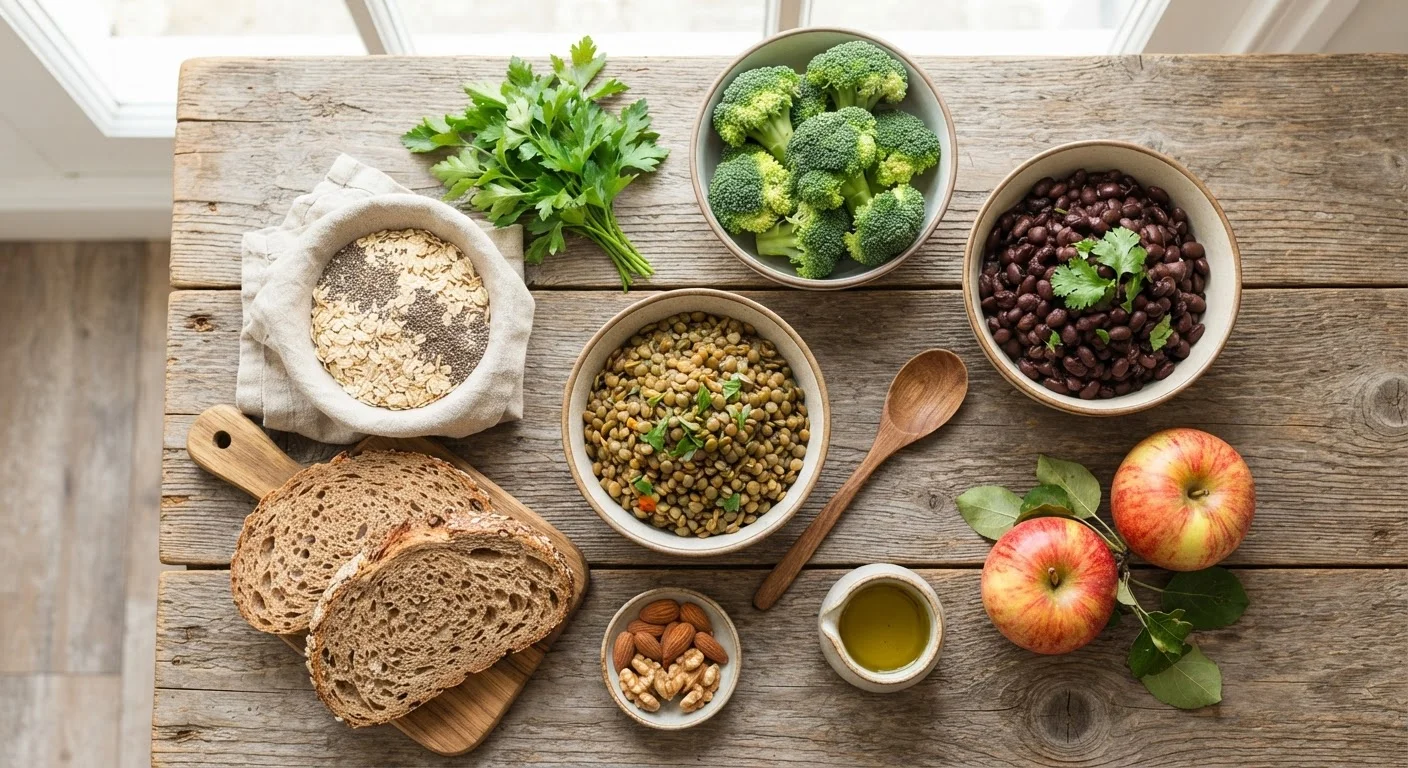
Why Fiber Has a Consumption Gap
Fiber sits quietly on nutrition labels without generating much excitement, yet it's one of the most consistently under-consumed nutrients in the American diet. According to the Dietary Guidelines for Americans, fiber is classified as a dietary component of public health concern - a designation reserved for nutrients that are both essential and widely lacking in typical eating patterns.
The gap isn't mysterious. Ultra-processed foods - refined grains, packaged snacks, fast-food staples - have largely replaced the whole plant foods that naturally deliver fiber. When white flour replaces whole wheat, or juice replaces whole fruit, fiber is among the first things lost in processing. The result is a household diet that may look filling on the surface but leaves a significant nutritional hole.
Understanding what fiber actually does - and where to reliably find it - is a practical first step toward closing that gap for your family. For a broader look at how nutrients are listed on packaging, see our guide to reading the Nutrition Facts label.
~15g
Average daily fiber intake for U.S. adults
The Dietary Guidelines for Americans identifies fiber as a nutrient of public health concern due to widespread underconsumption relative to recommended levels.
95%
Americans not meeting fiber recommendations
Research published in nutrition literature consistently finds that only about 5% of the U.S. population meets adequate fiber intake levels.
6-8g
Fiber per half-cup of cooked legumes
Legumes such as lentils and black beans are among the most fiber-dense everyday foods and are widely available at low cost.
What Fiber Does in the Body
Fiber performs several distinct functions depending on its type. Soluble fiber - found in oats, barley, apples, and legumes - dissolves in water and slows digestion. This slower transit can help moderate blood sugar responses after meals and is associated with supporting healthy cholesterol levels, according to established nutritional research.
Insoluble fiber - found in whole wheat, vegetables, and nuts - adds bulk to stool and speeds movement through the intestines, supporting regular digestion. Most whole plant foods deliver a combination of both types, which is one reason nutrition guidance consistently emphasizes variety over any single food.
Fiber also acts as a prebiotic - it feeds beneficial bacteria in the gut. A well-nourished gut microbiome is an active area of nutrition research, and while scientists are still mapping its full implications, the link between fiber intake and a diverse gut environment is well supported. Fiber is technically a carbohydrate, so it helps to understand how it fits alongside other macronutrients - our overview of macronutrients covers that context clearly.
“Dietary fiber has been shown to have multiple health benefits, yet intake remains far below recommended levels for the vast majority of Americans. Shifting toward more whole plant foods is one of the most consistent recommendations in nutrition research.”
— American Society for Nutrition, Professional nutrition research organization
The Best Everyday Sources of Fiber
No single food deserves all the credit. The most practical strategy is building fiber into meals across multiple food groups rather than relying on one high-fiber staple.
- Legumes: Lentils, black beans, chickpeas, and kidney beans are among the most fiber-dense foods available, typically delivering 6-8 grams per half-cup cooked serving. They're also affordable and shelf-stable.
- Whole grains: Oats, barley, whole wheat bread, and brown rice provide meaningful fiber, especially compared to their refined counterparts. Check labels - "multigrain" does not automatically mean whole grain or high fiber.
- Vegetables: Broccoli, Brussels sprouts, carrots, and peas are strong contributors. Eating a variety of vegetables matters more than focusing on any single one.
- Fruits: Pears, raspberries, apples (with the skin), and avocados all deliver notable fiber. Whole fruit provides more fiber than juice.
- Nuts and seeds: Chia seeds, flaxseeds, and almonds contribute fiber alongside healthy fats and protein.
Legumes in particular pull double duty - they're excellent sources of both fiber and plant-based protein, a combination our plant-based protein overview explores in detail.
Start With One Meal, Not the Whole Day
Trying to overhaul every meal at once is exhausting and rarely sticks. Pick one meal - say, breakfast - and focus on making it reliably fiber-rich with oats, fruit, or whole grain toast. Once that feels normal, look at lunch. Gradual layering is more sustainable than a full dietary reset.
Practical Ways to Work More Fiber Into Family Meals
Large dietary overhauls are hard to sustain. Small, consistent swaps tend to stick better for busy households.
- Swap refined grains for whole grains where it's easy - whole wheat pasta, rolled oats at breakfast, or brown rice in place of white.
- Add legumes to dishes that already work - stir canned black beans into soups, fold lentils into meat sauces, or toss chickpeas into salads.
- Keep fruit whole rather than juiced. A medium apple has around 4 grams of fiber; apple juice has almost none.
- Use vegetables as volume in casseroles, stir-fries, and grain bowls, which naturally raises fiber without requiring anyone to think of it as a health exercise.
- Read labels with fiber in mind. Products with at least 3 grams of fiber per serving are generally considered a good source. Our weekly grocery planning checklist can help you build these habits into your regular shopping routine.
One important note: increase fiber gradually. Adding large amounts too quickly can cause temporary bloating and gas. Pairing higher fiber intake with adequate water intake is essential - fiber needs fluid to do its job effectively.
This article is for general informational and educational purposes only and is not a substitute for personalized advice from a qualified healthcare provider or registered dietitian. Consult a professional before making significant changes to your diet, particularly if you have a health condition.