The Core Difference: Patience vs. Immediacy
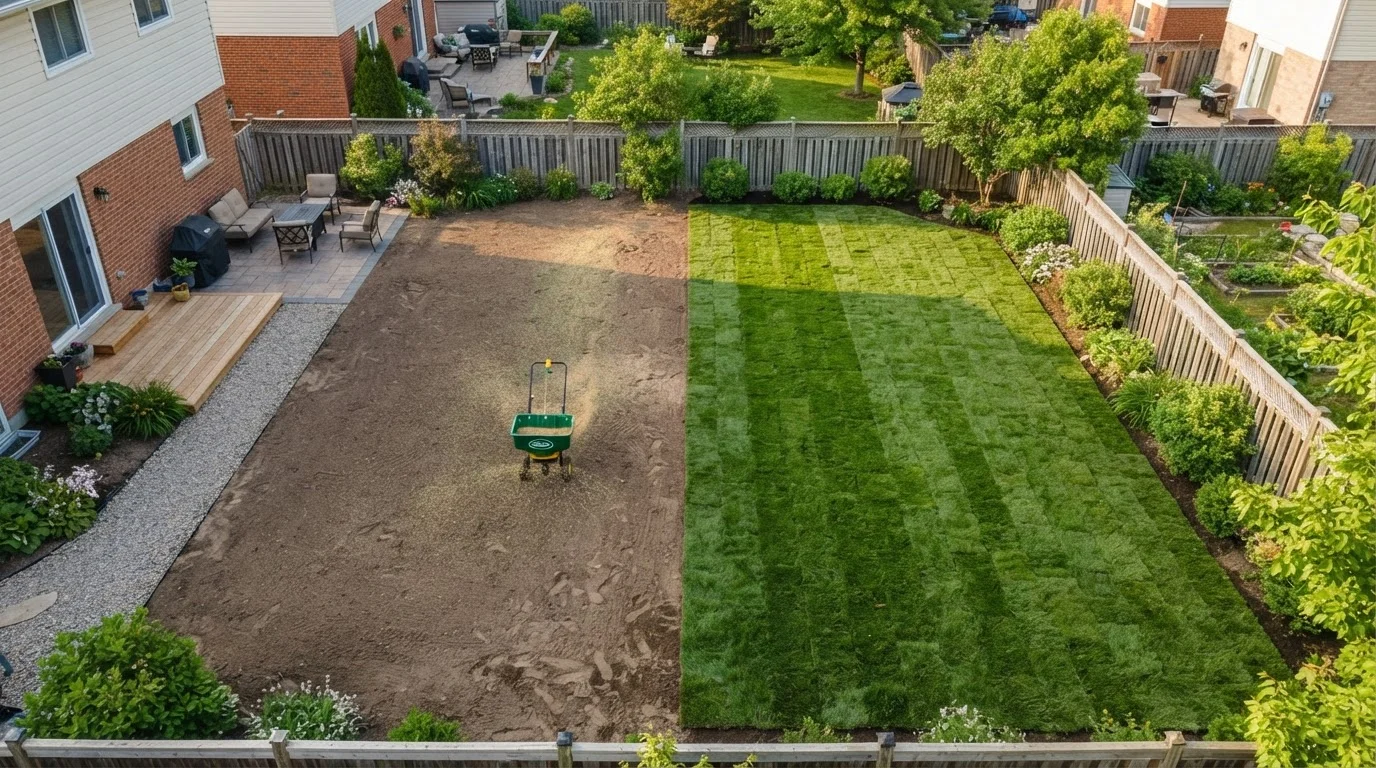
When you establish a lawn from grass seed, you're starting from scratch - scattering seed over prepared soil and waiting for germination, typically anywhere from 7 to 21 days depending on the grass type and temperatures. Full establishment, meaning a lawn thick enough to withstand regular foot traffic, usually takes 60 to 90 days or longer.
Sod, by contrast, is mature turf grown at a farm and harvested in rolls or slabs with roots intact. When it's laid on your prepared soil and watered properly, those roots knit into the ground within two to three weeks. You're essentially skipping the germination phase entirely.
The tradeoff is straightforward: seed asks for time; sod asks for money. Understanding where your project falls on that spectrum is the first step toward making the right call.
| Criterion | Grass Seed | Sod |
|---|---|---|
| Upfront cost | Lower per square foot | Higher per square foot |
| Time to usable lawn | 60-90+ days | 2-3 weeks |
| Variety selection | Very wide range of species | Limited to farm-grown varieties |
| Erosion control | Poor on slopes | Excellent immediately |
| DIY difficulty | Moderate (watering discipline key) | Physically demanding but straightforward |
| Best timing | Species-dependent season | Spring or fall (most species) |
| Risk of failure | Higher (germination variables) | Lower (established root mat) |
Cost Breakdown: What You're Actually Paying For
Grass seed is almost always the more affordable option. Depending on the grass species and blend quality, seed can cost a fraction of what sod runs per square foot. For a typical residential lawn of 2,000 to 3,000 square feet, the savings can be substantial - sometimes several hundred dollars or more.
Sod's higher price reflects the labor and time the sod farm has already invested. You're paying for a product that is weeks or months further along in the growing process. Installation - whether you hire it out or do it yourself - adds to that total. Sod pallets are heavy, delivery fees apply, and the work of cutting, fitting, and rolling the sod is genuinely labor-intensive.
That said, factor in the hidden costs of seeding: erosion control materials (like straw mulch), multiple watering sessions daily during germination, and the real possibility of reseeding thin or failed patches. Over a full season, seeding a problematic yard can close the price gap more than homeowners expect.
5-10×
Sod's cost premium over seed per sq ft
Industry estimates vary, but sod typically runs several times more per square foot than comparable grass seed, not counting installation labor.
7-21 days
Typical grass seed germination window
Germination time varies widely by species, soil temperature, and moisture; cool-season grasses often sprout faster than warm-season varieties.
2-3 weeks
Time for sod roots to knit into soil
Under proper watering and temperature conditions, sod typically anchors into the ground within two to three weeks of installation.
Timing, Soil, and Conditions That Tip the Balance
Both methods are sensitive to timing. Cool-season grasses - such as tall fescue, Kentucky bluegrass, and ryegrass - establish best when seeded in late summer to early fall, when soil temperatures have cooled but conditions remain warm enough for germination. Sod of these same species can be laid in spring or fall. Warm-season grasses - like Bermuda, Zoysia, and St. Augustine - prefer late spring through early summer for both seeding and sodding.
Soil preparation matters equally for both approaches. Regardless of which method you choose, compacted or nutrient-poor soil will undermine establishment. A soil test - available inexpensively through many county cooperative extension offices - tells you what amendments your soil needs before you begin. Skipping this step is one of the most common reasons lawns fail to thrive regardless of whether seed or sod was used.
Consider your site conditions carefully. Shaded areas can be tricky for sod if the farm-grown turf was raised in full sun. Grass seed, on the other hand, lets you select shade-tolerant blends matched to your yard's specific light levels. Conversely, slopes steeper than about 10 to 15 percent are genuinely difficult to seed successfully - water runoff displaces seed before it can germinate, and that's where sod earns its keep.
Making the Final Call for Your Yard
There is no universally correct answer between seed and sod - the right choice depends on your budget, your timeline, and the specific challenges your yard presents. A few clarifying questions can help you decide:
- How soon do you need a functional lawn? If the answer is weeks, sod is the practical path.
- What is your available budget? For large areas, seed's lower cost can be decisive.
- Are there slopes, erosion risks, or heavy clay soil? Sod handles these scenarios more reliably.
- Do you have the time to water consistently? Newly seeded lawns need frequent, light watering - sometimes twice daily - until germination is complete.
Many homeowners end up using a hybrid approach: sodding high-visibility or high-traffic areas like the front yard and entry paths, while seeding less-visible side and rear areas. This can balance cost and aesthetics effectively. Whatever you choose, the investment in proper soil prep, correct timing, and consistent watering in the early weeks will do more to determine success than the choice between seed and sod itself.
This article is for general informational purposes. Costs, timelines, and grass species suitability vary by region, climate, and local conditions. Consult your local cooperative extension service for region-specific guidance.