Why Consider Replacing or Reducing Your Lawn?
Maintaining a traditional turf lawn demands a steady investment of time, water, and money. Between weekly mowing, seasonal fertilizing, and irrigation during dry spells, the costs - both financial and environmental - add up quickly. For homeowners looking to simplify their outdoor routine without sacrificing curb appeal, ground covers offer a compelling alternative.
Ground covers are low-growing plants that spread horizontally to blanket soil. They protect bare earth from erosion, crowd out weeds once established, and many varieties thrive with little intervention once they take hold. Whether you're dealing with a shady slope, a dry sunny strip, or simply want to shrink the amount of lawn you mow, there's likely a ground cover suited to your conditions.
The options below are widely adaptable across U.S. growing zones, though you should always confirm a plant's suitability with your local cooperative extension service before planting.
Check for Invasive Status
Some highly effective ground covers are classified as invasive in certain U.S. states, meaning they can spread beyond your yard and displace native plants in natural areas. Before purchasing any ground cover, check with your state's department of natural resources or local cooperative extension service to confirm the plant is appropriate for your region. This one step can prevent significant ecological harm down the line.
Ground Covers Worth Planting
Creeping Thyme
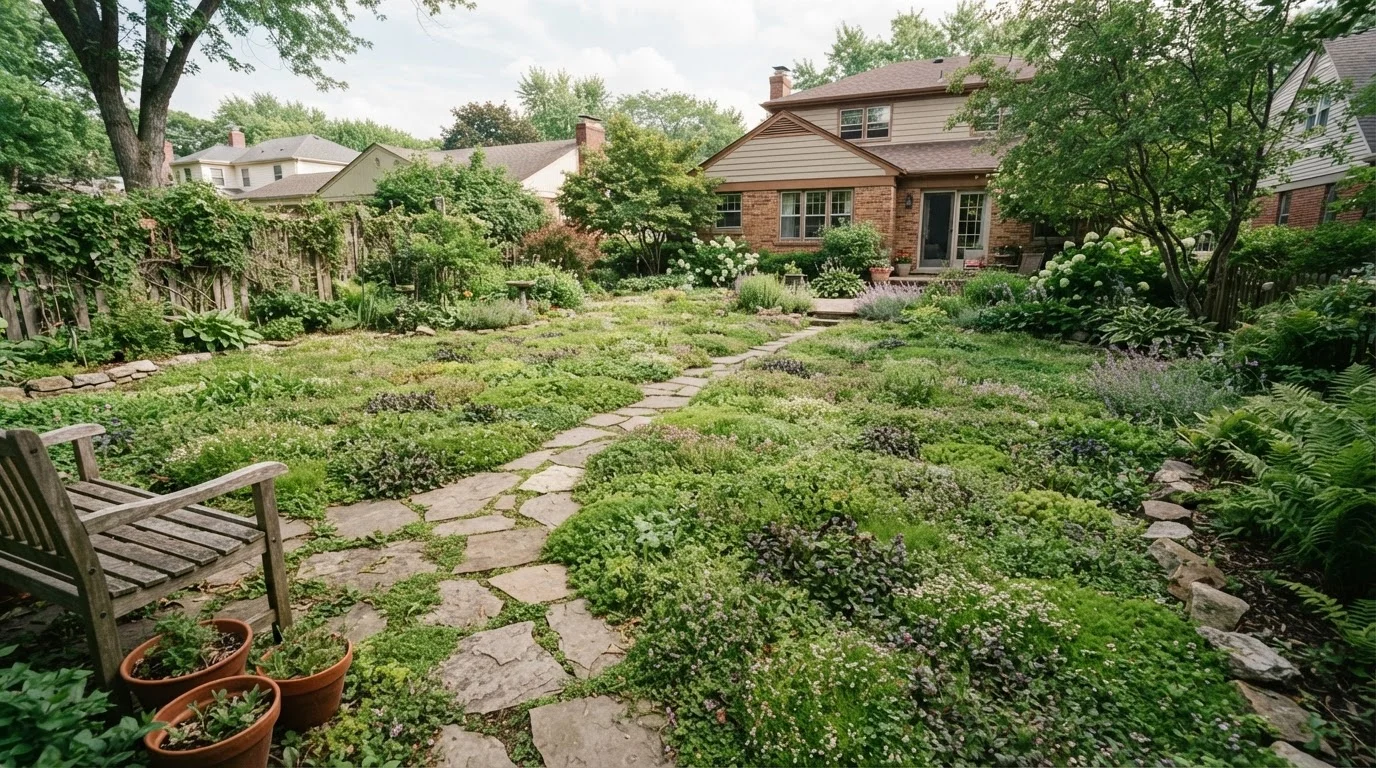
Creeping thyme is a drought-tolerant perennial that forms a dense, fragrant mat only a few inches tall. It tolerates light foot traffic, making it one of the few ground covers suitable for areas between stepping stones or along pathways. In summer, it produces small purple or pink flowers that attract bees and other pollinators.
It performs best in full sun and well-drained soil, making it an excellent choice for hot, dry areas where grass struggles. Once established, it needs virtually no supplemental watering in most U.S. climates and no mowing at all.
Creeping thyme handles light foot traffic and thrives in dry, sunny spots where grass often fails.
Creeping Jenny
Creeping Jenny is a vigorous spreader with bright chartreuse or golden-green foliage that works well in both sun and partial shade. It grows close to the ground and spreads quickly, making it effective for filling in large bare areas relatively fast compared to slower ground covers.
It tolerates moist soil conditions better than many alternatives, so it's worth considering for low-lying spots that collect water or areas near downspouts. While it can spread enthusiastically, it is generally easy to trim back at borders to keep it contained.
Creeping Jenny fills bare areas quickly and handles moist, low-lying spots that other plants avoid.
Pachysandra
Pachysandra is one of the most reliable ground covers for dense shade - conditions where grass consistently struggles and bare soil erodes. It forms a tidy, evergreen carpet that stays green year-round in most of the country, requiring almost no attention once established.
It spreads steadily but not aggressively, making it manageable for smaller shaded areas under trees or along north-facing foundations. Pachysandra prefers slightly acidic, well-drained soil and does not perform well in full sun or areas with standing water.
Pachysandra thrives in deep shade and stays evergreen, solving one of the trickiest lawn problem spots.
Clover
White clover was once a deliberate addition to grass seed mixes before broadleaf herbicides made it an accidental target. Today, many homeowners are intentionally reintroducing it as a lawn alternative or supplement. Clover fixes nitrogen from the air into the soil, reducing the need for fertilizer, and its flowers support pollinators throughout the growing season.
A clover lawn stays green longer in dry conditions than turf grass, requires no mowing if you prefer a natural look, and tolerates moderate foot traffic. It can be mowed occasionally if you prefer a tidier appearance, and it recovers quickly.
Clover feeds itself by fixing nitrogen and stays green through dry spells better than most turf grasses.
Vinca Minor (Periwinkle)
Vinca minor, commonly called periwinkle, is a shade-tolerant evergreen ground cover with glossy leaves and violet-blue flowers in spring. It spreads steadily via trailing stems that root where they touch soil, gradually filling in slopes and shaded beds that are difficult to mow or maintain.
It is notably tolerant of dry shade - one of the harder growing conditions to address - and handles a range of soil types reasonably well. Note that vinca is considered invasive in some states, particularly in the eastern U.S., so check with your local extension office before planting to ensure it's appropriate for your region.
Vinca minor handles dry shade reliably, but verify its invasive status in your state before planting.
Native Sedges
Sedges are grass-like plants that are often confused with ornamental grasses, but they're a distinct plant family with hundreds of native species across North America. Many low-growing sedge varieties can substitute for turf in areas with partial to full shade and consistently moist soil - conditions where conventional lawn grasses thin out and fail.
Because they are native, they require no fertilizer, minimal supplemental watering once established, and support local wildlife. They do not need regular mowing, though an annual trim in early spring helps keep them looking tidy. Selecting a species native to your specific region maximizes both performance and ecological benefit.
Native sedges thrive in shady, moist conditions and support local wildlife with zero fertilizer needs.
Start With a Soil Test
Before investing in any ground cover, consider doing a basic soil test through your local cooperative extension service. Knowing your soil's pH and nutrient levels helps you choose plants that will actually thrive rather than struggle. Many extension offices offer affordable testing kits, and the results take the guesswork out of soil amendment decisions.
Getting Started Without Overwhelm
You don't need to rip out your entire lawn at once. Many homeowners start small - replacing one problematic patch, a shaded strip under trees, or a steep slope that's difficult to mow safely. Once a section establishes successfully, expanding becomes much easier and less daunting.
Before planting, prepare the area by removing existing grass and weeds, loosening compacted soil, and adding organic matter if drainage is poor. Water new plantings consistently during the first growing season, then taper off as plants establish their root systems. Mulching between young plants helps retain moisture and keeps weeds at bay during that critical first year.
With realistic expectations and the right plant for your conditions, ground covers can dramatically reduce your outdoor workload season after season.