Why Brown Patches Are Rarely One-Size-Fits-All
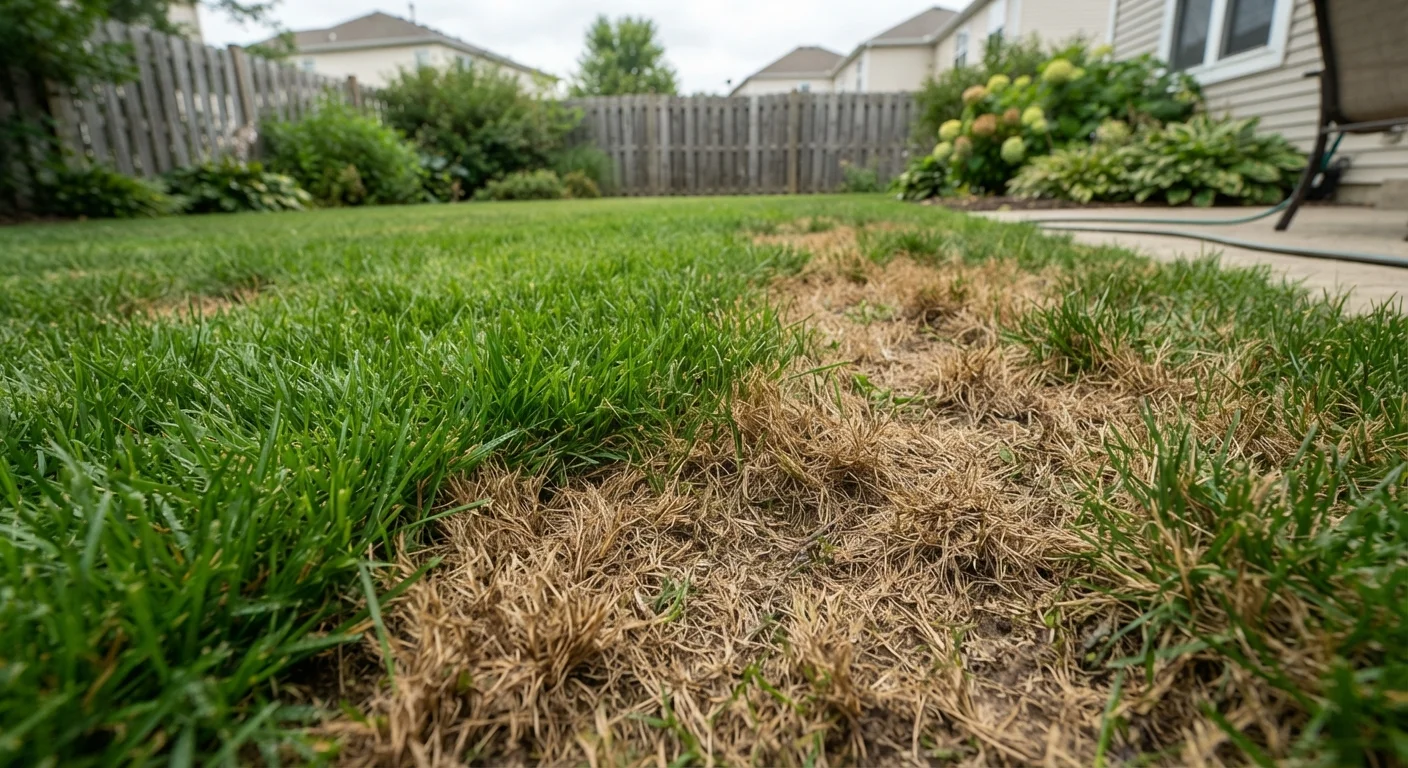
Brown patches are one of the most common concerns homeowners bring up about their lawns - and one of the most frequently mishandled. The problem isn't that the fixes are complicated. It's that there are several very different causes that look nearly identical from a distance, and the fix for one can actively worsen another.
Drought stress, fungal disease, soil compaction, insect damage, mowing habits, and even pet behavior can all produce brown or dying grass. Before you water, spray, or aerate anything, the most valuable step you can take is a simple, hands-on examination of the affected area.
Diagnose Before You Treat
Applying fungicide to a drought-stressed lawn, or watering a fungus-affected one, can make the problem significantly worse. Before spending money on any treatment, take five minutes to physically examine the affected area - pull on the grass, check the soil moisture two inches down, and look for insects. The right fix depends entirely on the right diagnosis.
The sections below outline the most common mistakes homeowners make when confronting brown patches - and what to do instead.
Common Mistakes That Make Brown Patches Worse
Each of the errors below is understandable - they usually come from a place of wanting to fix the problem quickly. But acting on the wrong assumption delays real recovery and can set your lawn back by an entire growing season.
Assuming brown grass always means drought and responding by watering more.
Why it happens: Drought stress is the most intuitive explanation for brown grass, so homeowners reach for the hose first without checking other possible causes.
Applying a generic lawn treatment product without identifying the specific problem first.
Why it happens: Hardware store shelves offer many all-in-one lawn products, and it's tempting to try something rather than nothing when grass starts dying.
Ignoring soil compaction as a possible root cause of dead or stressed grass.
Why it happens: Compaction is invisible from the surface, so it's easy to overlook - especially in high-traffic areas of the yard.
Mowing too short during hot or dry weather, causing heat stress that appears as browning.
Why it happens: Many homeowners mow short to reduce how often they have to cut the lawn, not realizing that grass height directly affects its resilience.
Overlooking dog urine spots or fertilizer burn as the cause of small, concentrated brown patches.
Why it happens: These patches look similar to disease or drought damage at a glance, leading homeowners to treat for the wrong problem repeatedly.
Once you've correctly identified the cause, most brown patches are recoverable with targeted, consistent care. Overseeding, adjusted watering schedules, aeration, or simply changing mowing height can restore healthy turf within a few weeks to a couple of months, depending on the season and grass type.
Grub Damage Can Spread Quickly
If the brown patch lifts away from the soil like a loose carpet when you tug it, grub damage is likely. Grubs sever grass roots just below the surface, and the affected area can expand rapidly during late summer. Once you confirm grubs are present - typically more than five per square foot - consult your local cooperative extension office for appropriate, regionally suitable management guidance.
A Simple Framework for Diagnosing Your Lawn
You don't need special equipment to do a reliable initial diagnosis. Work through these quick checks before taking any action:
- Pull the grass. If it lifts away from the soil with almost no resistance, root damage from grubs or disease is likely. Healthy grass resists pulling.
- Check soil moisture. Push a screwdriver two inches into the soil. Dry and crumbly means drought stress. Soggy means overwatering or drainage problems.
- Look at the patch shape. Irregular, spreading patches with no clear border suggest drought or compaction. Near-perfect circles with a defined edge suggest fungal activity.
- Check for insects. Peel back a small section of turf in the affected area and look for white, C-shaped grubs in the top inch or two of soil.
- Recall recent lawn activity. Did you fertilize recently? Has a dog been in that area? These context clues matter.
~40%
Of lawn problems linked to watering errors
Turfgrass specialists commonly estimate that a large proportion of residential lawn issues stem from improper irrigation - either too much or too little water applied at the wrong time.
2 inches
Soil depth to check for moisture
Lawn care experts recommend probing soil to a depth of two inches before watering - if it feels moist at that depth, additional watering is likely unnecessary and could encourage fungal growth.
Taking ten minutes for this process before purchasing any product will nearly always lead to a faster, cheaper, and more effective outcome.