The Real Reasons Cats Scratch
Understanding why cats scratch is the first step toward managing it effectively. Scratching serves three distinct biological functions that cats cannot simply choose to stop performing.
Claw maintenance: A cat's claws grow in layers. Scratching strips away the dull outer sheath, exposing the sharper claw underneath. Without this process, claws can overgrow and curl painfully into the paw pad.
Physical conditioning: When a cat drags its claws downward against a surface, it engages muscles from the shoulder through the forelimbs. This full-body stretch is especially important after long rest periods - which is why so many cats scratch immediately after waking up.
Territorial and emotional signaling: The interdigital scent glands in a cat's paws release pheromones during scratching. Combined with the visible marks left on a surface, scratching communicates a cat's presence and emotional state to other animals - and reinforces the cat's own sense of security in its space.
Because scratching meets multiple simultaneous needs, eliminating it entirely is not realistic or humane. The goal is redirection, not suppression.
“Scratching is not a behavioral problem - it is a behavioral need. The owner's job is to provide an outlet that satisfies that need more effectively than the furniture does.”
— American Association of Feline Practitioners, Veterinary professional organization focused on feline medicine and welfare
What Makes Furniture So Appealing to Cats
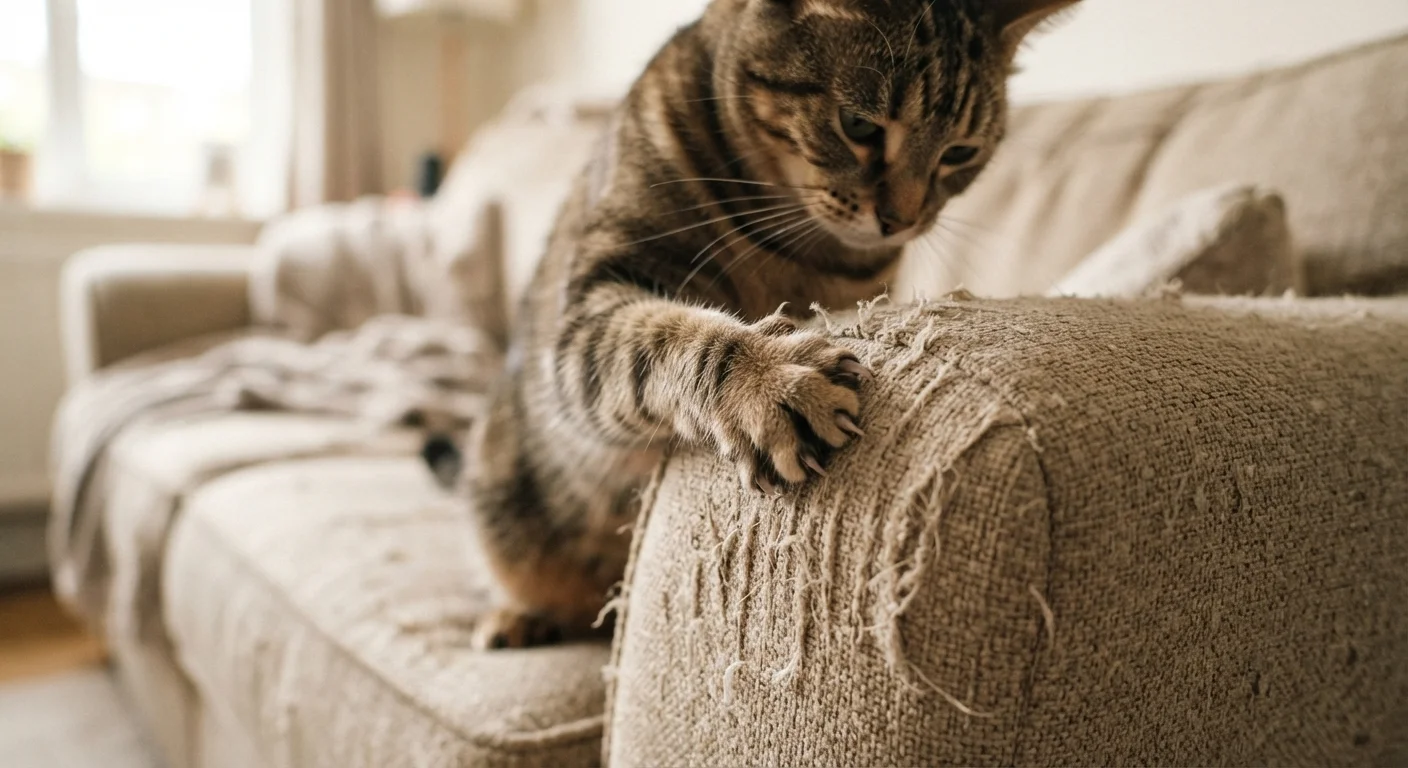
Sofas and upholstered chairs offer several qualities cats seek in a scratching surface: the right texture for claw resistance, a vertical orientation that supports a full stretch, and - critically - a prime location in the home's social center.
Cats are more likely to scratch in areas where they spend time with their owners and in spots near sleeping areas or entry points. Your living room sofa may simply be the best-positioned, best-textured option available to your cat.
~95%
Cat owners who report scratching-related furniture damage
According to survey data cited in the Journal of Feline Medicine and Surgery, scratching is among the most common owner-reported behavioral concerns in domestic cats.
28+ inches
Recommended minimum scratching post height
Animal behavior specialists generally recommend posts tall enough to allow a full vertical stretch, which for most adult cats means at least 28-32 inches.
Many generic scratching posts fail to compete because they are too short (under 28 inches), too lightweight to stay stable under pressure, or placed in low-traffic corners the cat rarely visits. A post that wobbles when a cat leans into it is quickly abandoned.
Practical Strategies That Actually Work
Effective redirection relies on making alternatives more attractive than the furniture - not simply making the furniture unpleasant.
Choose the right scratching surface
Cats have individual preferences for texture. Common options include sisal rope, corrugated cardboard, carpet, and natural wood. If your cat targets woven fabric, a sisal-covered post is usually the closest match. Offer more than one material type initially to identify your cat's preference.
Placement is non-negotiable
Position new scratching posts directly adjacent to the furniture currently being scratched. Once your cat consistently uses the post, you can gradually move it a few inches at a time toward a preferred location. Moving it abruptly risks losing the new habit entirely.
Use positive reinforcement
When your cat uses the post, reward the behavior immediately with praise, a small treat, or play. Punishment - spraying water, clapping, or scolding - is generally counterproductive: it can increase anxiety without teaching the cat where to scratch instead.
Temporary physical deterrents
Double-sided tape, furniture covers, or aluminum foil applied to the targeted area can reduce the appeal of the sofa while your cat builds a new scratching habit. These are most effective when used alongside - not instead of - an appealing alternative.
Nail trimming and soft caps
Trimming your cat's nails every two to three weeks blunts the tips and reduces surface damage. Soft vinyl claw caps are another option; they are adhesive, non-toxic, and last several weeks. Both approaches are maintenance tools, not behavioral solutions on their own.
Make the Post Irresistible From Day One
Sprinkle a small amount of dried catnip on or around a new scratching post to encourage initial investigation. You can also dangle a toy near the base to prompt your cat to reach upward toward the post. First contact with the post is often the hardest part - once your cat discovers the texture is satisfying, return visits typically follow on their own.
When to Consult a Veterinarian or Behaviorist
Most household scratching problems respond well to environmental management. However, a sudden increase in scratching intensity or frequency - particularly if paired with other behavioral changes - can occasionally reflect underlying stress, pain, or anxiety worth discussing with a veterinarian.
If you have tried consistent redirection strategies for several weeks without improvement, a certified cat behavior consultant (look for credentialing through the International Association of Animal Behavior Consultants) can conduct a more individualized assessment of your cat's environment and routine.
This article is for general informational purposes only and does not constitute veterinary or behavioral advice. Consult a licensed veterinarian for concerns about your individual cat's health or behavior.