Why Dog Dental Health Gets Neglected
Dental disease is among the most common health conditions diagnosed in dogs, yet it remains one of the most under-addressed at home. Veterinary organizations estimate that by age three, the majority of dogs show early signs of periodontal disease - an infection of the structures surrounding the teeth. Despite this, surveys consistently find that most owners brush their dog's teeth rarely or never.
The reasons are understandable: dogs resist brushing, the early stages of dental disease are invisible to the untrained eye, and bad breath is often dismissed as just a "dog thing." But persistent bad breath, reluctance to chew hard food, and visible tartar are signs that the disease process is already underway. Understanding the most common mistakes owners make is the fastest way to change that trajectory.
~80%
Dogs with dental disease by age 3
Veterinary dental specialists estimate that the vast majority of dogs show signs of periodontal disease by their third birthday.
<5%
Dog owners who brush daily
Veterinary practice surveys consistently find that daily tooth brushing remains rare among dog owners despite professional recommendations.
The Most Common Dental Care Mistakes - And How to Fix Them
The following mistakes are drawn from the patterns veterinary professionals most frequently observe in practice. Correcting even one of them can meaningfully improve your dog's oral health over time.
Using human toothpaste on dogs.
Why it happens: Many owners assume that toothpaste is toothpaste, or they reach for what's already in the bathroom cabinet.
Skipping professional dental cleanings because the dog seems fine.
Why it happens: Dental disease progresses below the gumline where it isn't visible, so dogs can have significant infection while appearing outwardly normal and still eating well.
Relying solely on dental chews or water additives instead of brushing.
Why it happens: Brushing can be difficult, especially with resistant dogs, and dental chews feel like an easier solution.
Waiting until bad breath is severe before taking action.
Why it happens: Mild bad breath is often normalized, and owners may not realize it signals early-stage disease.
Ignoring the higher dental risk in small and toy breeds.
Why it happens: Owners of small dogs often focus on other care aspects and don't realize their dog's breed type carries specific oral health vulnerabilities.
This article is for general informational purposes only and is not a substitute for veterinary advice. Always consult your veterinarian for guidance specific to your dog's health needs.
Building a Realistic Home Dental Routine
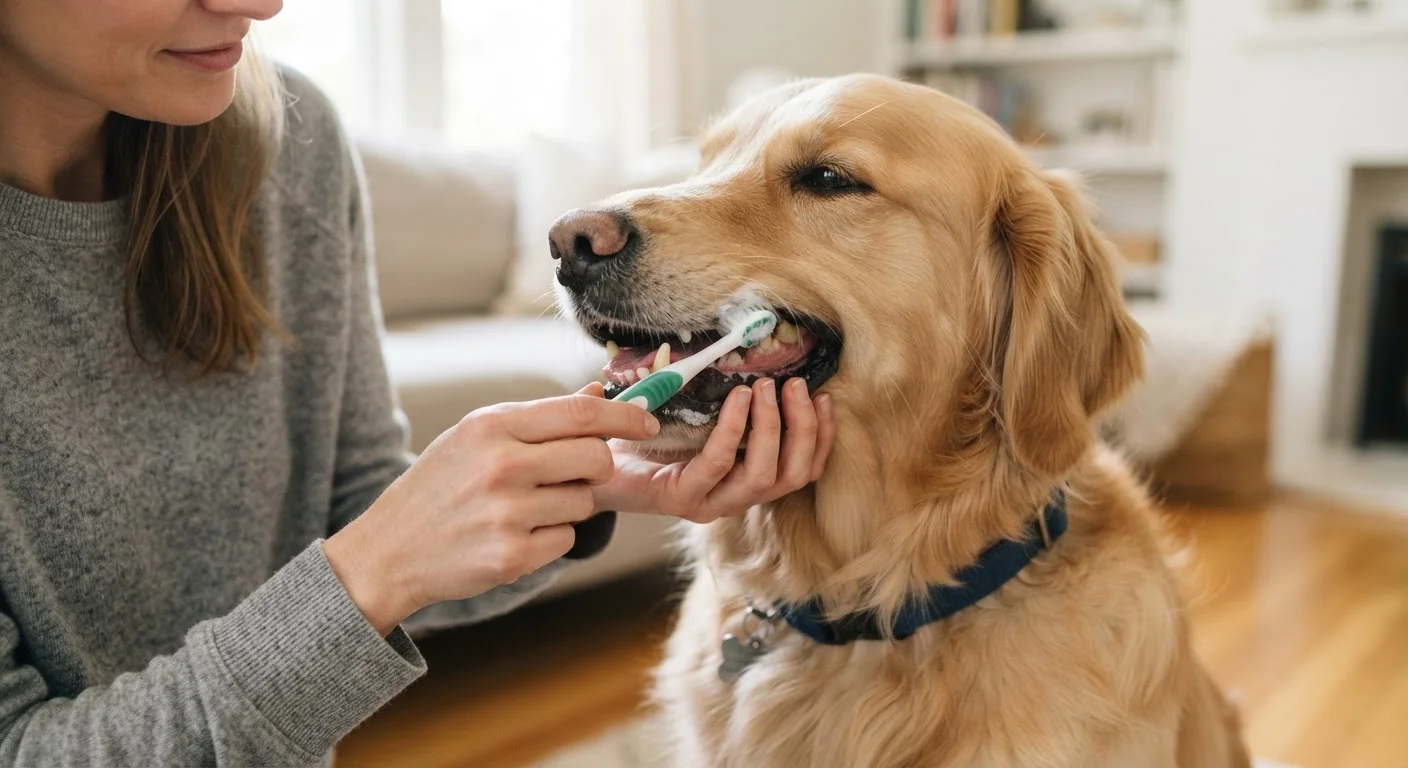
Consistency matters more than perfection. Even brushing three to four times per week provides meaningful protection against plaque buildup compared to doing nothing. Use a toothbrush sized for your dog's mouth - finger brushes work well for beginners - and always use enzymatic toothpaste formulated specifically for dogs. These products are designed to be safe if swallowed and contain enzymes that help break down plaque between brushing sessions.
Never Use Human Toothpaste on Your Dog
Xylitol, a common sweetener in human toothpastes, is acutely toxic to dogs and can cause life-threatening drops in blood sugar. Fluoride is also harmful if ingested regularly. Keep all human dental products out of reach and stock only dog-formulated toothpaste for your pet's oral care routine.
If your dog is new to brushing, start by letting them lick the toothpaste off your finger for several days before introducing the brush. Gradual desensitization makes the process far more sustainable. Pair each session with calm praise so the routine becomes something your dog tolerates - or even anticipates.
Dental chews approved by the Veterinary Oral Health Council (VOHC) carry a seal indicating they meet published standards for plaque or tartar reduction. These can be a useful supplement, but confirm with your veterinarian which options are appropriate for your dog's size, age, and dietary needs.