Why the Format of Dog Food Actually Matters
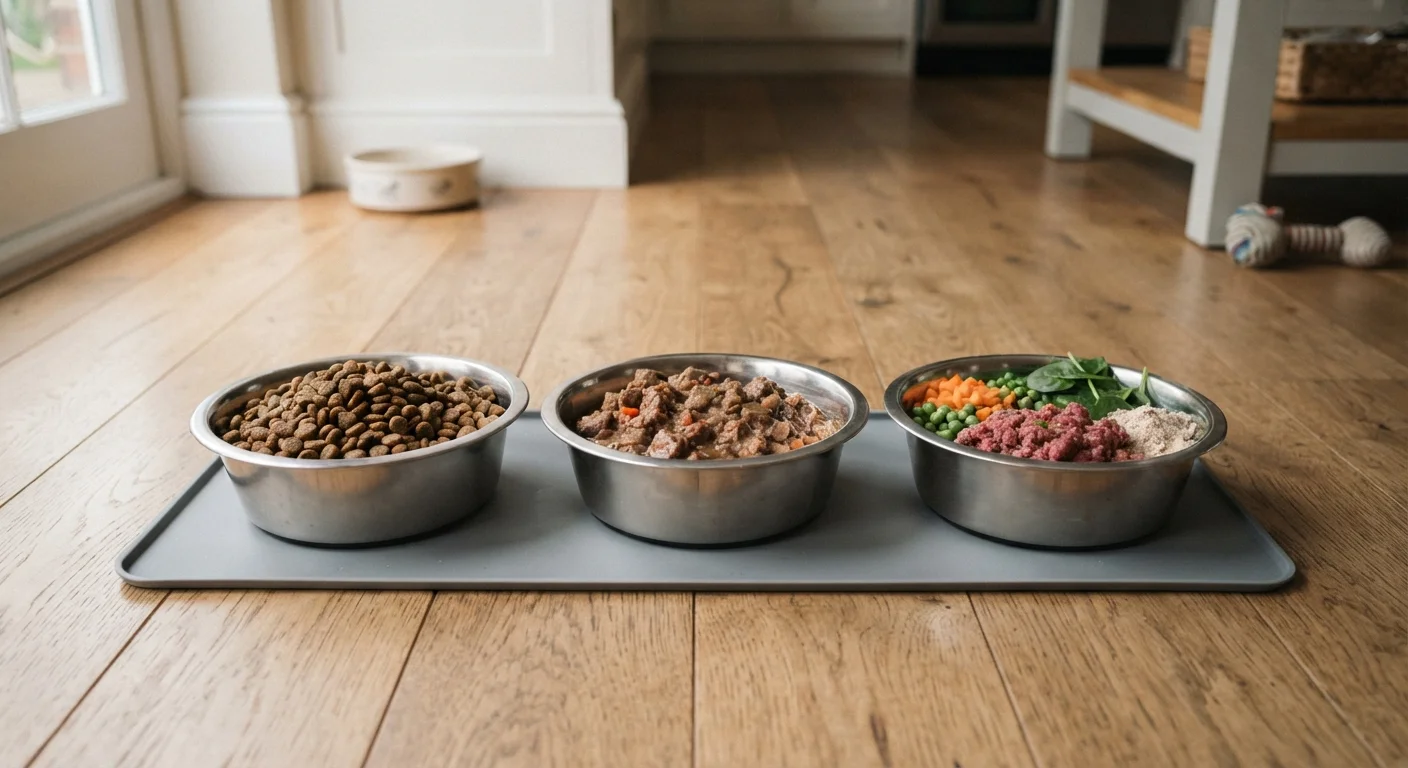
When most dog owners think about their pet's nutrition, they focus on ingredients - protein sources, grain content, added vitamins. But the physical format of a dog's food - dry, wet, or raw - shapes its nutritional profile in ways that go beyond the ingredient list. Moisture levels, processing methods, and microbial safety all shift significantly depending on format.
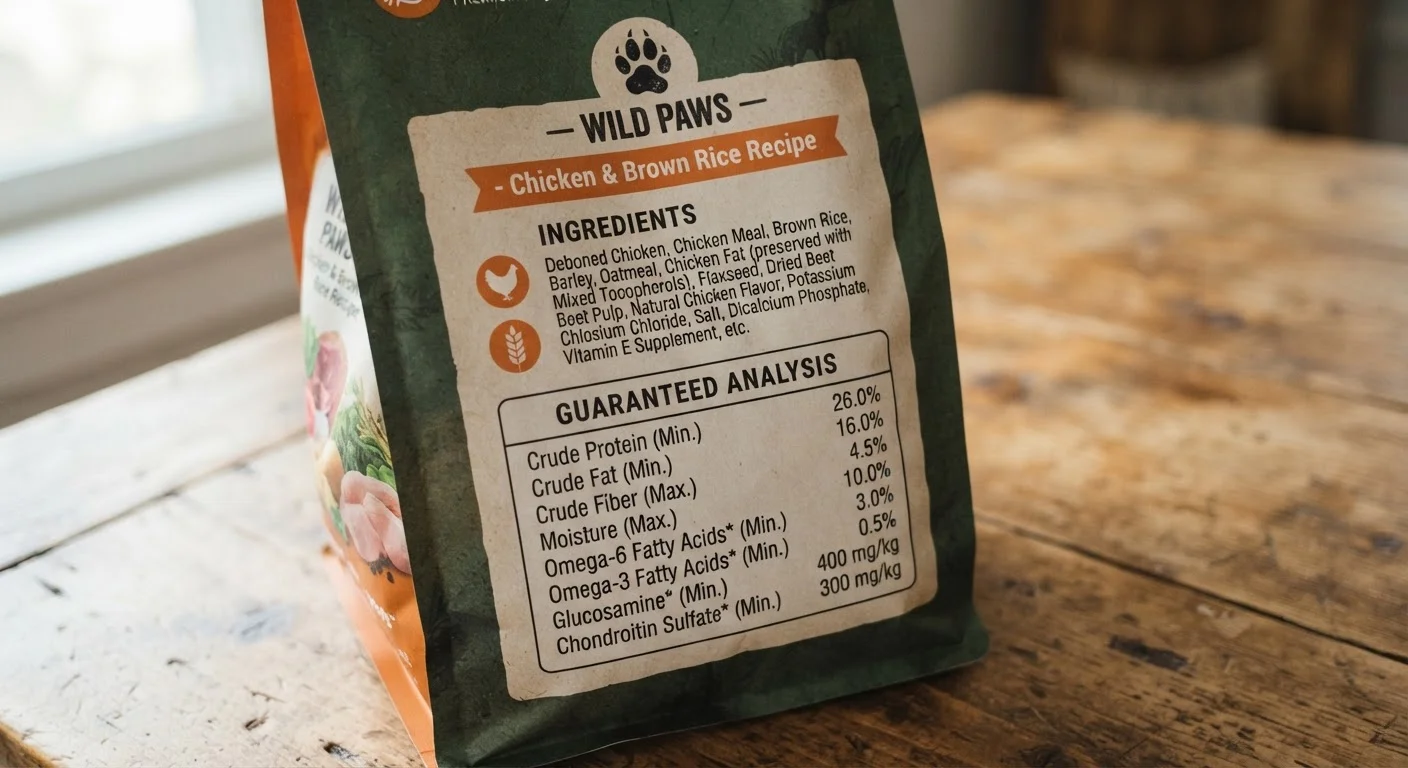
Understanding these differences isn't about finding a single "best" option. As with human nutrition, what works well depends on the individual. For a deeper look at how to interpret what's actually in your dog's food, see our guide to canine nutrition labels.
| Dry Food (Kibble) | Wet Food | Raw Diet | |
|---|---|---|---|
| Moisture Content | 6-10% | 70-80% | 60-75% (varies) |
| Typical Cost per Serving | Low to moderate | Moderate to high | High (varies widely) |
| Shelf Life / Storage | Long shelf life, easy storage | Refrigerate after opening | Requires freezing; short thawed life |
| Food Safety Risk | Low | Low to moderate | Higher (bacterial contamination risk) |
| AAFCO Compliance | Widely available | Widely available | Variable; many not certified |
| Palatability for Picky Dogs | Moderate | High | Often high |
| Nutritional Balance | Consistent when certified | Consistent when certified | Varies; risk of deficiency if DIY |
Dry Food (Kibble): Consistency and Convenience
Dry kibble is the most widely used dog food format in the United States, and for practical reasons. It stores easily, measures consistently, and generally costs less per serving than wet or raw alternatives. Kibble is produced through extrusion - a high-heat process that cooks ingredients into shelf-stable pellets - which means moisture content is low, typically between 6% and 10%.
From a nutritional standpoint, most commercially produced kibbles are formulated to meet AAFCO (Association of American Feed Control Officials) nutrient profiles, which set minimum standards for complete and balanced dog food. That said, not all kibbles are formulated equally, and the heat involved in processing can reduce some heat-sensitive nutrients, which manufacturers often compensate for with added supplements.
One commonly cited benefit of dry food is its mechanical effect on teeth - the crunching action may help reduce tartar accumulation. However, this benefit is often overstated. For a realistic picture of what actually protects canine dental health, our overview of dog dental health covers the evidence in more detail.
Wet Food: Higher Moisture, Higher Palatability
Canned or pouch-based wet food typically contains 70% to 80% moisture - much closer to the water content found in whole prey. This makes it particularly useful for dogs that don't drink enough water on their own, or those with urinary tract issues where increased hydration is a clinical goal. Dogs recovering from illness or those with reduced appetite often accept wet food more readily due to its stronger aroma and softer texture.
Wet food tends to be higher in animal-based protein relative to its caloric density, though it's also generally more expensive per calorie than dry food. Because it's perishable once opened, portion management and refrigeration become important. For older dogs whose taste and smell sensitivity may have declined, wet food can be a practical tool for maintaining adequate intake - a consideration worth exploring in our guide to senior dog care needs.
Mixing Formats Is a Legitimate Option
Many veterinarians consider a combination of dry and wet food a practical middle ground - preserving the convenience and cost-effectiveness of kibble while using wet food to boost hydration and palatability. If you go this route, account for the combined caloric load from both formats to avoid unintentional overfeeding. Your vet or a veterinary nutritionist can help you work out appropriate portion ratios.
Raw Diets: What the Evidence Actually Shows
Raw feeding - sometimes called BARF (Biologically Appropriate Raw Food) or prey-model feeding - involves giving dogs uncooked muscle meat, organ meat, raw meaty bones, and sometimes vegetables or fruit. Proponents argue it more closely mimics ancestral canine diets and can improve coat condition, digestion, and energy levels.
The evidence base is more complicated. While some dog owners report positive anecdotal outcomes, major veterinary organizations including the American Veterinary Medical Association (AVMA) have issued cautionary statements about raw diets, primarily due to the risk of bacterial contamination - Salmonella, Listeria, and E. coli among them. These pathogens pose risks not only to dogs but to humans in the household, particularly children, elderly individuals, and immunocompromised people.
Raw diets also carry a higher risk of nutritional imbalance unless carefully formulated with veterinary or board-certified veterinary nutritionist oversight. Home-prepared raw meals in particular may be deficient in calcium, phosphorus, or key vitamins without deliberate supplementation. If this approach interests you, it warrants a direct conversation with your veterinarian before making the switch.
Raw Diets and Household Safety
Raw meat can harbor pathogens that transfer to surfaces, bowls, and hands during preparation and feeding. The AVMA advises particular caution in households with infants, elderly individuals, pregnant people, or anyone who is immunocompromised. If you choose raw feeding, strict hygiene protocols - separate preparation surfaces, thorough handwashing, and safe food storage - are not optional. Discuss the full risk picture with your veterinarian before starting.
Making a Choice That Fits Your Dog
No feeding format is inherently superior. Dogs vary significantly by age, breed, health condition, and individual digestive tolerance. A young, healthy Labrador with no chronic conditions has different nutritional flexibility than a senior dog managing kidney disease or a puppy still developing its immune system.
A few practical questions worth working through with your vet:
- Does your dog have any diagnosed health conditions that make one format more or less appropriate?
- What is your realistic capacity to handle food safely - especially relevant for raw diets?
- What does your dog actually eat consistently and without GI upset?
- Is the food you're considering AAFCO-compliant for your dog's life stage?
Whatever format you choose, the ingredients within it still matter. Understanding how to read a dog food label - including the guaranteed analysis panel and AAFCO statement - is a skill that applies across all three formats. The canine nutrition label decoder can help you get more out of that information.
This article is intended for general informational purposes only and is not a substitute for professional veterinary advice. Always consult a licensed veterinarian before making significant changes to your dog's diet.