Before Your Dog Arrives
A little preparation before pickup day dramatically lowers stress for both you and your dog. Think of it as setting the stage rather than reacting to chaos once the dog is already home.
Decompression period
The adjustment window - often two to four weeks - during which a new dog learns the sights, sounds, and routines of a home before showing their true personality.
Crate as safe space
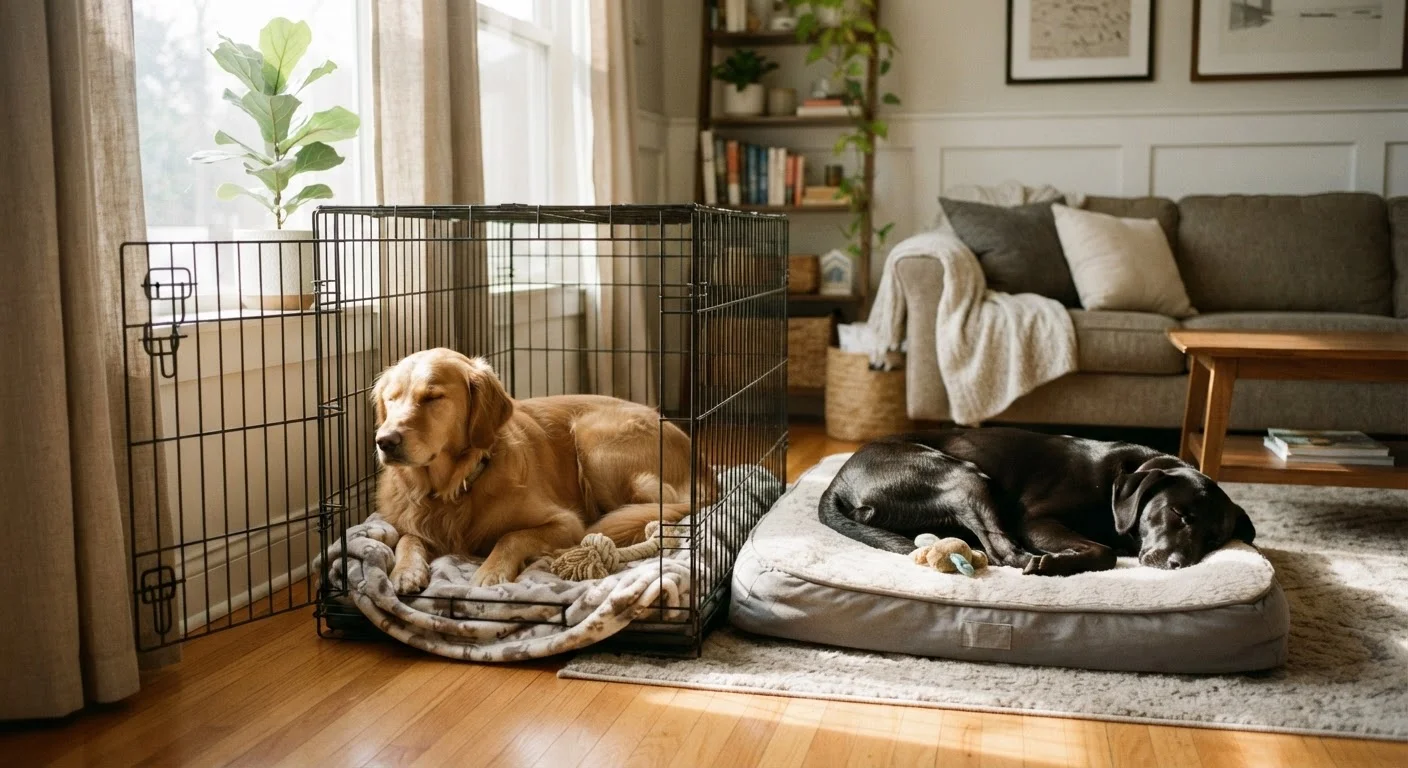
A properly introduced crate serves as a den-like retreat where a dog can rest without disturbance, not as a punishment or containment device.
Positive reinforcement
A training approach where desired behaviors are immediately followed by something the dog enjoys - praise, a treat, or play - making those behaviors more likely to repeat.
Threshold
The point at which a dog's stress or excitement level becomes too high for them to think clearly or respond calmly; keeping experiences below threshold helps a dog learn and settle.
Elimination schedule
A predictable timetable for taking a dog outside to urinate and defecate, reducing indoor accidents by anticipating the dog's biological needs.
Designate a single "home base" room - typically a quiet space with easy-to-clean flooring - where your dog will spend the first day or two. Place the crate or bed, water bowl, and a few low-stimulation toys there. Remove cords, toxic houseplants, and anything chewable from ground level. If you have other pets, plan a separate introduction space so no animal feels cornered on a first meeting.
Purchase the same food your dog has been eating, if you can find out what it is. Sudden diet changes on top of an already stressful transition frequently cause digestive upset. If you need to switch foods later, do it gradually over seven to ten days.
Day One: Arrivals and First Impressions
The car ride home may be your dog's first experience of your scent and voice in an enclosed space - keep the atmosphere calm and avoid loud music or excited chatter. If possible, have a second person present to offer gentle reassurance while you drive.
When you arrive, go directly to a quiet outdoor area and give your dog a few minutes to sniff and, ideally, eliminate before entering the house. This small step establishes an outdoor potty association from the very first moment.
Once inside, let your dog explore the home base room at their own pace. Resist the urge to hover or force interaction. Sit on the floor at their level and allow them to approach you. Keep the first few hours low-key: no large gatherings, no loud children running in, no introductions to other household pets on day one unless the situation makes waiting impossible.
Let Your Dog Set the Pace
On day one, resist scheduling playtime or planned interactions. Allow your dog to approach family members on their own terms. Dogs who are given control over the pace of new relationships tend to build trust faster and show fewer stress behaviors in the first week.
Days Two Through Four: Building Routine
Dogs are pattern-seeking animals. Once a dog can predict when meals happen, when the door opens, and when quiet time begins, anxiety drops measurably. Aim to feed at the same times each day - typically twice daily for adult dogs - and take your dog outside on a consistent schedule: first thing in the morning, after each meal, after naps, and before bed.
Start brief, structured leash walks in your immediate neighborhood. Keep sessions short - 10 to 15 minutes - and let your dog sniff freely rather than pushing pace. Sniffing is mentally tiring in a productive way and helps a dog process new environments without becoming overwhelmed.
If your dog is crate-trained or you're introducing a crate, use it as a positive retreat rather than a punishment space. Feed meals near or inside the crate, and reward calm entry with quiet praise. Never force the door shut during this early phase if your dog shows significant distress.
Days Five Through Seven: Expanding Confidence
By mid-week, most dogs show early signs of relaxation: more exploratory sniffing throughout the house, improved appetite, and some playful behavior. This is a good time to gently expand boundaries - allow supervised access to an additional room, or practice short departures from the house (five to ten minutes) so your dog learns that you return.
Begin basic cue practice in short, positive sessions lasting just two to three minutes. Simple cues like sit, come, and name recognition lay the foundation for communication and give your dog a way to earn praise, which builds confidence faster than passive time alone does.
If you haven't already scheduled a veterinary wellness exam, do so now. A baseline health check confirms your dog's vaccination records are complete and gives your vet a reference point if any health concerns arise later.
The 3-3-3 Rule of Thumb
Many shelter adoption counselors reference a rough framework: three days for a dog to decompress, three weeks to learn household routines, and three months to feel truly at home. This is a general heuristic, not a scientific guarantee - some dogs adjust faster, others more slowly. Use it as a patience reminder rather than a strict milestone chart.
What to Watch For: Health and Behavior Red Flags
Some stress behaviors in the first week are normal: hiding, occasional house soiling, reduced appetite, or excessive sleeping. These typically resolve as routine takes hold. However, certain signs warrant a prompt call to your veterinarian:
- Vomiting or diarrhea lasting more than 24 hours
- Complete food and water refusal beyond 48 hours
- Coughing, nasal discharge, or eye discharge
- Lethargy that doesn't improve with rest
- Growling, snapping, or escalating fearful responses to family members
Persistent aggression or fear that worsens rather than improves should be assessed by a veterinary professional who can rule out pain or illness as contributing factors, and may warrant a referral to a certified applied animal behaviorist. Early intervention consistently produces better outcomes than a wait-and-see approach.
This article is for general informational purposes only and does not constitute veterinary medical advice. Always consult a licensed veterinarian for guidance specific to your dog's health and behavior.