
Size, Space, and Housing Requirements
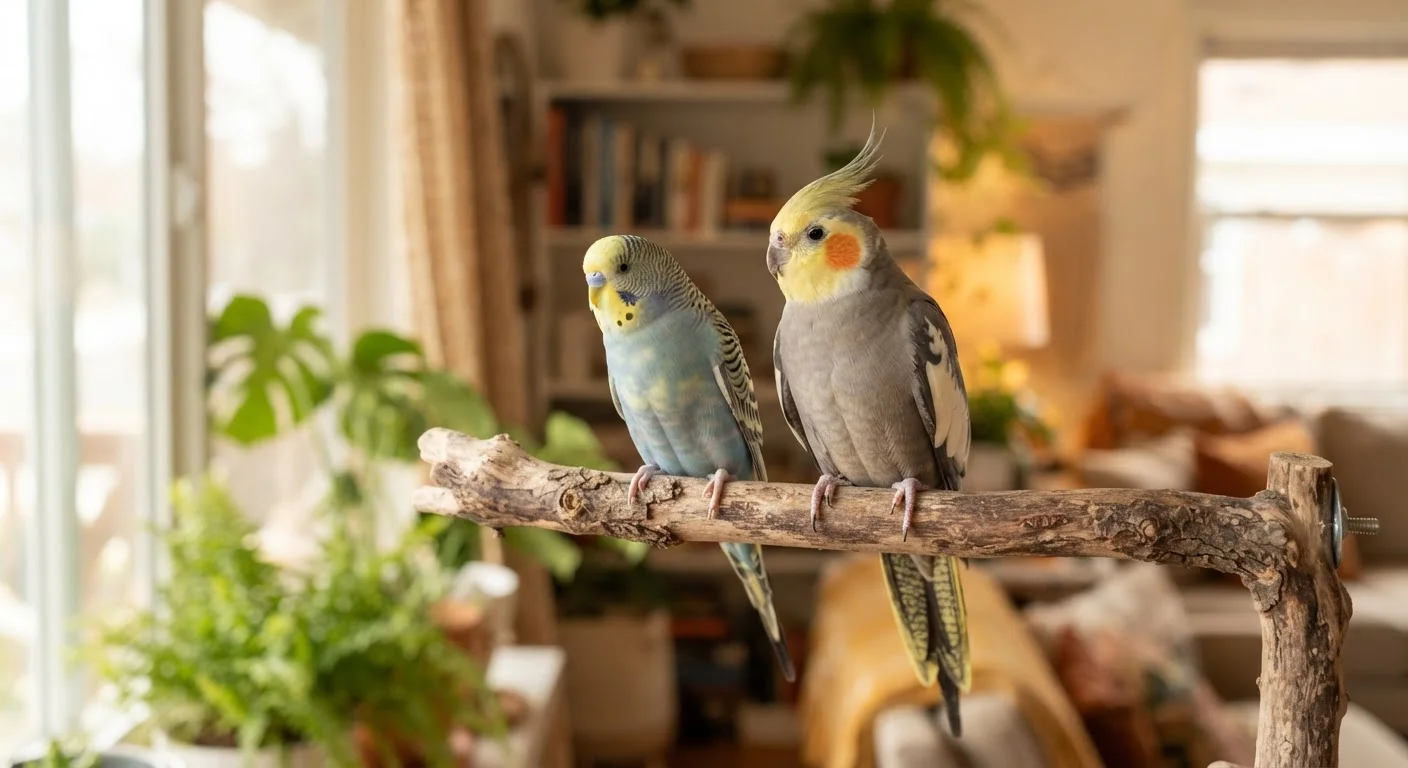
One of the first practical differences between budgies and cockatiels is physical size - and that has a direct impact on the cage and space you will need to provide.
Budgies average around 7 inches in length and weigh roughly 1 ounce. A single budgie needs a minimum cage size of about 18 x 18 x 18 inches, though larger is always better. When kept in pairs - which is strongly recommended, as budgies are highly social flock birds - the cage should scale up accordingly to allow free movement and separate feeding stations.
Cockatiels are noticeably larger, typically 12-13 inches from beak to tail and weighing around 3 ounces. A single cockatiel needs a minimum cage footprint of roughly 24 x 18 x 24 inches, with bar spacing no wider than ¾ of an inch to prevent head entrapment. Their longer tail feathers also mean the cage must be tall enough that perches do not put the tail against the cage floor.
Both species benefit from daily out-of-cage time in a bird-proofed room - ceiling fans off, windows and doors closed, toxic houseplants removed, and other pets secured.
| Criterion | Budgerigar (Budgie) | Cockatiel |
|---|---|---|
| Average size | ~7 inches, ~1 oz | ~12-13 inches, ~3 oz |
| Minimum cage size | 18 x 18 x 18 inches | 24 x 18 x 24 inches |
| Typical lifespan | 7-12 years | 15-20 years |
| Noise level | Low - constant soft chatter | Moderate - whistles and contact calls |
| Best kept | In pairs for social health | Solo with daily human interaction |
| Handling temperament | Can be skittish; varies by socialization | Generally calm and affectionate |
| Speech ability | Some words; less distinct | Whistles and phrases; clearer melody |
| Beginner-friendliness | High | Moderate to high |
Noise, Vocalizations, and Communication Style
Neither budgies nor cockatiels are silent birds, but their vocal profiles differ considerably.
Budgies produce a nearly constant stream of chatter - chirps, warbles, and soft contact calls throughout the day. This background noise is generally described as pleasant rather than piercing, but it is persistent. Male budgies are more likely to develop a varied repertoire of sounds and occasional words, though speech clarity is typically less distinct than in larger parrots.
Cockatiels are capable of louder vocalizations. Males in particular produce sustained whistling songs and can learn recognizable tunes with repetition. Their contact call - a repeated, high-pitched whistle they use to locate flock members - can carry through walls and may be a consideration in shared housing or noise-sensitive environments. However, cockatiels are generally not described as screaming birds, unlike some larger parrot species.
Consider Adopting Before You Shop
Both budgies and cockatiels are frequently surrendered to avian rescues and shelters by owners who underestimated their care needs. Adopting from a rescue gives you the opportunity to assess the bird's temperament firsthand and ask experienced handlers about its history. Many rescue birds are already hand-tame and adapt well to new homes with patient, consistent care.
If noise level is a deciding factor, observe both species in person at a shelter or avian rescue before committing. Individual personality varies, and a hand-raised bird may vocalize differently than a less socialized one.
Social Needs, Temperament, and Handling
Understanding how each bird relates to humans - and to other birds - is central to making the right choice for your household.
Budgies are intensely social within their own species. A lone budgie kept without a companion bird will depend heavily on its owner for social stimulation. Without sufficient interaction, budgies can develop stress-related behaviors such as feather plucking or repetitive movement. Keeping two budgies together largely resolves this, though it can make them somewhat less focused on bonding with humans.
Cockatiels tend to form stronger individual attachments to their primary human caretaker. They often seek physical contact - sitting on a shoulder, leaning into gentle head scratches - and can become visibly distressed when separated from a bonded person for extended periods. This deep bonding is rewarding, but it also means cockatiels require consistent daily interaction to remain emotionally well.
Both species should be handled gently from an early age to remain tame. Birds that are not regularly handled may become hand-shy over time, regardless of breed.
7-12 yrs
Average budgie lifespan with good care
The American Federation of Aviculture notes that lifespan varies significantly based on diet, environment, and access to veterinary care.
15-20 yrs
Average cockatiel lifespan in captivity
Cockatiels are among the longer-lived small parrots; the commitment is comparable to adopting a dog in terms of years.
2nd
Most popular pet bird in the US (budgie)
Budgerigars are consistently ranked among the top two most commonly kept pet birds in North America, after the cockatiel.
Diet, Health, and Lifespan Considerations
Both budgies and cockatiels thrive on a varied diet that goes well beyond a single seed mix. Avian veterinarians generally recommend a foundation of a formulated pellet diet supplemented with fresh vegetables, leafy greens, and limited fruit. Seeds should be treated as a supplement or occasional treat rather than the primary food source, as seed-only diets are associated with nutritional deficiencies - particularly Vitamin A deficiency - in both species.
Common health concerns in budgies include respiratory infections, overgrown beaks or nails, and tumors, which become more common with age. Cockatiels are susceptible to respiratory illness, egg-binding in females, and a condition called Psittacosis (parrot fever), which is transmissible to humans - a fact worth knowing, though routine hygiene and avian vet checkups significantly reduce this risk.
Both species benefit from annual checkups with an avian veterinarian - a specialist distinct from a general small-animal vet. Finding a qualified avian vet in your area before acquiring a bird is strongly advisable.
Lifespan is a meaningful commitment factor. Budgies typically live 7-12 years with good care; cockatiels can live 15-20 years. Prospective owners should consider this as a long-term responsibility, not a short-term arrangement.
This article provides general information about budgerigar and cockatiel care and is not a substitute for guidance from a qualified avian veterinarian. Always consult a professional for advice specific to your bird's health and needs.