Why Small Pet Introductions Demand Extra Care
Rabbits, guinea pigs, birds, and similar small animals are prey species. Unlike introducing two dogs, where both animals share broadly similar social instincts, a small pet entering a home with a dog or cat is navigating a fundamentally mismatched dynamic. The small pet's nervous system is wired to detect and respond to predators - elevated heart rate, freeze responses, and chronic low-grade stress are all real physiological outcomes of a poorly managed introduction.
That stress isn't just behavioral. Research in exotic and small-animal veterinary practice consistently associates chronic fear with suppressed immune function, reduced appetite, and shorter lifespans in prey-species pets. Getting the introduction right isn't about sentimentality - it's directly tied to your new pet's long-term health.
Prey Drive Cannot Be Fully Trained Away
Even a dog or cat with no history of aggression can injure or kill a small animal in a single unsupervised moment. Instinctual prey drive is distinct from learned aggression and does not always show advance warning signs. No amount of successful supervised introductions makes it safe to leave these animals alone together. Permanent structural separation when you are not present is non-negotiable.
The good news is that many households successfully keep these animals together when introductions are structured, gradual, and supervised indefinitely. The steps below give you a framework that respects the instincts of all the animals involved.
What You'll Need Before You Start
Preparation before the new pet arrives will make every subsequent step more manageable. Attempting to improvise housing or barrier solutions after your small pet is already in the home creates unnecessary exposure risk.
What you will need
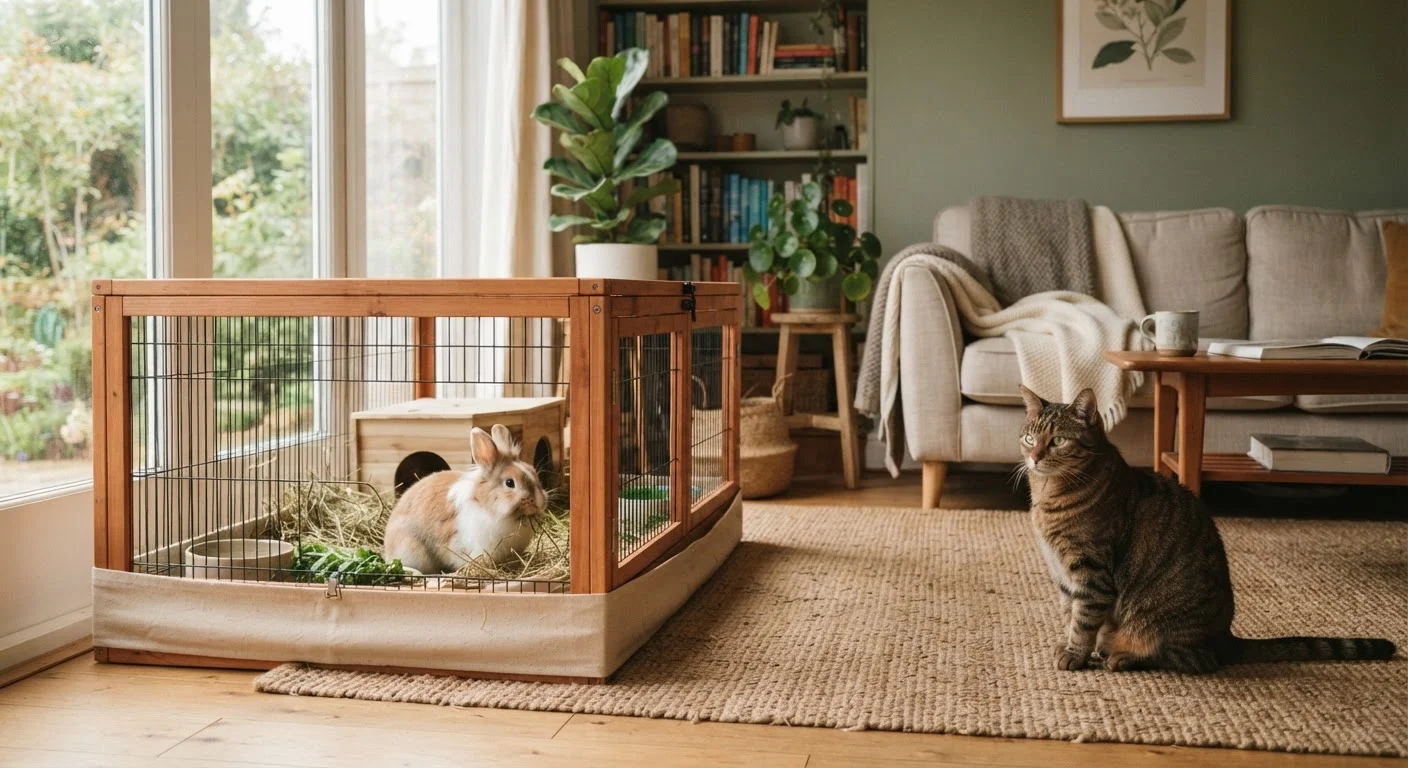
Secure enclosure or cage
Provides a safe, enclosed space for the small pet during all introduction phases.
Baby gate or exercise pen
Creates a physical barrier that allows visual contact between animals without direct access.
High-value treats for existing pets
Used to reward calm, relaxed behavior near the new pet's scent and space.
Used bedding or a worn cloth item
Carries the new pet's scent for initial scent-swapping between animals.
Leash and collar or harness
Keeps dogs under controlled restraint during supervised visual and close-proximity sessions.
If your existing dog has a known history of chasing small animals - whether squirrels, cats, or toys - consider consulting a certified professional dog trainer or veterinary behaviorist before proceeding. A preliminary assessment of your dog's reactivity level will help you set realistic expectations.
Step-by-Step: Safe Introduction Process
Follow each step in order, and only advance when both animals are showing consistently calm behavior at the current stage. There is no fixed timeline - some pairs move through these stages in a week; others take a month or more.
Set up a separate, secure space for the new pet
Before your new small pet arrives, designate a room that your existing animals cannot access unsupervised. Set up the habitat there and allow the new pet one to three days to decompress from the stress of transport and a new environment. A settled small pet is far more resilient during introduction phases than a newly frightened one.
Begin scent swapping between animals
Take a small piece of the new pet's used bedding and place it near your existing pet's resting area. Do the same in reverse - place something carrying your dog or cat's scent near (but not inside) the small pet's enclosure. Repeat this daily for two to five days, using treats to reward your existing pet for calm, non-reactive behavior around the unfamiliar scent.
Introduce visual contact from a safe distance
Once both animals appear relaxed around each other's scent, allow brief visual contact. Place the small pet in its secure enclosure and bring your existing pet to the doorway of the room - on a leash if a dog, or held securely if a cat. Keep sessions under five minutes at first. Watch for signs of fixation, stalking posture, or intense staring in your existing pet, and signs of freezing, thumping, or rapid hiding in the small pet.
Progress to barrier-separated close contact
When both animals are visibly relaxed during visual sessions - your small pet is eating normally, grooming, or approaching the enclosure front, and your existing pet can be redirected easily - move to sessions separated by a baby gate or exercise pen. Allow the existing pet to approach at its own pace while the small pet remains in its enclosure. Continue rewarding calm behavior heavily. Run five to ten sessions at this stage before considering any further progression.
Monitor and establish permanent household rules
Even after weeks of calm, supervised interactions, your small pet should always have a space your other animals cannot access - a room, a pen, or a raised habitat out of reach. Small pets' stress responses can be subtle; weight loss, reduced activity, or changes in eating often signal chronic anxiety rather than any single dramatic event. Schedule regular check-ins with your veterinarian to ensure your new pet is thriving, not merely tolerating its environment.
Read Small Pet Body Language First
Before progressing any introduction stage, confirm your small pet appears settled: it should be eating, drinking, grooming, and exploring normally. A guinea pig or rabbit that is consistently huddled, motionless, or refusing food is not ready for the next step. Taking a full extra week at any stage is always the right call.
This article provides general educational guidance for pet owners and is not a substitute for advice from a licensed veterinarian or certified animal behaviorist familiar with your specific animals.