Why Multi-Species Households Require Extra Planning
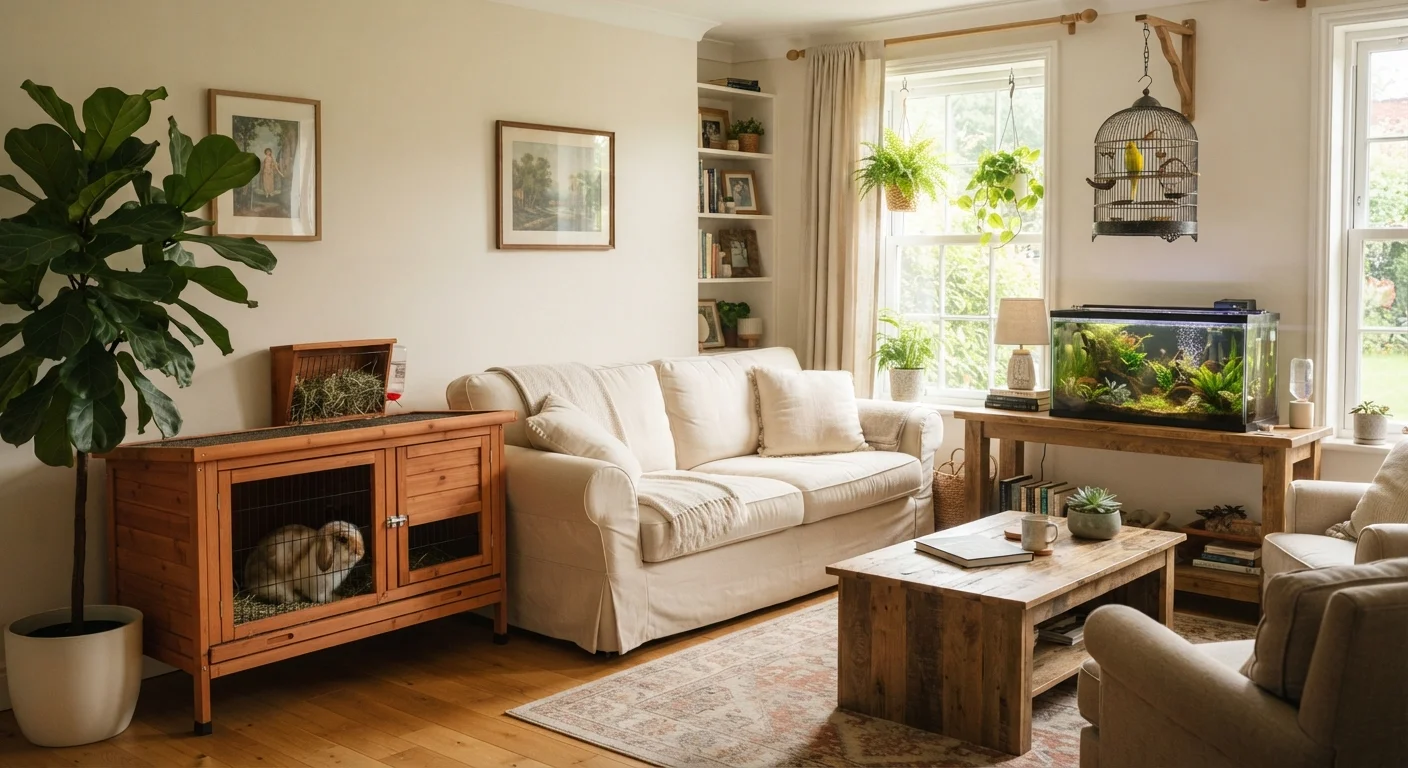
Owning a rabbit, a pair of guinea pigs, a budgie, and a betta fish may sound manageable on paper - but each species evolved in a different ecological niche with distinct behavioral cues, sensory sensitivities, and social structures. What feels like a quiet evening to you might be genuinely stressful for a prey animal sharing airspace with a bird that produces loud, sharp calls.
Before adding a second or third species, map out your home's existing conditions: ambient noise levels, room temperatures throughout the day, and how much dedicated floor and shelf space is realistically available. This baseline assessment prevents the most common multi-pet mistake - assuming all small animals have roughly similar needs.
Consider Introducing Species Gradually
Adding multiple new species at once makes it difficult to identify which animal is causing a problem if behavioral or health issues arise. Introduce one species at a time and allow at least a month to establish stable routines before adding another. This approach also gives you an accurate picture of the true time commitment each species requires.
Best Practices for Managing Space and Environment
Physical separation is the single most important factor in a multi-species home. Even species that cannot physically harm one another - like a rabbit and a canary - can cause chronic stress through sight, scent, or sound alone. Rabbits are prey animals hardwired to react to birds of prey; a large parrot in the same room can elevate a rabbit's cortisol levels even if the two never interact.
Separate enclosures by species-specific sensory needs, not just physical size.
Prey species like rabbits and guinea pigs experience ongoing stress when housed within sight or scent range of animals they perceive as predators, even domesticated ones. Chronic stress suppresses immune function and can shorten lifespan.
Match ambient temperature and lighting to each species' native requirements.
Birds, reptiles, and fish are highly sensitive to temperature fluctuations, while rabbits and guinea pigs are vulnerable to heat above approximately 75-80°F. Tropical fish tanks and rabbit hutches in the same room often represent conflicting environmental requirements.
Create a written feeding and cleaning chart visible to all household members.
Verbal hand-offs between family members frequently result in missed feedings or double-feedings, both of which can harm small animals. A posted chart eliminates ambiguity and distributes responsibility clearly.
Quarantine any new animal before introducing it to a home with existing pets.
New animals - even those that appear healthy - can carry parasites, bacteria, or viruses that are asymptomatic in one species but harmful to another. A 2-4 week quarantine period in a separate space significantly reduces transmission risk.
Budget time and finances per species, not per pet count.
A single rabbit may require less veterinary investment than a pair of birds, even though the bird count is higher. Species-level budgeting prevents situations where one animal's unexpected vet bill compromises care for others.
Building a Care Schedule That Actually Works
When you have multiple species, care tasks multiply quickly: daily feeding, fresh water, spot cleaning, enrichment, and health checks. Without a written system, high-maintenance pets tend to get attention while quieter ones are inadvertently deprioritized.
Assign each species a fixed care window rather than attending to all pets at once. This prevents rushed care and makes it easier to notice subtle changes in behavior or appearance - an early warning sign of illness - that are easy to miss when you're moving through tasks rapidly.
Watching for Health Risks Across Species
Multi-species households carry a small but real risk of zoonotic disease transmission - illnesses that can pass between animal species or, in some cases, from animals to humans. Salmonella, ringworm, and certain respiratory pathogens can affect multiple species differently. Wash hands between handling different pets, and use separate feeding utensils and cleaning tools for each enclosure.
Aquariums introduce additional humidity into a room, which can affect respiratory health for small mammals housed nearby. Birds are particularly sensitive to airborne toxins, including aerosols, scented candles, and non-stick cookware fumes - factors that may not affect your rabbit or fish but can be fatal to avian species. Position bird enclosures away from kitchens and ensure good ventilation throughout your home.
This article provides general educational information about small pet care and is not a substitute for advice from a licensed veterinarian. Consult a vet experienced with exotic or small animals for guidance specific to your pets' health needs.