
Why Goldfish Are So Widely Misunderstood
Goldfish have been kept as pets for centuries - and in that time, a surprising number of myths about them have taken root in mainstream culture. These misconceptions aren't harmless. They shape purchasing decisions, tank setups, and feeding habits in ways that often result in sick, stressed, or short-lived fish. The good news is that research into fish cognition and aquatic biology has given us a much clearer picture of what goldfish actually need.
Below, we address the most persistent myths about goldfish - and replace them with what the evidence actually shows.
Myth
Goldfish only have a three-second memory.
Fact
Goldfish have demonstrated memory retention lasting months, not seconds.
This claim is one of the most durable animal myths in popular culture, but it has no credible scientific basis. Studies in fish cognition - including experiments where goldfish were trained to push levers or navigate mazes - show that they can retain learned behaviors for months. Researchers at the Technion Institute of Technology in Israel, for example, have trained goldfish to associate specific sounds with feeding, with recall persisting well beyond any three-second window. Goldfish are capable learners, and their memory is far more sophisticated than the myth implies.
Myth
Goldfish grow only as large as their tank allows.
Fact
Stunted growth in small containers is a sign of poor health, not a natural adaptation.
The idea that goldfish "grow to the size of their environment" is partly rooted in a real phenomenon, but the explanation is often misunderstood. When goldfish are kept in undersized or poorly filtered tanks, they do tend to remain small - but this is because growth hormones accumulate in the water and waste compounds stress the fish, suppressing healthy development. It is not a benign, convenient adaptation. Stunted goldfish typically have compromised organ development and shortened lifespans. Given appropriate space and water quality, common goldfish can reach 10-12 inches in length.
Myth
A goldfish bowl or small vase is a perfectly fine home.
Fact
Bowls lack the filtration and space goldfish need to stay healthy, and they accumulate harmful waste rapidly.
Goldfish are high-waste producers. They continuously excrete ammonia, which breaks down into nitrite and then nitrate - compounds that are toxic at elevated levels. A small, unfiltered bowl accumulates these substances quickly, creating a chronically stressful and often lethal environment. Bowls also provide poor gas exchange, limiting the oxygen available to fish. Aquatic care organizations broadly advise against housing goldfish in bowls for these reasons. A proper aquarium with mechanical and biological filtration is the appropriate environment.
Myth
Goldfish only live for a year or two.
Fact
Well-cared-for goldfish commonly live 10-15 years; some documented individuals have lived beyond 20 years.
The short lifespan many people associate with goldfish is almost entirely a product of inadequate care - not the fish's biology. When housed in appropriate conditions with proper nutrition, filtration, and water quality management, goldfish are long-lived animals. The short lifespans seen in carnival prizes or poorly maintained tanks reflect environmental failures, not a natural ceiling. Owners who invest in proper setup from the start regularly report goldfish living well into their second decade.
Myth
Goldfish are solitary and don't benefit from companionship.
Fact
Goldfish are social fish that generally fare better with appropriate tankmates of their own kind.
In their natural environment, goldfish - descended from wild carp - live in groups. While they are not schooling fish in the strict behavioral sense, they display social behaviors and appear to benefit from the presence of conspecifics (others of the same species). Keeping a single goldfish in isolation is not inherently harmful, but pairing compatible goldfish in a suitably sized tank is consistent with their natural social tendencies. Care should be taken to match goldfish of similar size and swimming ability, particularly when mixing fancy and common varieties.
What Good Goldfish Care Actually Looks Like
Once the myths are cleared away, goldfish care becomes much more straightforward. These fish thrive in spacious, filtered tanks with stable water chemistry. A general starting point often cited by aquarium hobbyists is 20 gallons for the first goldfish, with additional space for each additional fish - though specific requirements vary by goldfish variety, so consulting aquatic care resources or a veterinarian with fish experience is worthwhile.
10-15 years
Typical lifespan with proper care
Aquatic care resources consistently cite a 10-15 year lifespan for well-maintained goldfish, with some individuals documented beyond 20 years.
20+ gallons
Commonly recommended minimum tank size
Many aquarium hobbyist guides suggest at least 20 gallons for a single fancy goldfish, with more space needed for each additional fish.
Regular partial water changes - typically 25-30% weekly - help manage the ammonia and nitrate levels that goldfish waste generates quickly. A quality filter rated for the tank size is essential, not optional. Goldfish also benefit from a varied diet that includes sinking pellets, blanched vegetables, and occasional treats rather than a single flake food fed indefinitely.
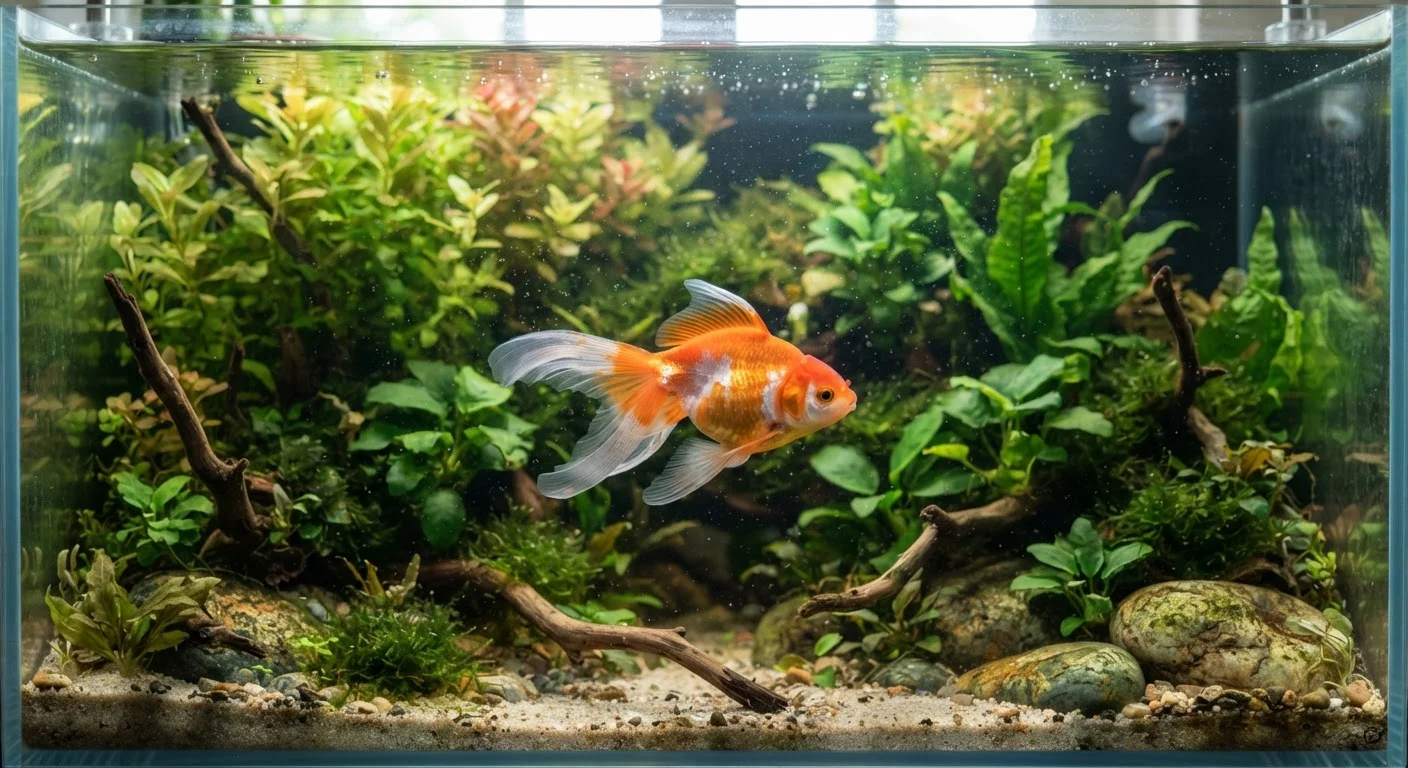
Providing tank enrichment - plants, varied substrates, and objects to investigate - supports natural foraging behavior and reduces the kind of stress that contributes to disease. None of this is especially complicated, but it does require moving past the "goldfish are low-maintenance throwaway pets" framing that so many of these myths reinforce.
This article is for general informational purposes only and does not constitute veterinary advice. For concerns about your fish's health or specific care needs, consult a veterinarian experienced with aquatic animals.