Why Guinea Pigs Are More Complex Than Advertised
Guinea pigs are frequently positioned as ideal starter pets - small, quiet, and easy to manage. While they are genuinely rewarding companions, that framing understates what they actually require. Guinea pigs are prey animals with specific behavioral, nutritional, and social needs that, when unmet, lead to stress, illness, and shortened lifespans.
Understanding the real scope of guinea pig care before bringing one home makes it far more likely the experience will go well - for you and for the animal.
7.5 sq ft
Minimum recommended cage floor space
The Humane Society of the United States recommends at least 7.5 square feet of floor space for a single guinea pig.
70-80%
Daily diet that should be hay
Grass hay should make up the majority of a guinea pig's diet to support digestion and dental health.
5-7 years
Typical guinea pig lifespan
With proper care, guinea pigs generally live between 5 and 7 years, representing a meaningful long-term commitment.
Housing: Space, Substrate, and Setup
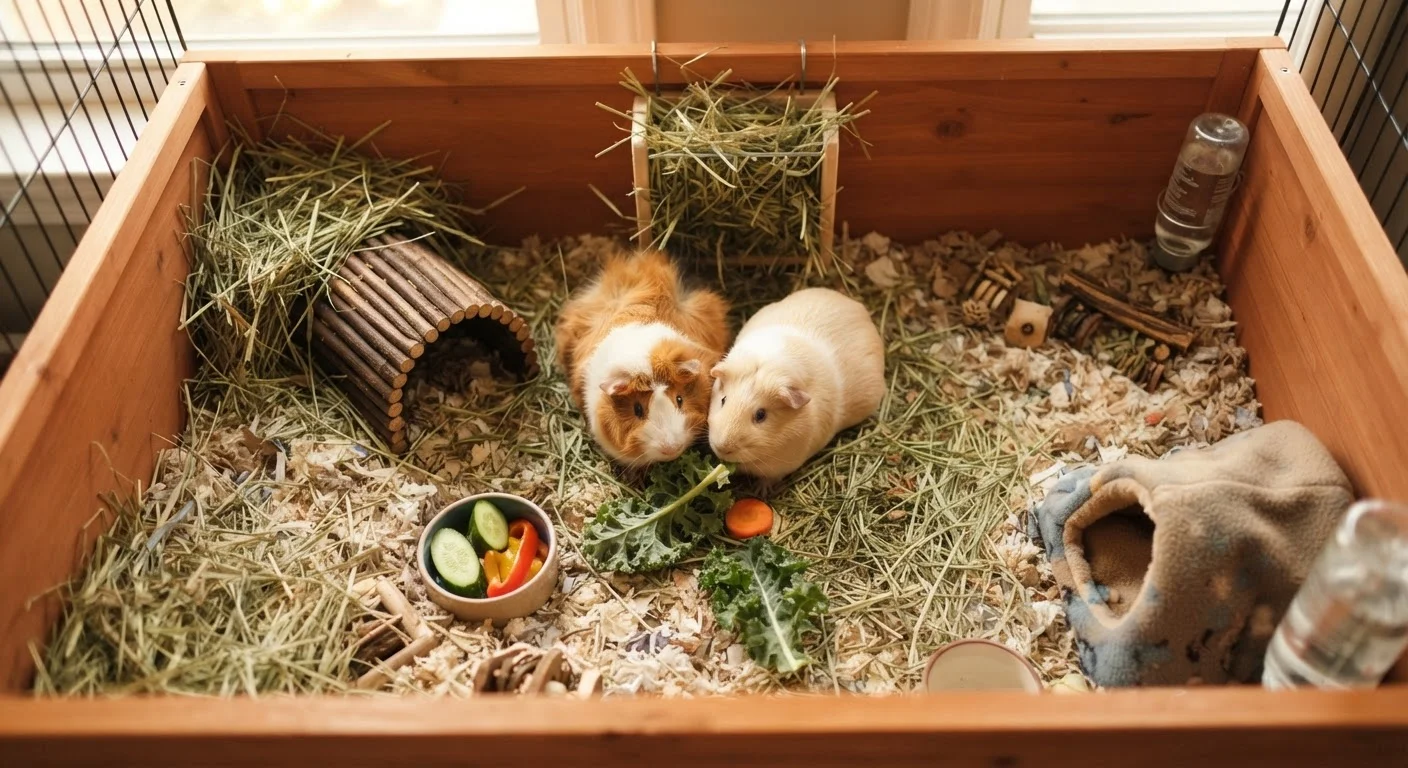
Enclosure size is one of the most common areas where guinea pig care falls short. The Humane Society of the United States recommends a minimum of 7.5 square feet of floor space for one guinea pig, and more for pairs or groups. Many commercially sold cages marketed for guinea pigs fall below this threshold.
Wire-bottomed cages can injure a guinea pig's feet - a condition called bumblefoot (pododermatitis). Solid-floored enclosures with appropriate bedding are strongly preferred. Suitable substrates include paper-based bedding, fleece liners, or kiln-dried pine shavings. Cedar shavings should be avoided, as the aromatic oils can irritate the respiratory tract.
The enclosure should be kept at stable indoor temperatures, ideally between 65°F and 75°F. Guinea pigs are sensitive to both heat above 80°F and drafts, which can trigger respiratory illness.
Consider a C&C Cage for Better Space
Cubes-and-coroplast (C&C) enclosures are a popular DIY option that allows owners to build larger, customizable habitats at relatively modest cost. They can be sized appropriately for pairs or groups and are easy to clean. Many guinea pig welfare advocates recommend them specifically because they're easier to scale up than most commercially sold cages.
Diet and Nutrition Essentials
Nutrition is arguably the most critical element of guinea pig care. Their digestive systems are designed for high-fiber, continuous grazing - and the single most important component of their diet is unlimited fresh timothy hay (or another grass hay like orchard grass). Hay should make up approximately 70-80% of daily food intake. It keeps their continuously growing molars worn down and supports healthy gut motility.
A critical and non-negotiable nutritional requirement is vitamin C. Unlike humans, guinea pigs lack the enzyme needed to synthesize vitamin C internally. Without adequate daily intake - generally cited as 10-30 mg per day for healthy adults - they develop scurvy, which causes joint pain, lethargy, and immune dysfunction. Fresh bell pepper, leafy greens like romaine lettuce, and small amounts of citrus provide good dietary sources. Water-soluble vitamin C drops can be used, but they degrade quickly in water and are less reliable than fresh food sources.
Commercial guinea pig pellets fortified with vitamin C can supplement the diet, but should not replace hay or fresh vegetables. Avoid pellet mixes with seeds, dried fruit, or colorful puffed pieces - these are high in sugar and can cause digestive upset.
Social Needs and Companionship
In the wild, guinea pigs (also called cavies) live in social groups. Kept alone, they can become stressed, bored, and more prone to behavioral and health problems. Most animal welfare organizations recommend keeping guinea pigs in same-sex pairs or small groups rather than as solitary animals.
Introductions between guinea pigs should be done carefully in a neutral space to reduce territorial conflict. Male pairs (especially two unneutered males) can sometimes be more prone to dominance disputes, though many coexist peacefully when introduced young and given adequate space.
When introducing two guinea pigs, start with a side-by-side housing period - separated by a mesh divider - before allowing full contact. This lets them get used to each other's scent without the pressure of immediate physical interaction.
Gradual introductions reduce the risk of aggressive encounters and give both animals time to acclimate, improving the odds of a successful long-term pairing.
Use a simple kitchen scale to weigh your guinea pig once a week and log the number. A loss of even 2-3 ounces over a week or two can signal a developing health issue before any other symptoms appear.
Guinea pigs instinctively hide illness; weight tracking is one of the most reliable early-warning tools available to owners and is widely recommended by exotic animal veterinarians.
Human interaction is not a substitute for guinea pig companionship, though regular handling and gentle socialization are still beneficial - both for the animal's comfort and for your ability to monitor its health.
Veterinary Care and Common Health Concerns
Guinea pigs should be seen by a veterinarian experienced with exotic or small animals - not all general practice vets are equally comfortable treating cavies. An initial wellness exam after adoption, followed by annual checkups, is a reasonable baseline.
Common health concerns to be aware of include:
- Dental problems: Their teeth grow continuously; misalignment (malocclusion) can prevent eating.
- Respiratory infections: Often bacterial, and can escalate quickly if untreated.
- Urinary tract issues: Bladder stones and urinary tract infections are relatively common.
- Skin parasites: Mites and lice can affect guinea pigs and should be treated by a vet.
Because guinea pigs are prey animals, they instinctively mask signs of illness. Subtle changes in eating habits, activity level, droppings, or weight can be early indicators that something is wrong. Weighing your guinea pig weekly with a kitchen scale is a practical way to catch gradual weight loss early.
This article provides general educational information about guinea pig care and is not a substitute for advice from a qualified exotic animal veterinarian.
Enrichment and Daily Interaction
Mental stimulation matters for guinea pig wellbeing. A bare enclosure with only food and water leads to boredom and stereotypic behaviors (repetitive movements that signal stress). Enrichment doesn't need to be elaborate:
- Cardboard tunnels and hideouts provide security and exploration opportunities.
- Foraging activities - hiding portions of vegetables in hay - encourage natural behavior.
- Safe wooden chews support dental health and offer tactile engagement.
- Daily floor time outside the cage, in a safe, enclosed area, gives them space to move and explore.
Guinea pigs are most active during dawn and dusk (crepuscular animals), so scheduling interaction around those windows often results in more engaged, responsive pets. Aim for at least one hour of out-of-cage time per day in a guinea-pig-proofed space free of electrical cords, toxic plants, and gaps where they could get stuck.
Consistent, calm handling from a young age builds trust. Guinea pigs rarely bite unless frightened; the goal is to make handling feel safe rather than threatening for the animal.