The Core Math: Per-Unit Price vs. Total Cost
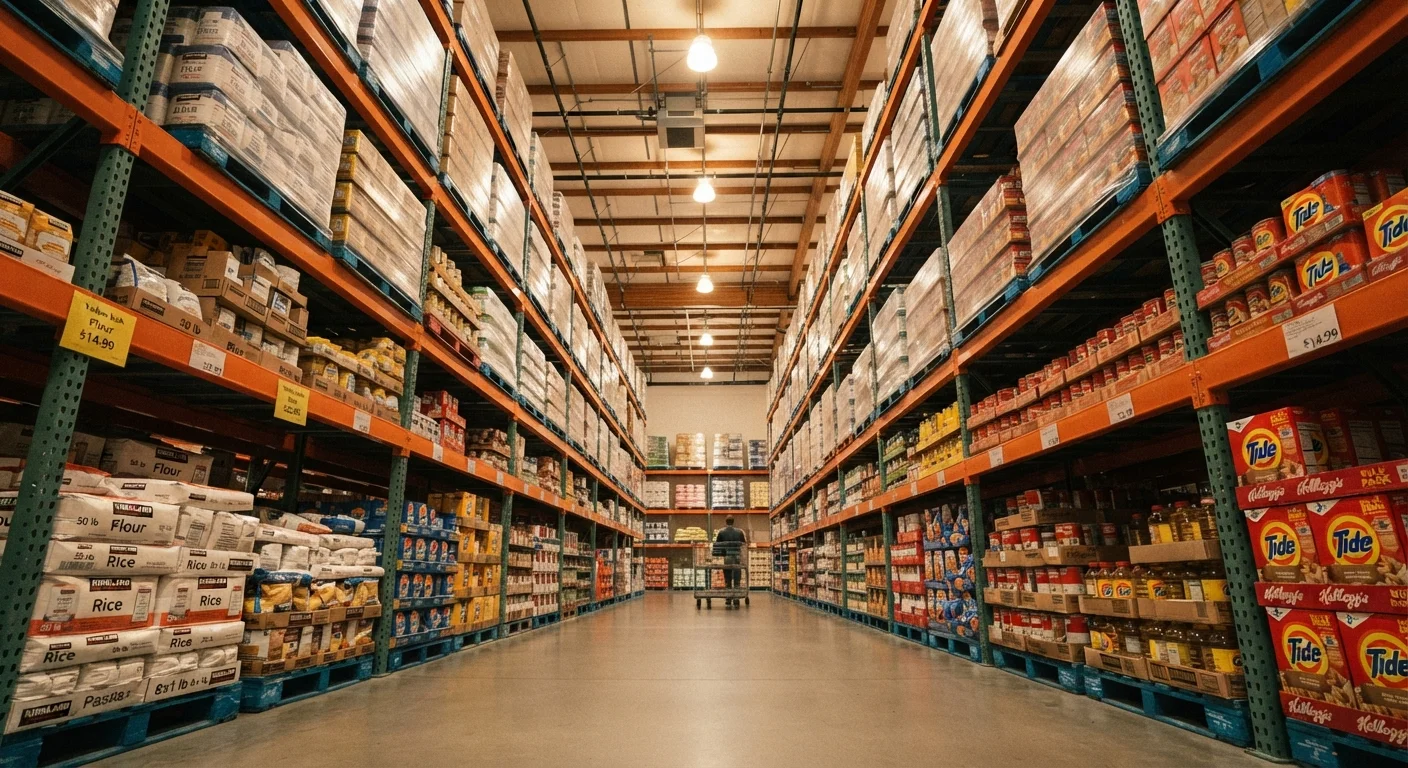
The appeal of bulk buying starts with a simple observation: buying more units at once almost always lowers the price per unit. A 48-roll pack of toilet paper will typically carry a lower per-roll cost than a 12-roll pack. That math is usually real - but it's only part of the equation.
The total cost of a bulk purchase includes what you pay at the register, but it also includes the cost of any product that goes to waste, the value of storage space consumed, and the opportunity cost of cash locked into inventory sitting in your garage. When those factors are added in, the per-unit advantage can shrink or disappear entirely. Cost-per-use thinking applies directly here: a bulk deal only pays off if you actually use what you buy.
~30%
Typical per-unit savings on bulk non-perishables
Consumer purchasing analyses generally estimate bulk purchases of shelf-stable goods offer 20-30% lower per-unit costs compared to standard retail sizes, though this varies by category and retailer.
30-40%
Share of food purchased that US households waste
The USDA has estimated that US households waste between 30 and 40 percent of the food supply, a figure that directly undermines savings from bulk perishable purchases.
When Bulk Buying Genuinely Works
Certain purchase categories are structurally well-suited to buying in volume. Products with long shelf lives and stable demand - laundry detergent, canned goods, paper products, dried beans, and similar staples - carry virtually no spoilage risk and will be consumed regardless of how many you buy at once.
Lower cost per unit on staple items
Bulk packaging consistently delivers a lower per-unit price on non-perishable goods, which translates to real savings when the product is fully consumed.
Fewer shopping trips and decision points
Stocking up on frequently used items reduces the frequency of trips, saving both time and incidental purchases made while in-store.
Protection against price increases
Buying in volume when prices are stable can shield households from short-term price spikes on commodities and consumables.
Reduces per-household overhead on essentials
For large families, buying in bulk can meaningfully reduce the monthly spend on cleaning supplies, paper goods, and pantry staples without requiring behavioral change.
Households with more people also benefit more straightforwardly. A family of five will move through a large container of olive oil before it oxidizes; a single-person household may not. Similarly, if you're buying for a home-based business or regularly preparing food in large quantities, bulk purchasing aligns naturally with your consumption rate. For these situations, the savings are durable and compound over time - effectively acting as a discount on a recurring expense. See how this fits into a broader approach to stretching a grocery budget without compromising quality.
Where Bulk Buying Backfires
The category of purchases that looks attractive in bulk but regularly disappoints in practice is larger than most shoppers expect.
Spoilage erases per-unit savings fast
Food and products with expiration dates that aren't consumed in time convert a discount into a loss - sometimes a significant one relative to the original saving.
Upfront cash outlay strains monthly budgets
Even when the long-run math is favorable, a large lump-sum purchase can create cash flow stress for households working with tight monthly budgets.
Storage space has a real cost
Dedicated pantry or garage space used for bulk goods has an implicit cost - and in smaller homes or apartments, adequate storage simply may not exist.
Larger pack sizes can increase consumption rate
Consumer behavior research suggests people tend to use more of a product when the package is large, partially offsetting the per-unit price benefit.
Risk is higher with untested products
Buying 60 units of a product you've never used before locks in a purchase you may regret, with little recourse if the product doesn't meet expectations.
Perishables are the most obvious risk - buying a large flat of strawberries or a bulk pack of deli meat only saves money if it's eaten in time. But the problem extends beyond food. Cleaning products can separate or lose effectiveness. Medications and supplements have expiration dates. Even paper products can absorb moisture in a poorly ventilated storage space.
There's also a behavioral risk: buying in bulk can license overconsumption. Research in consumer psychology has noted that larger package sizes tend to increase usage rates, which partially offsets the per-unit savings. If you use more shampoo because the bottle is bigger, the per-use cost doesn't drop as much as the per-ounce price suggests. These are exactly the kind of hidden costs that quietly erase savings.
Membership Fees Affect the Real Savings
Warehouse club memberships typically cost $50-$120 per year. For bulk buying to generate net savings at these retailers, your annual savings on purchases need to exceed the membership cost. Households that shop infrequently or in small quantities may not cross that threshold. Calculate your expected annual savings before committing to a membership, and revisit whether it still makes sense each renewal period.
Practical Criteria for Making the Call
Before committing to a bulk purchase, a few concrete questions help cut through the appeal of the per-unit price:
- Do you have dry, accessible storage? If a bulk purchase requires renting space, buying new shelving, or leaving items in a humid garage, factor that cost in explicitly.
- Have you bought this product before? Never buy an untested product in bulk. If you don't love it, you're stuck with 60 units of something you won't use.
- Will your consumption rate realistically match the quantity? Estimate honestly based on how quickly you typically finish a standard size.
- Does this purchase affect your cash flow? A $120 bulk haul that saves $30 over six months still requires $120 today. If that strains a monthly budget, the savings may not be worth the financial pressure.
Bulk buying is one of several purchasing strategies worth evaluating alongside others. Timing a purchase and choosing the right shopping channel are separate levers - and they don't always point in the same direction.