What Price Trackers Actually Do
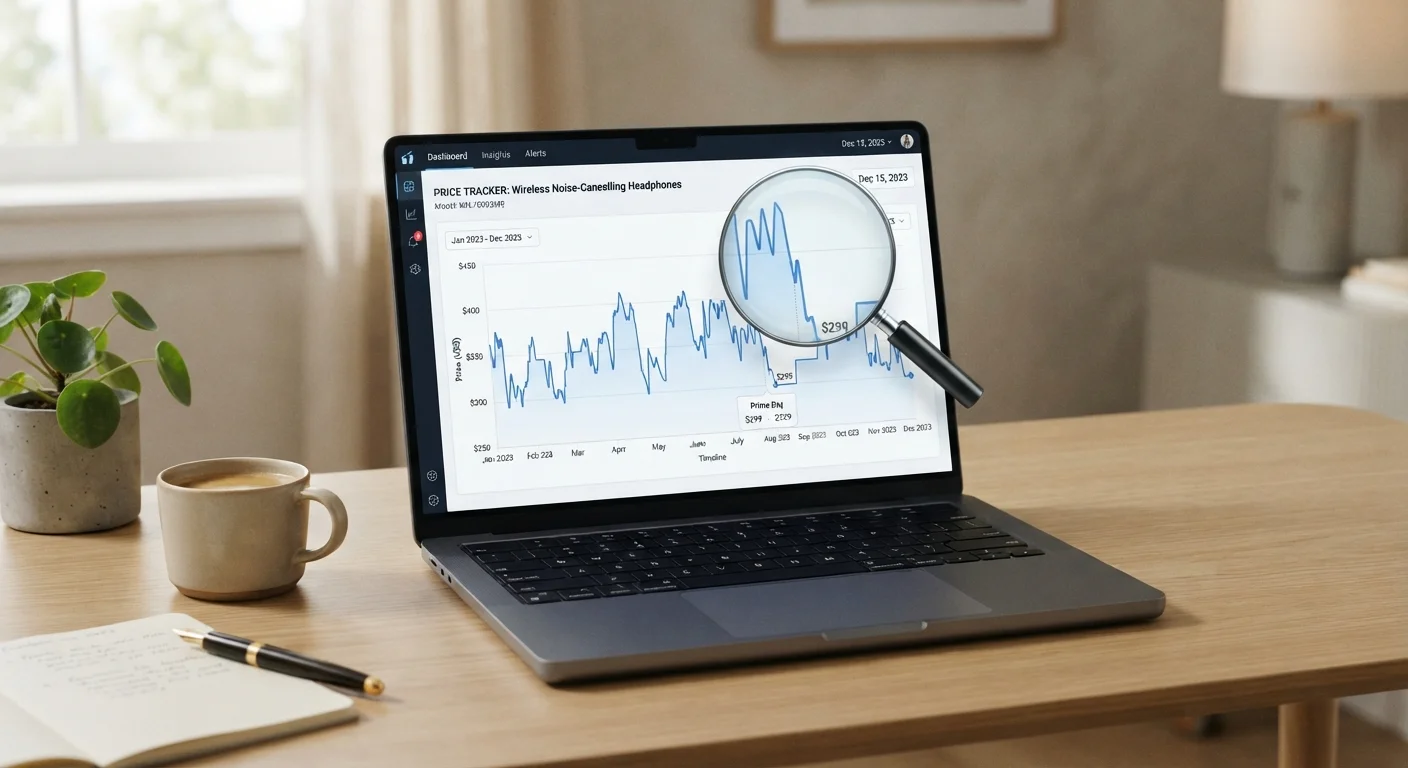
At their core, price tracking tools do one thing: they record the price of a specific product at regular intervals and store that history. When you view a product page with a tracker active, you see not just the current price but a chart of how that price has moved over days, weeks, or months. That context is the real value.
Without price history, a "40% off" label is meaningless - 40% off what baseline, set when? Retailers routinely inflate reference prices before promotional events, a practice that makes discounts appear larger than they are. A price history chart cuts through that noise by showing you the product's actual price trajectory. For a deeper look at how to read those charts accurately, see Reading a Price History Chart.
Alert functionality layers on top of this: you specify a target price, and the tool notifies you when that price is reached. Some trackers also monitor multiple sellers simultaneously, flagging when a competing retailer undercuts the current lowest price.
Up to 30%
Typical price variance for popular electronics over 90 days
Industry analyses of major retail marketplaces have found that prices on high-demand electronics can swing by 20-30% within a single quarter, independent of advertised sale events.
~23%
Share of 'sale' prices that are at or above historical averages
Research into major retail promotional events has found that a meaningful portion of items labeled as discounted are priced at or above their trailing average - reinforcing the value of historical price context.
When Price Tracking Is Worth Your Time
Price trackers deliver the most value in a specific type of purchase: one you've already decided to make, where the product listing is stable, and where you're not under time pressure. Think appliances, large electronics, kitchen equipment, or furniture - items with long sales cycles, significant price variance, and listings that don't change frequently.
For these purchases, setting a target price 10-20% below the current listing and waiting is a reasonable strategy. You're not gambling on a flash sale; you're waiting for a routine price movement that historical data suggests is likely to happen.
Set Your Target Before You Start Tracking
Decide on your acceptable price point before you begin monitoring - ideally informed by the product's price history over at least 60-90 days. Setting a target after you've been watching the price risks anchoring to recent fluctuations rather than a realistic market floor. A pre-set number also reduces the temptation to rationalize buying when the price drops slightly but hasn't actually reached a historically low point.
Contrast that with situations where tracking adds little value: products with rapidly rotating inventory, items whose listings change frequently (different sellers, condition ratings, or bundled accessories), or anything you need immediately. Perishables, seasonal items with genuine scarcity, and products on discontinuation paths are also poor tracking candidates.
It's also worth pairing your tracking habits with a realistic understanding of promotional timing. The assumption that major shopping events always deliver the deepest discounts is worth questioning - our article on why timing a purchase rarely saves as much as advertised explores that in detail.
The Real Limitations You Should Know
Price trackers have structural limits that are easy to overlook when you're focused on the potential savings.
- Polling gaps: Most tools check prices at set intervals - every few hours or once daily. A short-lived price drop between checks won't appear in your history or trigger an alert.
- Single-dimension data: A tracker shows price, not total cost. Shipping fees, membership requirements, and seller-specific terms can make a "lower" tracked price more expensive in practice.
- Listing instability: On large marketplaces, the same product URL can cycle through multiple sellers with different pricing, condition descriptions, or fulfillment methods. Historical data may reflect different sellers at different times, making comparisons unreliable.
- No quality signal: A price drop doesn't tell you whether the product was reformulated, discontinued, or is being sold by a less reputable seller.
For homeowners managing a broader household budget, price tracking is one tool among several. It integrates naturally with home budgeting strategies and can complement reward-based savings approaches - though it's worth understanding what loyalty programs and cashback schemes are actually worth before stacking too many systems at once.
Using Trackers Without Letting Them Drive Your Decisions
The risk with any savings tool is that it subtly shifts your behavior in ways that cost more than you save. Tracking prices on items you wouldn't otherwise buy - and then purchasing them because the alert fired - is a net negative, not a win.
A disciplined approach keeps the tool in a supporting role. Decide you need something, research a fair price using historical data, set a target, and wait. If the price never reaches your target within a reasonable window, you make a judgment call based on how much you need the item versus how long you're willing to wait.
Price tracking is most useful as a patience-reinforcement tool: it gives you an objective reference point that makes it easier to walk away from an inflated price. That's genuinely valuable - as long as you're tracking things you've already committed to buying rather than building a wishlist of purchases you'd only make if a discount appeared.
This article is for general informational purposes only and does not constitute financial advice. Consult a qualified financial professional for guidance tailored to your personal circumstances.