
What Makes an Expense 'Fixed'?
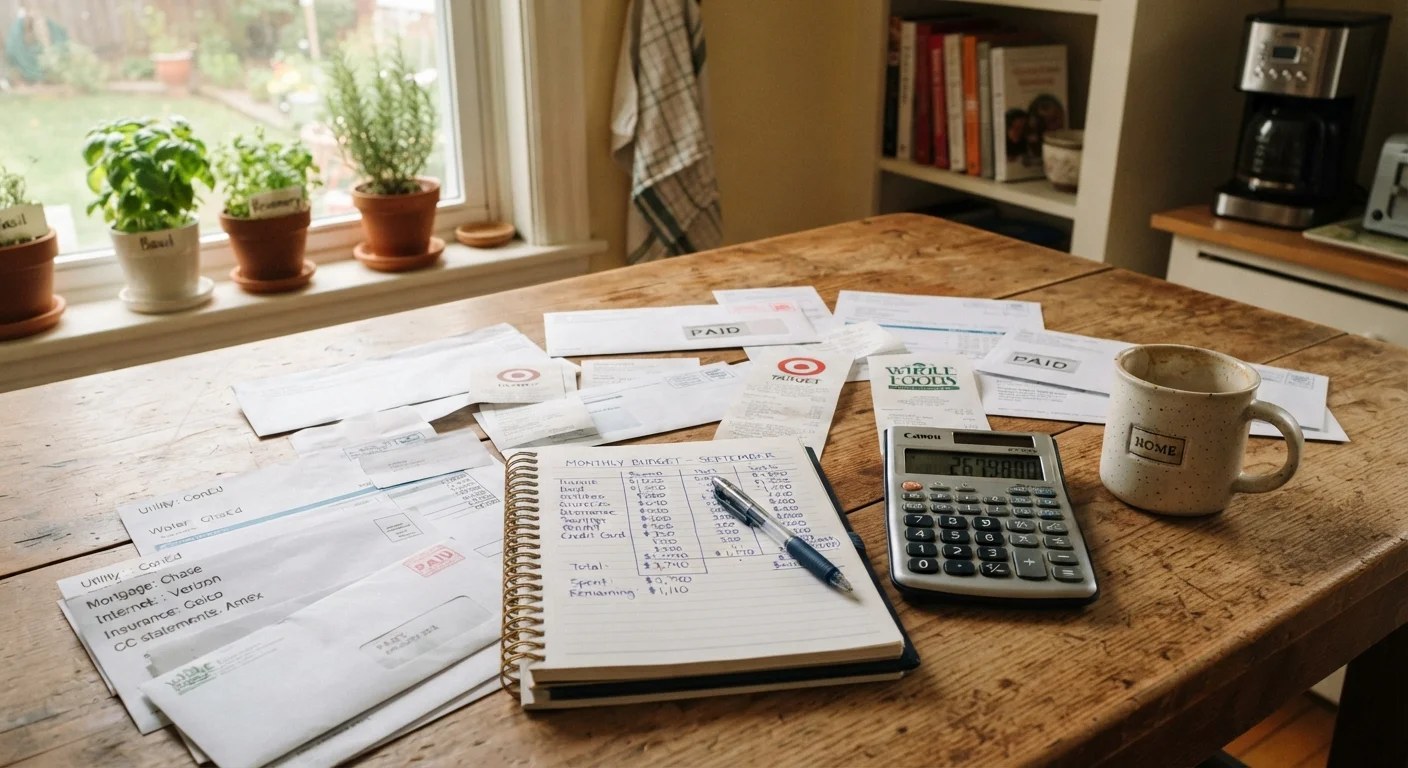
A fixed expense is any recurring cost that stays the same from month to month, regardless of how much you use a service or how your spending habits shift. For homeowners, the most obvious example is a fixed-rate mortgage payment - the same dollar amount is due on the same date every single month for the life of the loan.
Other common fixed expenses include:
- Homeowners insurance premiums (typically billed monthly or annually)
- Property tax installments (if escrowed into your mortgage, they're already fixed)
- HOA dues
- Fixed-rate auto loan payments
- Subscription services billed at a flat monthly rate
The defining characteristic is predictability. You can enter these numbers into a budget once and trust they won't change until a contract renews or a loan term ends. That stability is genuinely useful - it means you can plan your cash flow around them with confidence. The downside: fixed costs are also the hardest to reduce in the short term. Renegotiating a mortgage or canceling an insurance policy takes time and carries its own costs. For a deeper look at how these costs fit into your total spending picture, see how household spending typically breaks down.
What Makes an Expense 'Variable'?
Variable expenses change from month to month based on usage, behavior, or external conditions. They're less predictable by nature, but that unpredictability cuts both ways - it also means you have more direct control over them.
Common variable household expenses include:
- Groceries and dining out
- Electricity and gas bills (usage-driven, not rate-driven)
- Water and sewer charges
- Gasoline and transportation costs
- Home maintenance and repair
- Entertainment and personal care
Variable costs are where most homeowner budgets go sideways. A hot summer drives up cooling bills. An unexpected plumbing repair appears out of nowhere. A few extra restaurant meals inflate the month's total. These aren't failures of discipline - they're the natural behavior of variable costs. The practical response is to track them over several months to find your realistic average, then build that average (with a small buffer) into your budget rather than guessing low. For costs that can genuinely surprise you, hidden homeownership costs is worth a read.
| Criterion | Fixed Expenses | Variable Expenses |
|---|---|---|
| Amount each month | Consistent, predetermined | Fluctuates with usage or habits |
| Predictability | High - easy to forecast | Low to moderate - requires tracking |
| Control in short term | Limited - locked into contracts | High - responds to behavior changes |
| Common examples | Mortgage, insurance, HOA dues | Groceries, utilities, dining, fuel |
| Budget planning approach | Enter once, revisit at renewal | Average 3+ months, add a buffer |
| Best lever for cutting costs | Refinancing, shopping coverage | Behavioral adjustments, tracking |
The Gray Zone: Semi-Variable Costs
Not every household bill fits neatly into one category. Utilities are the classic example: your electricity rate may be fixed (you locked in a flat rate with your provider), but your bill still varies based on how much power you consume. That makes electricity a semi-variable - or mixed - cost.
Budget Averaging for Semi-Variable Costs
One practical workaround for semi-variable bills is budget averaging - some utility providers offer this as a formal program that spreads your annual usage costs evenly across 12 months. This turns a variable bill into a fixed-feeling payment, which can simplify month-to-month planning. Check whether your providers offer this option, and verify how any year-end reconciliation works before enrolling.
Home maintenance is another gray area. You can budget a fixed monthly amount for repairs by setting aside a consistent sum each month (a common rule of thumb is 1-2% of your home's value annually, though actual costs vary widely by home age and condition). The actual spending is variable, but the savings contribution is fixed. This approach converts an unpredictable variable cost into something your budget can absorb. If you're weighing energy plan structures, fixed-rate vs. variable-rate utility plans covers the tradeoffs clearly.
How to Use This Distinction in Your Budget
Once you've sorted your expenses into fixed and variable buckets, the budgeting process becomes more structured. Start by listing every fixed expense - these form the non-negotiable baseline your income must cover. Then estimate your variable costs using a three-month average from real bank or credit card statements, not guesses.
The gap between your income and your fixed costs is your working budget for variable expenses and savings. If that gap is too narrow, variable costs are where you have the most leverage to create breathing room. Consider which variable categories are genuinely discretionary (dining out, subscriptions) versus necessity-driven (groceries, fuel). Cuts in the discretionary column tend to be more sustainable than white-knuckling necessity spending. For practical methods to allocate what remains, envelope and zero-based budgeting approaches offer two solid frameworks worth comparing. And if any of the terminology in this process feels unfamiliar, the household budget glossary is a useful plain-language reference to keep nearby.
~33%
Share of income spent on housing
The U.S. Bureau of Labor Statistics Consumer Expenditure Survey consistently finds housing absorbs roughly a third of average American household spending - the largest single fixed expense category.
1-2%
Annual home maintenance rule of thumb
Many personal finance frameworks suggest setting aside 1-2% of a home's value annually for maintenance and repairs, though actual costs vary significantly by property age, size, and condition.
This article is for general informational purposes only and does not constitute personalized financial advice. Consult a qualified financial professional for guidance specific to your situation.