
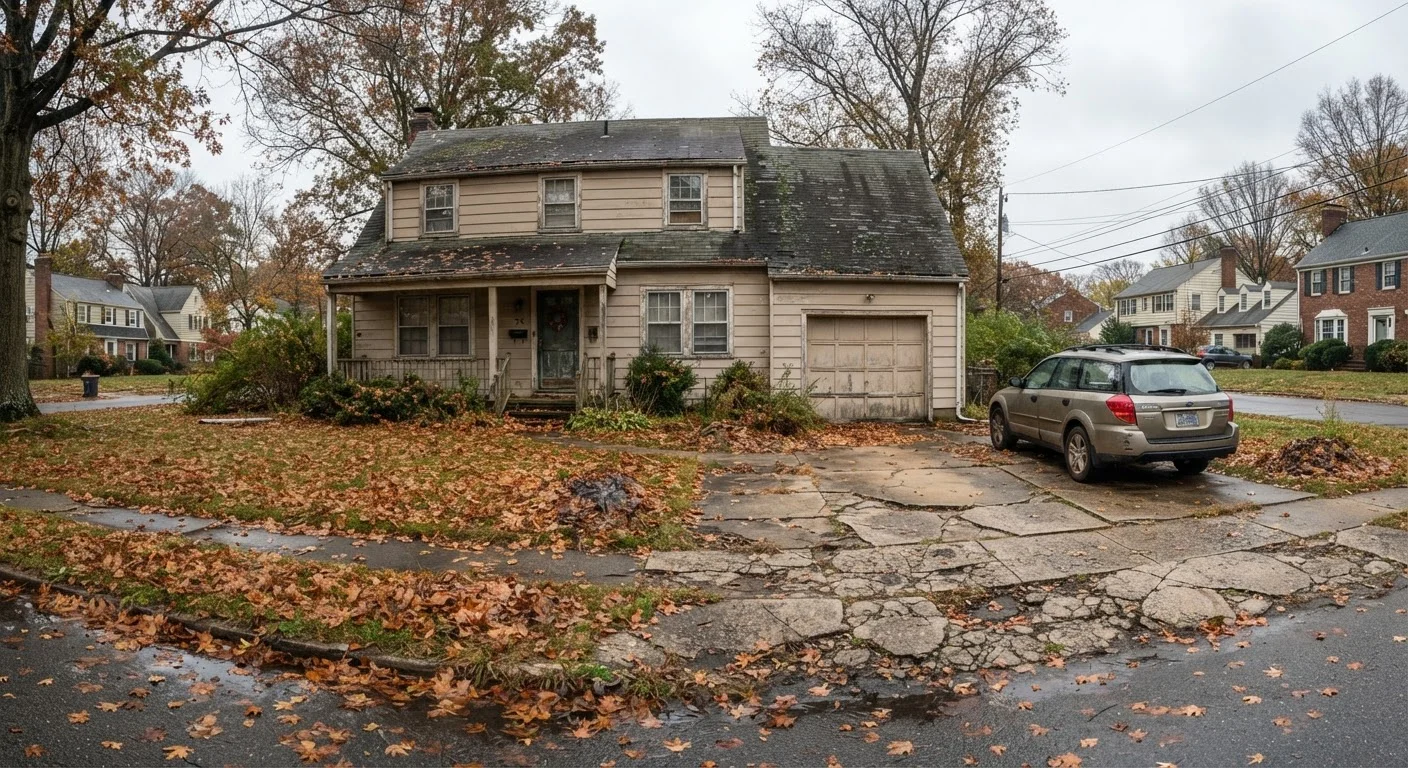
What Nobody Tells You at Closing
The mortgage payment is the number everyone plans around. But for most homeowners, the mortgage represents only a portion of what the home actually costs each month. The rest arrives quietly - in annual bills, irregular repair invoices, and fee structures buried in the closing paperwork - and it adds up faster than most people expect.
Research from various housing studies consistently suggests that homeowners underestimate non-mortgage housing costs by a significant margin. That gap between expectation and reality is where household budgets break down. If you're building your first home budget or recalibrating an existing one, the costs below are the ones most likely to be missing from your plan.
Routine Maintenance and Repairs
A widely cited rule of thumb in personal finance is to reserve 1% to 2% of your home's purchase price each year for maintenance and repairs. On a $350,000 home, that's $3,500 to $7,000 annually - or roughly $290 to $580 per month. Older homes, harsh climates, and larger lots tend toward the higher end.
The problem is that maintenance costs are irregular. Nothing breaks for six months, then the water heater and the furnace fail within weeks of each other. Homeowners who don't set aside a monthly reserve end up reaching for credit cards or pulling from savings when these moments arrive. Build the reserve before you need it.
Reserve 1-2% of your home's value annually for maintenance - before something breaks.
Property Tax Adjustments After Purchase
Many buyers close on a home using the seller's most recent property tax bill as their estimate, then get reassessed at current market value shortly afterward. Depending on the jurisdiction and how long the previous owner held the property, that reassessment can increase the annual tax bill by hundreds or even thousands of dollars.
If your mortgage servicer collects taxes through an escrow account, you may not notice the change until you receive an escrow shortage notice - often requiring a lump-sum catch-up payment or a higher monthly payment going forward. Check your local assessor's reassessment schedule shortly after purchase so you can project the adjustment before it arrives.
A post-purchase tax reassessment can significantly raise your escrow payment within the first year.
Homeowners Insurance Gaps and Riders
Standard homeowners insurance policies exclude a number of common risks, including flood damage, earthquake damage, sewer or drain backup, and identity theft recovery. Depending on your location and property, coverage for these risks may require separate policies or add-on riders - each carrying its own premium.
Premiums also drift upward over time as insurers adjust for claims history, construction costs, and regional risk factors. An annual review of your policy - comparing what you're covered for against what you actually need - can prevent both underinsurance and unnecessary spending. The saving on household bills hub includes guidance on evaluating recurring costs like insurance.
Flood, sewer backup, and earthquake losses are excluded from most standard homeowners policies.
Private Mortgage Insurance (PMI)
Buyers who put down less than 20% typically pay private mortgage insurance (PMI) - a monthly premium added to the mortgage payment that protects the lender, not the borrower. PMI generally ranges from 0.5% to 1.5% of the original loan amount annually, adding $100-$300 or more per month on a mid-size loan.
PMI doesn't cancel automatically in all cases. Under the Homeowners Protection Act, lenders are required to cancel PMI when the loan balance reaches 78% of the original purchase price, but borrowers can often request cancellation earlier - once equity reaches 20% - by submitting a written request and, in some cases, obtaining a new appraisal. Many homeowners pay PMI longer than necessary simply because they don't track their loan-to-value ratio.
PMI doesn't cancel itself - homeowners often pay it longer than necessary by not tracking loan-to-value.
HOA Fees and Special Assessments
Homeowners association (HOA) fees vary widely - from under $100 to several hundred dollars per month - and tend to increase over time as communities age and maintenance costs rise. But the bigger budget threat is the special assessment: a one-time charge levied when the HOA's reserve fund is insufficient to cover a major repair, such as a roof replacement on a shared building or repaving a private road.
Special assessments can run into thousands of dollars per unit with little advance notice. Before purchasing a property governed by an HOA, reviewing the association's reserve fund study and recent meeting minutes can reveal whether an assessment is likely. Once you're a member, the same documents help you monitor risk each year.
HOA special assessments can arrive with little notice and run into thousands of dollars per household.
Utility Costs Beyond the Baseline
New homeowners often budget based on average utility estimates provided during the sale - but those averages can mask significant seasonal variation. Heating bills in a northern winter or cooling costs through a southern summer can run two to three times the annual average in peak months. Larger square footage, older insulation, and inefficient systems all amplify this effect.
Beyond temperature control, homeowners add utility loads that renters rarely carry: irrigation systems, pool pumps, workshop equipment, EV chargers, and more. Review at least 12 months of utility billing history before finalizing your budget, and factor in any usage patterns specific to your household. For strategies on reducing recurring utility costs, the saving on bills section offers practical starting points.
Seasonal utility spikes and larger square footage routinely push energy costs well above the quoted average.
Landscaping, Pest Control, and Exterior Upkeep
Curb appeal has a cost. Lawn care - whether DIY or contracted - requires ongoing spending on equipment, fuel, fertilizer, seed, or service fees. Add gutter cleaning (typically twice per year), driveway sealing, exterior painting cycles (every 5-10 years for most climates), and pest control contracts, and the exterior of a home can easily consume $1,500-$3,000 or more per year before any major repair.
These costs are easy to dismiss individually because each one seems minor. Tracking them in a single annual category - rather than treating each as a one-off - reveals their cumulative weight on the budget. The difference between fixed and variable household expenses is especially relevant here, since most exterior upkeep costs are variable and easy to overlook until they pile up.
Exterior upkeep costs are easy to dismiss individually - but collectively they can exceed $2,000 per year.
Getting Ahead of the Surprises
None of these costs are unavoidable - but all of them are foreseeable once you know to look for them. The most effective approach is to build a complete inventory of your home's recurring and irregular expenses and assign a monthly reserve for each, even for costs that only hit once a year or every few years.
Build a Master Cost Inventory
Create a simple spreadsheet listing every recurring and irregular home expense - monthly, annual, and multi-year cycles. Divide annual costs by 12 and add that figure to your monthly budget as a reserve line. This single habit closes most of the gap between estimated and actual homeownership costs.
For a deeper look at how spending categories fit together, mapping your real expenses by category can reveal where money is actually going versus where you think it is. And if deferred maintenance is already a concern, it's worth understanding how those decisions quietly erode home equity over time. The saving on bills hub also covers practical ways to reduce recurring household expenses once you have them mapped.
This article provides general financial information for educational purposes only and is not personalised financial or legal advice. Consult a licensed financial adviser or accountant for guidance specific to your situation.