Why Small Adjustments Beat Big Overhauls
Most homeowners juggling a mortgage, recurring bills, and daily expenses don't have the bandwidth for a complete household efficiency retrofit. The good news: you don't need one. The highest-leverage bill reductions typically come from a handful of low-friction habit changes and one-time setting tweaks - not from replacing appliances or installing solar panels.
This guide focuses on changes you can make in an afternoon that will keep paying off month after month. For a broader audit of every recurring expense, see our room-by-room bills checklist - it pairs well with the steps here. And if you're curious which popular tactics are often overhyped, some approaches rarely deliver meaningful results.
What you will need
What You'll Need Before You Start
Before working through the steps below, gather these basics. None require specialist skills or tools.
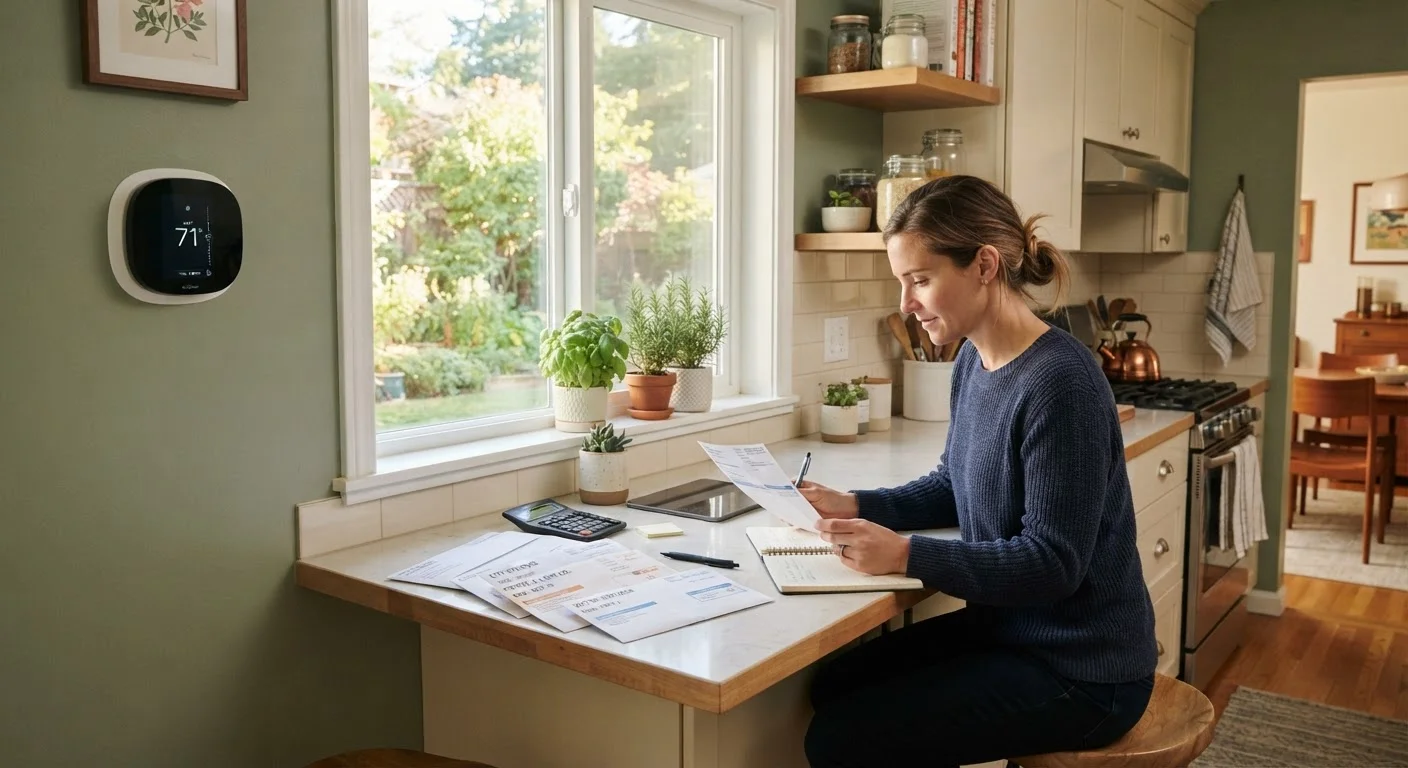
Recent utility bills or online account statements
Establishes your baseline so you can measure whether changes are working.
Programmable or smart thermostat
Allows you to set heating and cooling schedules automatically rather than relying on memory.
Smart power strips or individual outlet timers
Cuts phantom load from electronics and appliances that draw power even when not in active use.
Low-flow showerhead aerators
Reduces hot water use without a noticeable drop in water pressure.
Step-by-Step: Reducing Your Recurring Utility Costs
Work through these steps in order - each builds a cleaner baseline for the next. Most can be completed in a single sitting; a few require one follow-up call or an online account login.
Adjust your thermostat schedule
Heating and cooling typically represent the largest single category of home energy use. The US Department of Energy has long cited that setting your thermostat back 7-10°F for eight hours a day - while you're asleep or away - can meaningfully reduce annual heating and cooling costs without requiring you to feel uncomfortable while you're home.
If you have a programmable thermostat, create a schedule for sleeping hours and any regular away periods. If you're weighing an upgrade, our comparison of smart versus manual scheduling lays out realistic trade-offs for different household types.
Lower your water heater temperature
Water heating is consistently the second-largest energy expense in US homes. Most water heaters ship from the factory set to 140°F, but the EPA and many energy agencies recommend 120°F for typical households - enough for comfortable showers and effective dishwashing, and a meaningful reduction in standby heat loss.
Locate the temperature dial on your water heater (usually behind an access panel on electric models, or a dial on the gas valve for gas units) and turn it down to 120°F. Allow a few hours for the tank to stabilise before testing. If you have a dishwasher with a built-in booster heater, 120°F is generally sufficient.
Eliminate phantom power draw
Standby power - the electricity devices consume while switched off or in sleep mode - can account for a noticeable share of an average household's electricity use. Common culprits include televisions, gaming consoles, desktop computers, cable boxes, and older chargers left plugged in.
Do a walk-through and identify clusters of electronics. Plug them into a smart power strip or a basic switched strip so you can cut power to the whole group with one switch when not in use. Pay particular attention to entertainment centres and home office areas, which tend to have the highest standby loads.
Shift high-draw appliance use to off-peak hours
Dishwashers, clothes washers, and dryers are among the largest single-cycle electricity draws in a typical home. If your utility offers time-of-use (TOU) pricing - where electricity costs more during peak demand hours, typically afternoon and early evening - running these appliances at night or early morning can reduce your bill without changing how often you use them.
Check your latest bill or your utility's website to see if TOU rates apply to your account. If they do, simply using a delay-start function on your dishwasher or washer is often all it takes.
Review and renegotiate your broadband plan
Internet service is one of the few recurring bills where you often have direct negotiating leverage. Many providers offer promotional rates that quietly expire, and lower-tier plans frequently match the actual speeds most households use day-to-day.
Log into your account or call customer service and ask two things: what your current plan speed is, and whether any retention offers or lower-cost plans are currently available. Being willing to mention that you're comparing options often prompts a better offer. This call typically takes 15-20 minutes and costs nothing.
Install low-flow fixtures in high-use areas
Showerheads and faucet aerators are inexpensive, widely available, and typically take under ten minutes to install with no specialist tools. Low-flow showerheads certified under the EPA's WaterSense program use 2.0 gallons per minute or less - compared to 2.5 GPM for standard models - without a noticeable drop in pressure for most users.
Since hot water also costs energy, reducing flow reduces both your water and water-heating bills simultaneously. Focus first on showers, which account for the largest share of residential hot water use.
Track Changes Over Two Billing Cycles
Utility bills fluctuate with weather, household activity, and rate changes - so one month's data isn't conclusive. Compare the same billing period year-over-year, or track two consecutive months after making changes, to get a clearer picture of actual savings. Most utility providers offer online usage history that makes this straightforward.
Keeping the Savings Going
One-time changes help, but the compounding effect comes from consistency. Set a calendar reminder every six months to re-check your thermostat schedule, confirm your water heater setting hasn't drifted, and revisit your broadband plan - providers quietly adjust pricing tiers throughout the year.
If heating costs remain a concern heading into colder months, our seasonal heating checklist walks through system-specific maintenance steps that complement the habits above. For households where electricity pricing varies by time of day, understanding how time-of-use tariffs work can unlock further savings by shifting when you run high-draw appliances.
These steps are part of a larger picture. If you'd like to bring all your recurring expenses - utilities, insurance, subscriptions - into a single manageable system, see managing all recurring home expenses in one system.
This article is for general informational purposes only and does not constitute personalised financial advice. Results will vary depending on your home, usage patterns, and local utility rates. Consult a qualified professional for guidance specific to your circumstances.