Why a Checklist Approach Works Better Than One-Off Fixes
Heating accounts for the largest share of home energy use in most US climates, yet most of the factors that drive up bills are fixable with routine maintenance and small setting changes - not major renovations. The problem is that these tasks are scattered across different systems and easy to overlook when they don't obviously announce themselves as problems.
A structured checklist changes that. By working through the items below before and during the heating season, you address efficiency losses in the order that typically matters most: the mechanical system itself, the controls that govern it, the building shell that retains the heat, and the daily habits that influence how much the system runs.
This checklist covers forced-air furnaces, heat pumps, and hydronic (hot-water) boiler systems. Not every item will apply to your setup - skip the sections that don't fit and focus your time where the gaps are largest.
For a broader look at how heat escapes through your walls, attic, and windows before your system ever has a chance to warm the space, see our companion article on how your home's thermal envelope affects every bill.
HVAC filter (correct size and MERV rating for your system)
Replacing a clogged filter restores airflow and keeps the system running at rated efficiency.
Weatherstripping and door sweeps
Seal gaps around exterior doors to stop cold air infiltration at one of the most common leak points.
Paintable caulk or silicone caulk
Fill small gaps around window frames, pipe penetrations, and wall junctions to reduce drafts.
Radiator bleed key (hydronic systems only)
Release trapped air from hot-water radiators so each unit delivers its full heat output.
Duct sealant (mastic) or metal-backed foil tape
Permanently seal leaking duct joints to keep conditioned air from escaping into unconditioned spaces.
Programmable or smart thermostat
Automate temperature setbacks during unoccupied or sleeping hours without relying on memory.
Outlet gasket insulation kits
Fit behind electrical outlet faceplates on exterior walls to block a commonly overlooked draft source.
Working Through the Checklist
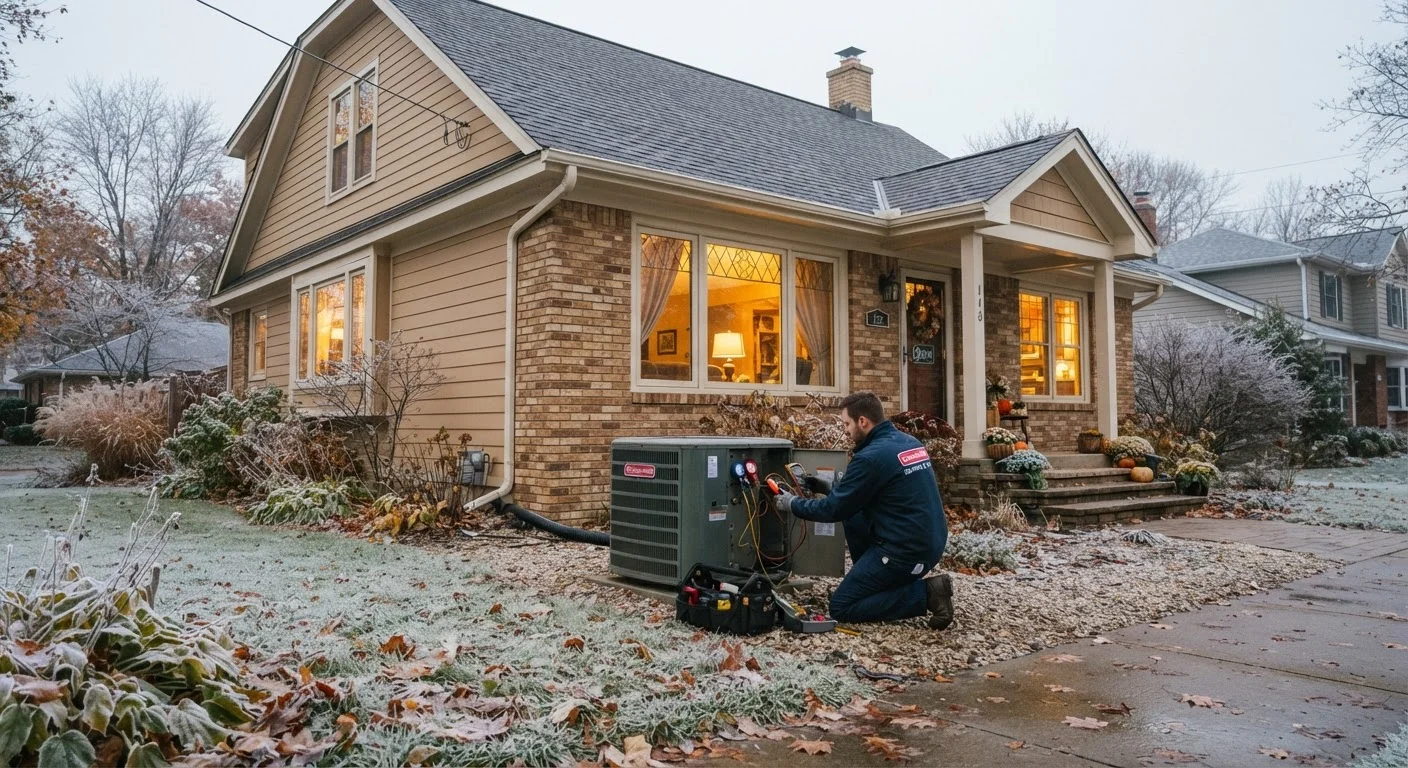
Start with system maintenance - it's the highest-leverage category and the one most homeowners defer the longest. A clogged filter alone can force your system to run significantly longer to reach the same thermostat setpoint, which shows up directly in your utility bill. From there, move to thermostat settings, then seal the building envelope, then look at distribution and habits.
System Maintenance (All System Types)
Thermostat and Controls
Air Sealing and Insulation
Heat Distribution and Zones
Behavioural Adjustments
Gas and Oil Systems: Leave Internal Work to Professionals
Inspecting burners, heat exchangers, gas valves, or flue connections on gas or oil heating equipment carries real safety risks including carbon monoxide exposure and fire hazard. Limit your DIY involvement to filter changes and external checks. Have a licensed HVAC technician service combustion equipment annually.
Don't Close Too Many Vents in Forced-Air Systems
Closing more than a few supply vents in a forced-air system can increase duct pressure and stress the blower motor, potentially reducing efficiency or causing early equipment failure. If you want to reduce heating in specific areas, consult a professional about zoning options rather than simply closing vents throughout the house.
Carbon Monoxide Detectors Are Non-Negotiable
Any home with a gas, oil, or propane heating system must have working carbon monoxide detectors on every level, including near sleeping areas. CO is odourless and colourless - detector failure has caused deaths. Test units monthly, replace batteries annually, and replace the entire detector unit every 5-7 years or per the manufacturer's guidance.
Air sealing is often the most underestimated category. Gaps around doors, windows, and penetrations allow warm air to constantly bleed out - your heating system is effectively competing against them all winter. A practical deep-dive on finding and fixing these leaks is available in our guide to weatherproofing your home from the outside in.
Once you've worked through the heating-specific items, consider folding this review into a wider annual bills audit. Our room-by-room household bills checklist covers every recurring home expense and can help you spot where money is quietly leaking beyond just heating costs.
This article provides general information for educational purposes and is not a substitute for professional advice from a licensed HVAC technician. Costs, savings, and efficiency outcomes vary by home, system type, climate, and usage patterns. Consult a qualified professional before undertaking any work involving gas, electrical, or structural components.