What We're Actually Comparing
Both options aim to solve the same problem: stop heating or cooling an empty house at full power. The difference is in how they get there.
A manual programmable thermostat lets you set a fixed weekly schedule - say, 68°F on weekdays from 6 a.m. to 8 a.m., then setback to 62°F while the house is empty, recovering before you return. You set it once; it repeats. No app, no Wi-Fi, no subscription.
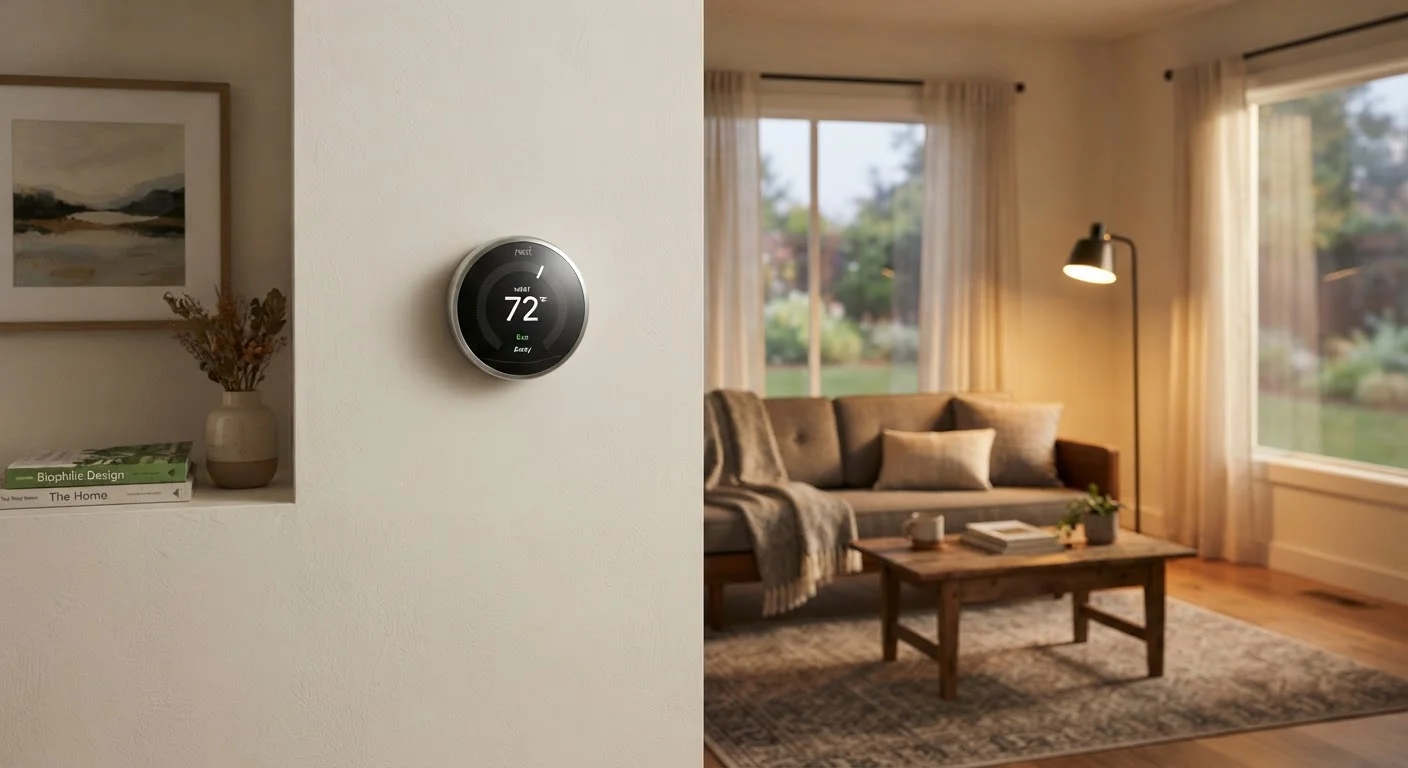
A smart thermostat connects to your home network and, depending on the model, can learn your patterns, adjust based on your phone's location, respond to voice commands, or integrate with time-of-use utility pricing. Some models build a schedule automatically based on how you use the system in the first weeks.
Both require an HVAC system that supports multi-wire thermostat connections - most forced-air systems qualify, but some older setups or high-voltage systems do not. Checking compatibility before purchasing either type is essential. For a broader look at how your utility rate structure interacts with these choices, see how fixed and variable rate plans work.
The Real Cost Comparison
Manual programmable thermostats typically cost $25-$75 and require no ongoing fees. A smart thermostat generally runs $150-$300 at purchase, with some platforms offering optional subscription tiers for advanced features.
The U.S. Department of Energy has noted that properly used programmable thermostats can yield meaningful savings - often cited around 10% on heating and cooling costs annually - but that figure hinges on consistent, correct use. Studies, including research published by Lawrence Berkeley National Laboratory, have found that many programmable thermostats are either left in "hold" mode (negating any scheduling benefit) or set with schedules that don't match actual occupancy.
Smart thermostats have been shown in some utility program analyses to reduce HVAC energy use by roughly 8-15%, with results varying significantly based on climate, home size, and prior thermostat habits. If you were already disciplined about manual scheduling, the incremental savings from upgrading may be modest.
| Manual Programmable | Smart Thermostat | |
|---|---|---|
| Typical upfront cost | $25-$75 | $150-$300 |
| Ongoing fees | None | None to moderate (optional subscriptions) |
| Setup complexity | Low; one-time schedule entry | Moderate; Wi-Fi, app, initial configuration |
| Adapts to schedule changes | No; manual reprogramming required | Yes; auto-learning or remote adjustment |
| Remote access | No | Yes, via smartphone app |
| Best savings scenario | Consistent, predictable household routine | Irregular schedules or frequent travel |
| Utility rebate eligibility | Rarely | Often (check with your utility) |
The payback period on a smart thermostat depends heavily on your current energy costs and how much your previous habits were leaving money on the table. For households already running tight manual schedules, the math may not justify the upgrade for several years.
Setup, Behavior Change, and Ongoing Effort
Manual thermostats demand a one-time programming effort. The challenge is that most households never fully complete this step - or set a schedule that doesn't match reality (wrong wake times, failing to account for weekends, forgetting seasonal changes). Once neglected, the device defaults to holding whatever temperature was last set manually, eliminating any energy benefit.
Smart thermostats lower the barrier to correct scheduling. Auto-learning models observe your adjustments and build a schedule around them. Geofencing features use your phone's location to reduce conditioning when everyone is away. Remote access via app lets you adjust settings when plans change unexpectedly. These features address the actual behavioral failure point of manual thermostats.
Maximize Either Option with One Simple Rule
Regardless of which thermostat type you use, the single highest-impact habit is setting a meaningful setback temperature - typically 7-10°F lower (or higher in summer) during hours when the house is genuinely unoccupied. The energy savings come from that temperature difference, not from the device itself. A smart thermostat makes maintaining that setback easier; a manual thermostat requires you to set and honor the schedule yourself.
That said, smart thermostats introduce their own friction: Wi-Fi setup, app accounts, firmware updates, and the occasional connectivity issue. Households with older residents less comfortable with apps, or homes with unreliable internet, may find the smart option introduces more problems than it solves.
For a broader approach to cutting recurring costs without major lifestyle disruption, the guide to trimming utility bills covers HVAC alongside water and broadband adjustments.
Which Makes More Sense for Your Household
Run through these practical questions before deciding:
- Is your daily schedule consistent? If everyone in the house keeps roughly the same weekday routine, a manual programmable thermostat - correctly set - will do most of what a smart model does at a much lower cost.
- Does your schedule change frequently? Remote workers with irregular hours, households with shift workers, or families who travel often benefit most from the flexibility of smart scheduling and remote control.
- How much do you currently spend on heating and cooling? If your annual HVAC costs are low (mild climate, small home, existing efficiency measures), the payback period on a premium smart thermostat stretches considerably.
- Are utility rebates available? Many utilities offer rebates on qualifying smart thermostats - sometimes $50-$100 - which materially changes the cost-benefit calculation. Check with your utility directly before purchasing.
Whichever option you choose, pairing it with basic seasonal maintenance pays additional dividends. The seasonal heating cost checklist is a useful companion for getting more out of either thermostat approach. You can also find more strategies within the broader home budgeting hub.
This article is for general informational purposes only and does not constitute financial or professional advice. Energy savings vary by home, climate, habits, and utility rates. Consult a qualified HVAC professional for advice specific to your system.