What the Assessment Actually Covers
A professional home energy assessment - sometimes called a home energy audit - is a systematic inspection of how your home uses and loses energy. It is not a sales visit or a vague walkthrough. A trained assessor evaluates your home's physical structure, mechanical systems, and historical energy consumption to identify where money is leaking and what fixes are worth prioritizing.
Most assessments begin with a review of 12 to 24 months of utility bills. The assessor looks for patterns: unusual spikes, seasonal trends, and consumption that seems out of proportion to your home's size or climate. This context shapes everything that follows.
From there, the assessor moves through your home room by room - similar in spirit to the approach described in our annual household bills audit checklist. The difference is that a professional brings calibrated equipment rather than a checklist alone.
The Tools Assessors Use and What They Detect
Professional assessors rely on several diagnostic tools that go well beyond what a homeowner can observe visually.
- Blower door test: A large fan temporarily sealed into an exterior doorframe depressurizes the home to a standardized level. The equipment measures how quickly air re-enters, quantifying overall air leakage. A leaky home requires significantly more heating and cooling energy to maintain comfortable temperatures.
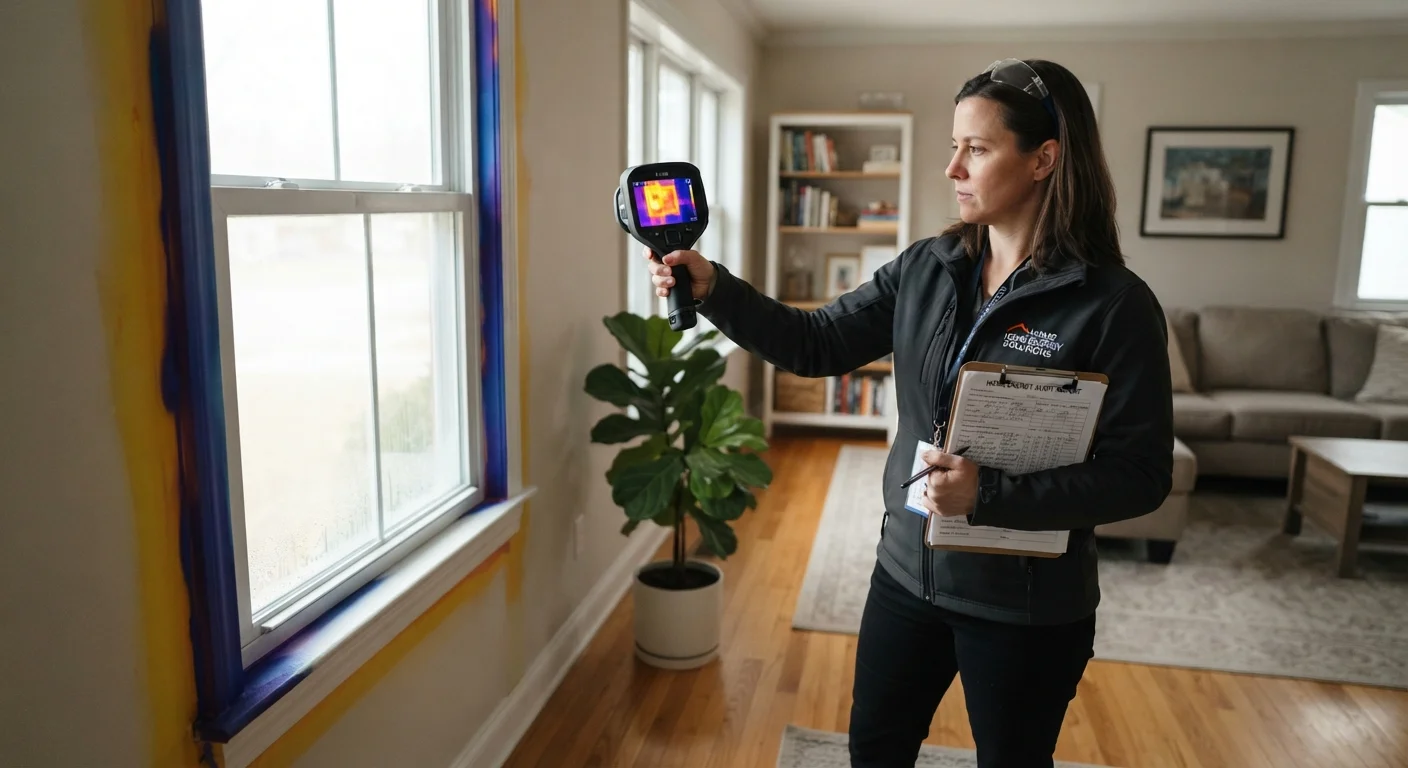
- Thermal imaging (infrared camera): Used during or after the blower door test, an infrared camera makes temperature differentials visible. Missing insulation, thermal bridging through studs, and gaps around windows and penetrations all show up as distinct color patterns. This is the primary tool for diagnosing problems in the home's thermal envelope.
- Combustion safety testing: For homes with gas appliances, furnaces, or water heaters, the assessor checks for carbon monoxide spillage and backdrafting - conditions where combustion gases re-enter living spaces instead of venting outdoors.
- Duct leakage testing: In forced-air systems, a duct pressurization test measures how much conditioned air escapes ductwork before reaching living areas. Leaky ducts in unconditioned spaces can waste 20-30% of heating and cooling output, according to the U.S. Department of Energy.
Combustion Safety Is Not Optional
If your home has any gas-burning appliances - including furnaces, boilers, water heaters, or stoves - combustion safety testing should be a required part of any energy assessment you commission. Backdrafting and carbon monoxide risks are real safety hazards, not secondary concerns. Confirm this test is included before booking an assessor.
These tests take between two and four hours for a typical single-family home. The assessor documents findings as they go, building the evidence base for the written report.
How to Read the Report and What to Do Next
The written report you receive after an assessment is meant to be a prioritized action plan, not just a list of problems. Look for three things: the estimated energy impact of each finding, the estimated cost to address it, and a simple payback period - how many years of energy savings it takes to recover the upfront cost.
Typical findings cluster into a few categories:
- Air sealing opportunities: Gaps around recessed lights, plumbing penetrations, attic hatches, and rim joists are common. Air sealing is generally low-cost relative to its impact.
- Insulation deficiencies: Attic insulation below current code levels is one of the most common findings in older homes. Payback periods vary by climate and fuel type.
- Heating and cooling system issues: An assessor may flag an aging furnace, undersized equipment, or refrigerant issues. Our seasonal heating cost checklist covers maintenance steps you can act on immediately.
- Water heating inefficiencies: Tank water heaters operating in unconditioned spaces or set at unnecessarily high temperatures are frequently flagged.
Work through the report in order of payback period rather than cost. Some of the least expensive fixes - like air sealing - often deliver the fastest returns.
This article provides general educational information about home energy assessments. It is not professional engineering, financial, or contracting advice. Consult a licensed energy auditor or contractor for guidance specific to your home and local codes.