Why $500 Is a Realistic Road Trip Budget
A $500 family road trip sounds like a stretch - until you break it down. For a family of four taking a 3-4 day trip, that figure covers fuel, food, lodging, and entertainment when each category is approached with intention. It's not about deprivation; it's about redirecting spending toward what actually makes a road trip memorable.
The families who routinely pull this off share one trait: they plan before they pack. Our pre-departure budget checklist walks through every line item worth estimating before you turn the key. Starting with a written number - not a vague intention - is what separates successful budget trips from expensive ones.
$500
Realistic 3-4 day family road trip budget
Based on typical fuel, food, lodging, and activity costs for a family of four on a 400-mile domestic loop.
40%
Of trip cost determined by route choice
Route selection directly influences fuel expenditure, lodging availability, and free activity access before spending begins.
$50-$70
Average restaurant meal cost per family
Estimated per-meal cost for a family of four at highway-adjacent casual dining - a major driver of food budget overruns.
Choosing the Right Route for Your Budget
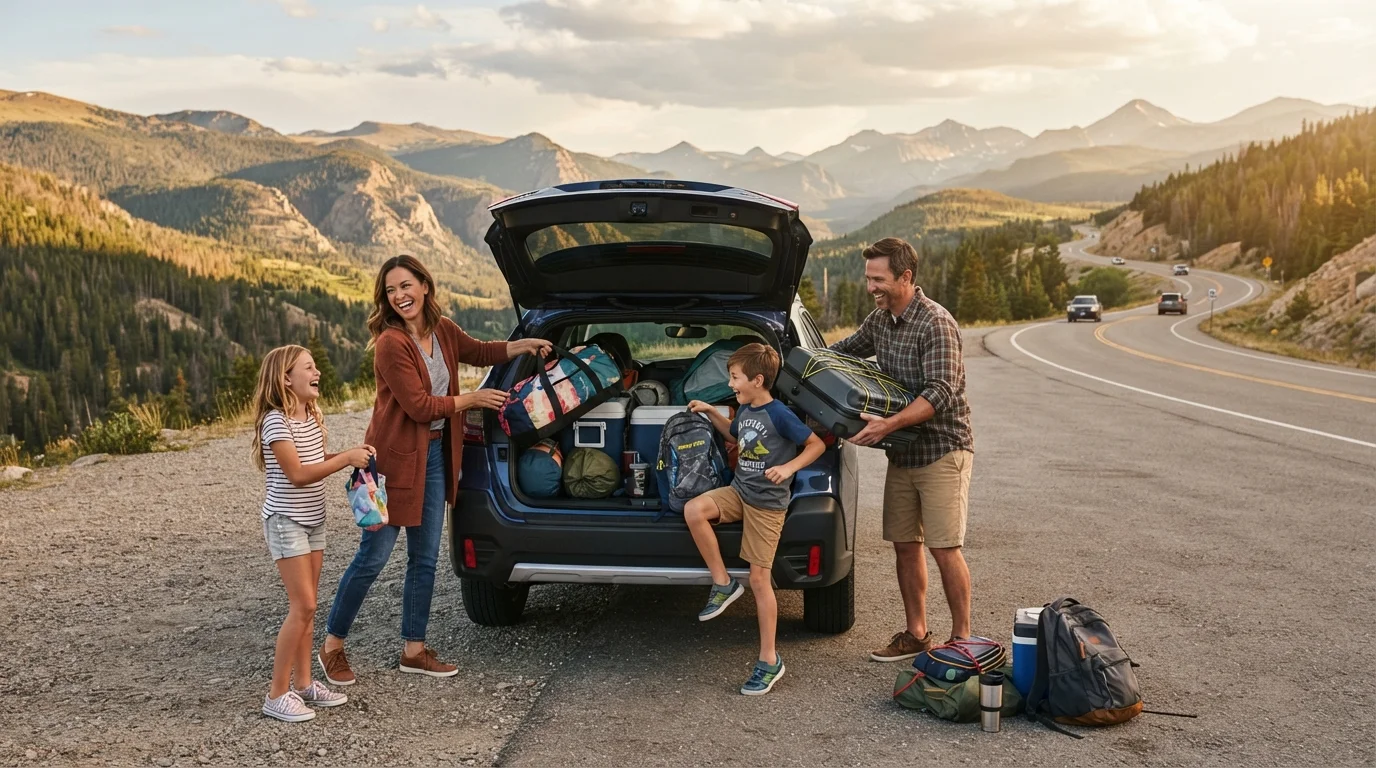
Route selection determines roughly 40% of your total trip cost before you spend a single dollar. A 600-mile loop through areas with sparse free camping and expensive gas stations will blow a $500 budget on day two. A well-chosen 400-mile loop through a national forest corridor can come in well under budget.
Favor loop routes over point-to-point trips - they eliminate the cost of return travel or one-way vehicle logistics. Prioritize routes that pass through national forests, Bureau of Land Management (BLM) land, and state parks with free or low-cost entry. The American West and Southeast both offer dense concentrations of these options within driving distance of major population centers.
If your family is new to multi-stop planning, our guide on mapping a multi-stop US family journey covers how to sequence stops so driving days stay manageable.
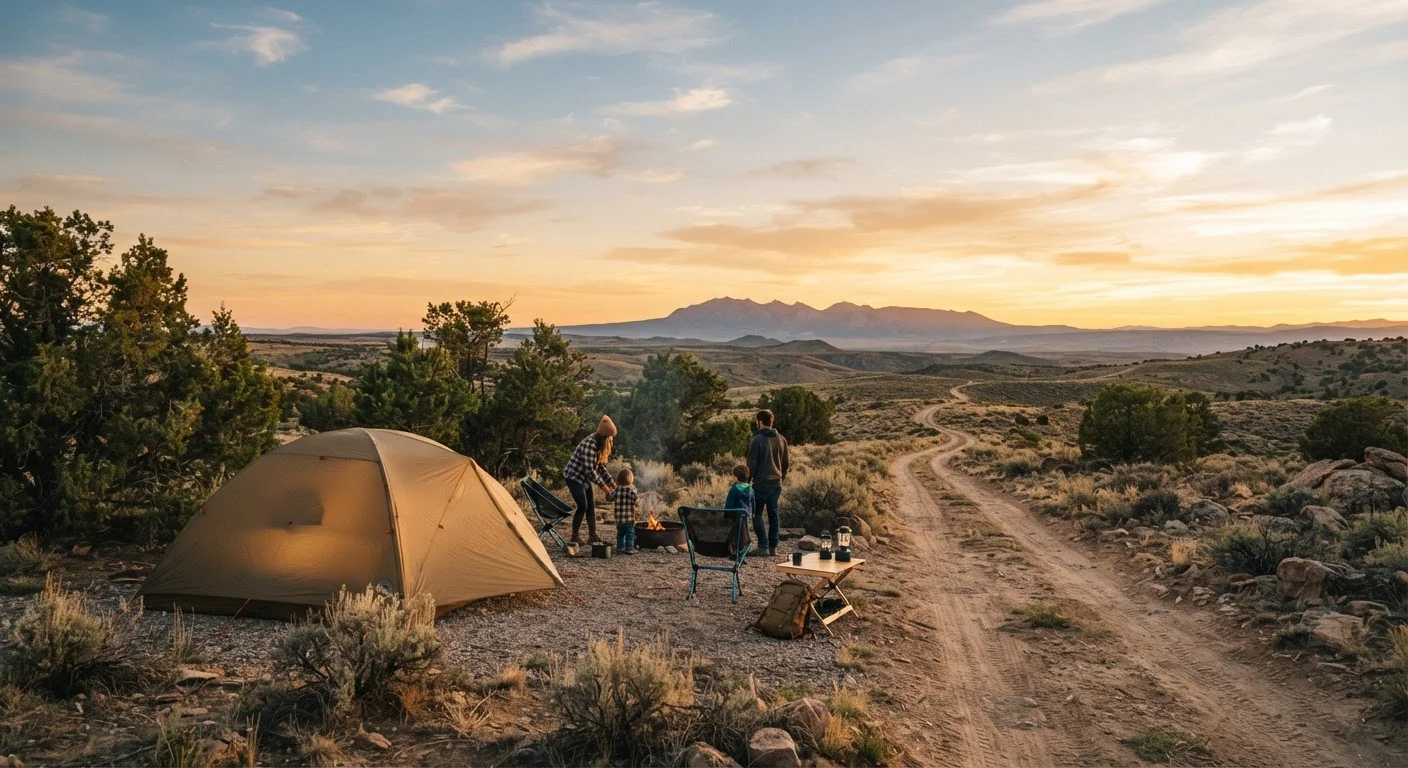
Search for 'dispersed camping' on the US Forest Service website before finalizing your route - many areas allow free overnight stays with no reservation required.
Dispersed camping is one of the least-known cost-cutting tools available to US road trippers, and it's legal and encouraged on most national forest land.
Set a hard daily spending cap in cash before each driving day - once the envelope is empty, stop spending.
A daily cash envelope forces real-time trade-offs and is far more effective than reviewing a credit card statement at home after the trip.
Fuel: Estimating and Controlling Your Biggest Cost
Fuel is typically the single largest line item on any road trip budget, often consuming $150-$220 of a $500 budget for a family vehicle. Estimate your fuel cost before committing to a route: divide the total planned mileage by your vehicle's highway MPG, then multiply by an estimated per-gallon price for your region.
For example, a 400-mile loop in a vehicle averaging 28 MPG uses roughly 14.3 gallons. At $3.50/gallon, that's about $50 - very achievable. At 18 MPG in an older SUV, the same route costs closer to $78. Know your number before you go.
Reduce fuel spend by maintaining steady highway speeds (fuel efficiency drops noticeably above 65 mph), keeping tires properly inflated, and avoiding unnecessary idling at rest stops. Fill up in smaller towns rather than highway interchange stations, where markup is typically higher.
Food on the Road Without Blowing the Budget
Restaurant meals for a family of four at highway-adjacent diners average $50-$70 per sitting - just two of those will consume a quarter of your entire $500 budget. The solution isn't skipping meals; it's shifting the cooking. A well-stocked cooler and a portable camp stove transform rest stops and campgrounds into dining rooms.
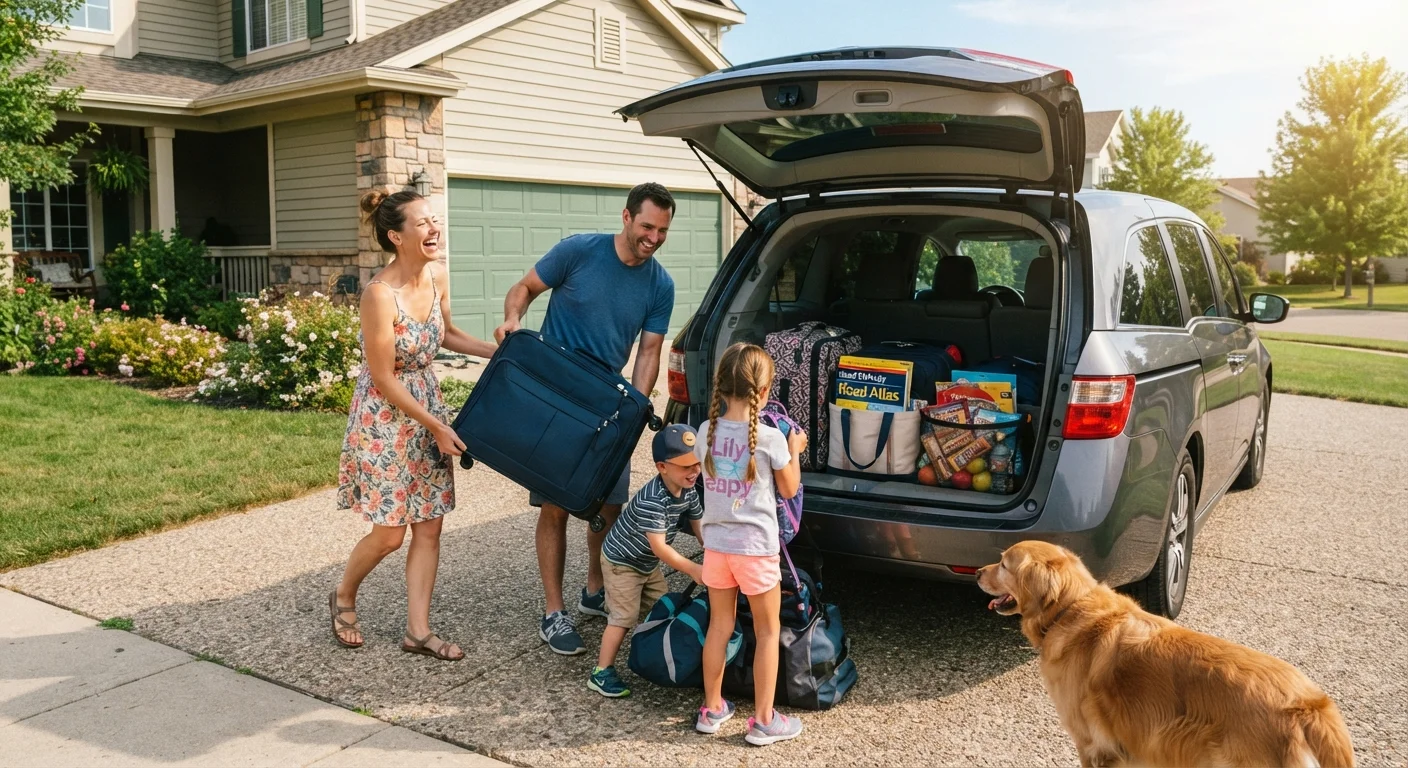
Before departure, batch-cook two dinners (chili, pasta, or rice dishes reheat easily), pack sandwich components for lunches, and load the cooler with cut fruit, string cheese, and nuts for snacking. Budget roughly $80-$100 for a family's full food supply for 3-4 days - far less than the $200+ you'd spend eating out.
Reserve one restaurant meal as a deliberate treat, ideally at a locally owned spot in a small town rather than a chain. It keeps morale high without derailing the plan. For more money habits that reinforce this approach, see our piece on road trip money habits that hold up across any route.
Freeze Your Water Before You Leave
Fill reusable water bottles three-quarters full and freeze them the night before departure. They double as ice packs in the cooler, keeping food cold longer and reducing how often you need to buy bagged ice at inflated gas station prices. This one habit can save $15-$20 over a 3-day trip.
Lodging Options That Keep Costs Down
Lodging is where most families unknowingly overspend. A single night at a mid-range motel can run $120-$160, which would consume nearly a third of a $500 budget in one swipe.
The most budget-consistent option for families comfortable outdoors is free dispersed camping on BLM or national forest land, where no permit or fee is required in most areas (check current land-use rules before you go, as policies vary by location and season). Developed campgrounds in state parks typically charge $20-$35 per night - a reasonable splurge that buys access to restrooms and sometimes showers.
For families preferring a roof, look into cabins at state park lodges or budget-oriented campground cabins, which often run $60-$90 per night and sleep four. Always verify availability and any reservation requirements well before your trip, particularly for popular parks on summer weekends.
Activities and Entertainment for Free (or Close to It)
The most durable memories from family road trips rarely come from paid attractions. Swimming holes, forest hiking trails, roadside historical markers, and small-town main streets cost nothing and often deliver more genuine connection than theme parks. Plan at least two free activities per day so the trip never feels like a grind between gas stations.
The America the Beautiful Annual Pass (currently around $80) provides access to national parks, national forests, and other federal lands for a full year - worthwhile if your route passes through even one or two national park units. Check whether your home state offers a state park annual pass as well; many are priced under $50 and can be used across multiple trips.
For family-friendly US destinations that pack in natural attractions without entry fees, our destination hub is a useful starting point when choosing where to anchor your route.
Building Your $500 Budget: A Simple Breakdown
Here's a realistic allocation for a family of four on a 3-4 day, 400-mile loop:
| Category | Estimated Cost |
|---|---|
| Fuel (400 miles, ~25 MPG, ~$3.50/gal) | $56 |
| Food & beverages (cooler-based, one restaurant meal) | $130 |
| Lodging (2 nights campground, 1 night budget cabin) | $130 |
| Activities & entrance fees | $60 |
| Emergency buffer | $80 |
| Total | $456 |
The emergency buffer isn't optional - unexpected tolls, a tire top-off, or a spontaneous ice cream stop in a mountain town are all real possibilities. Families who skip the buffer often return home over-budget; families who use it wisely call it the best $80 they spent. For a complete pre-trip checklist that aligns with this breakdown, see our family road trip budget checklist.
The $500 road trip isn't a compromise - it's a framework. Adjust the numbers for your vehicle, your region, and your family's style, and you'll find the budget has more flexibility than it first appears. The families who travel most on the least aren't luckier; they just plan a week before everyone else does.