Before a long drive, a methodical pre-trip check can catch problems early. Here's what to inspect and what to leave to a professional.
Key Takeaways
Most pre-trip checks can be done at home with basic tools in under an hour.
Tires, fluids, and brakes are the three highest-priority systems to inspect before a long drive.
Some checks - like brake pad measurement and belt inspection - are better left to a qualified mechanic.
Catching a small problem before departure is almost always cheaper than a roadside repair.
A spare tire in poor condition is just as risky as having no spare at all.
Why a Pre-Trip Inspection Is Worth the Time
A long road trip puts your vehicle under sustained stress it rarely sees during daily commuting - extended highway speeds, heavy loads, heat buildup, and hours of continuous operation. The good news is that most mechanical failures that strand drivers can be anticipated with a methodical check done a few days before departure.
This checklist is organized by priority, not by difficulty. Work through it top to bottom and flag anything that looks worn, low, or damaged for a mechanic's assessment before you leave. For a broader look at driving habits that protect your car on longer hauls, see the Driving Smarter hub for fuel-saving and road strategies.
Tires
Check tire pressure on all four tires (including the spare) using a calibrated gauge, and inflate to the vehicle manufacturer's recommended PSI found on the door jamb sticker - not the number printed on the tire sidewall.Must
Inspect tread depth on each tire; if any tire measures below 2/32 of an inch using a tread depth gauge or penny test, replace it before the trip.Must
Look for sidewall cracks, bulges, or uneven wear patterns that may indicate alignment or suspension issues needing professional attention.Must
Confirm the spare tire is properly inflated and that the jack and lug wrench are accessible and functional.Must
Fluids
Check engine oil level and condition on a cold engine; if the oil is dark and gritty or below the minimum line, change it before departure.Must
Inspect coolant level in the reservoir and verify it is within the marked range; low coolant on a long highway run is a leading cause of engine overheating.Must
Check brake fluid level in the master cylinder reservoir; if it is significantly below the minimum line, have a mechanic assess the brake system before you drive.Must
Top off windshield washer fluid - budget for more than you expect, especially on dusty or bug-heavy interstate routes.Should
Check power steering fluid and transmission fluid levels if your vehicle's owner manual recommends user inspection of these systems.Should
Brakes and Belts
Listen for squealing, grinding, or pulsating sensations during normal braking in the days before the trip; any of these warrants a professional brake inspection.Must
Have a mechanic visually check brake pad thickness if you have not had them inspected in the past year or 12,000 miles.Should
Inspect the serpentine belt for cracking, fraying, or glazing; a snapped belt will disable your alternator and power steering simultaneously.Must
Lights and Wipers
Walk around the vehicle and confirm all exterior lights function: headlights (low and high beam), brake lights, turn signals, reverse lights, and hazard lights.Must
Test wiper blades for streaking or skipping; replace any blade that does not clear the windshield cleanly in a single pass.Must
Check that interior dashboard warning lights extinguish properly after startup; an illuminated check engine light should be scanned for fault codes before a long drive.Must
Emergency Gear and Documentation
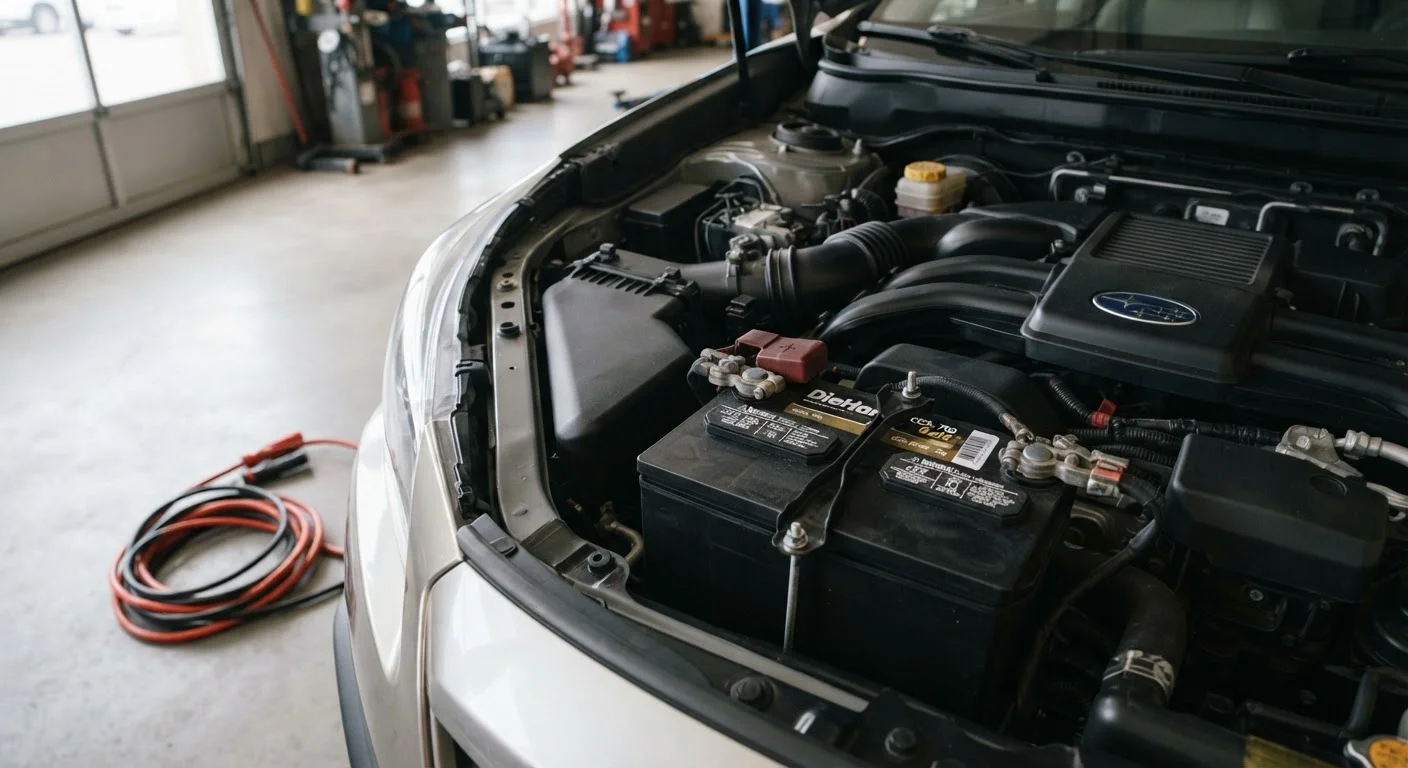
Confirm your roadside emergency kit includes jumper cables or a jump starter pack, reflective triangles or flares, a basic first-aid kit, and a flashlight with working batteries.Must
Verify your vehicle registration, proof of insurance, and driver's license are current and accessible - not just assumed to be in the glove box.Must
Carry a physical copy of your roadside assistance membership details or the phone number for your insurance carrier's assistance line.Should
Pack a portable phone charger so navigation and emergency communication remain available even during extended driving.Nice to have
Tools and Resources You'll Need
Most of these checks require only items you likely already own or can pick up inexpensively. Having the right tools on hand before you start will make the process faster and more accurate.
Required
Tire pressure gauge
Accurately measures PSI in each tire so you can inflate to the correct manufacturer specification.
Required
Tread depth gauge
Gives a precise measurement of remaining tread depth to determine whether tires are safe for highway travel.
Required
Flashlight or work light
Illuminates the engine bay, undercarriage, and tire sidewalls for a thorough visual inspection.
Optional
OBD-II code reader
Reads diagnostic fault codes stored by the vehicle's computer when the check engine light is on, helping you understand severity before seeing a mechanic.
Required
Fluid top-off supplies
Having the correct engine oil grade, coolant type, and washer fluid on hand lets you address low levels immediately rather than making a separate store run.
When to Hand It Off to a Professional
Brakes Are Not a DIY Assessment
Visual brake inspections through wheel spokes can give a rough sense of pad thickness, but accurate measurement requires removing the wheel. If you are unsure about your brake condition, have a mechanic check them - this is not an area where optimism is a safe substitute for certainty. Compromised brakes on a loaded vehicle at highway speeds are one of the most serious safety risks a driver can face.
Some items on this checklist involve systems where incorrect assessment can create a false sense of security - or cause injury. Brake pad thickness, serpentine belt condition, wheel bearing noise, and suspension wear are all areas where a qualified mechanic's trained eye adds real value. If your vehicle is due for a scheduled service within 1,000 miles of your planned trip, complete it before departure rather than after.
If your inspection surfaces anything outside your comfort level, a pre-trip inspection at a reputable shop typically takes under an hour and costs a fraction of roadside assistance or a tow. Pair this vehicle checklist with the family road trip budget checklist to make sure documentation, emergency funds, and fuel costs are covered too.
Don't Ignore Dashboard Warning Lights
A check engine light, tire pressure warning, or battery alert active at departure will not resolve itself on the highway. These lights signal that your vehicle's onboard diagnostics have detected a fault. Have the code read at a shop or with an OBD-II reader before you leave - many faults are minor, but some indicate conditions that will worsen under sustained load.
Car Ownership Tips Editorial Team is the collective byline for our editorial team and contributor network. Articles published under this byline or an editorial pen name are researched, written, and reviewed according to our editorial standards for clarity, consistency, and independence before publication.
The content provided on our blog site traverses numerous categories, offering readers valuable and practical information. Readers can use the editorial team’s research and data to gain more insights into their topics of interest. However, they are requested not to treat the articles as conclusive. The website team cannot be held responsible for differences in data or inaccuracies found across other platforms. Please also note that the site might also miss out on various schemes and offers available that the readers may find more beneficial than the ones we cover.