
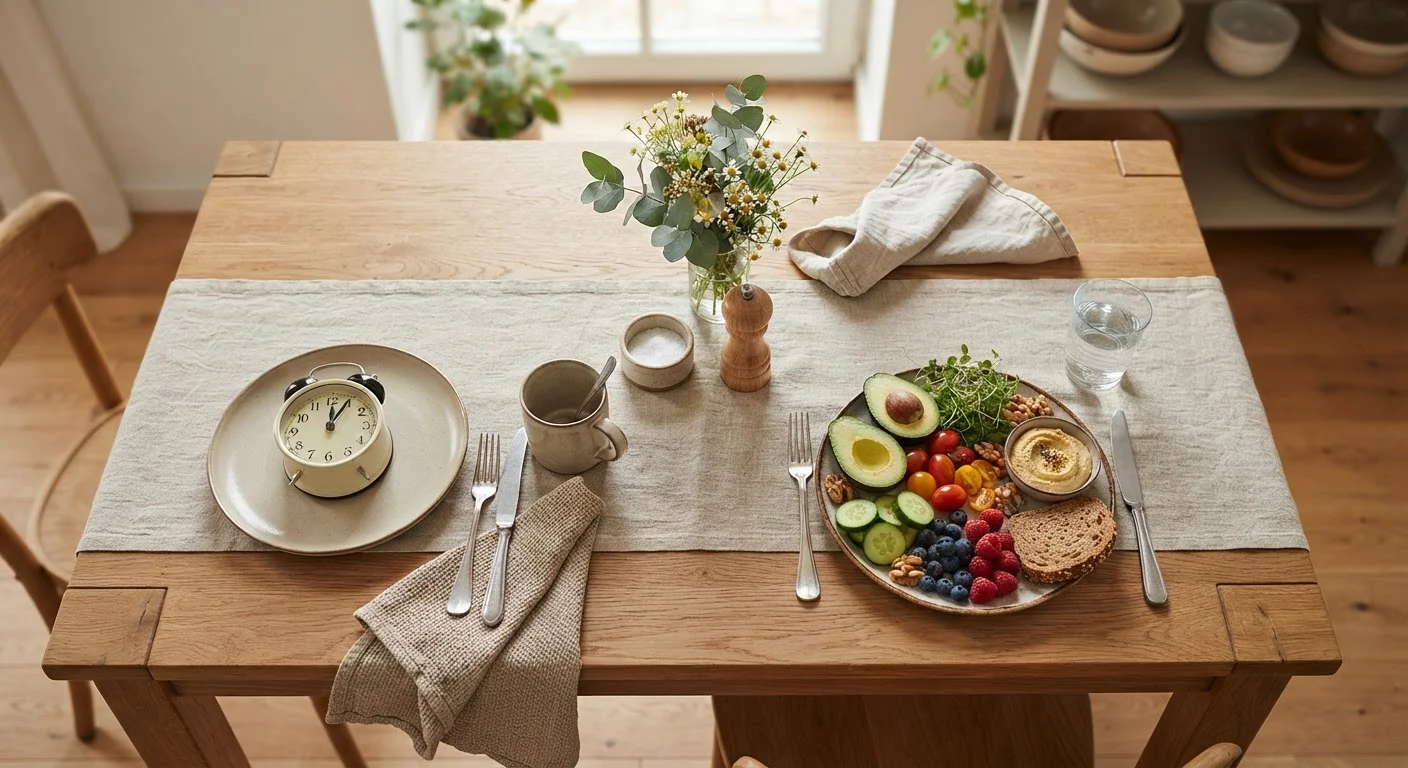
What Are Structured Eating Windows?
Structured eating windows - often associated with time-restricted eating - involve limiting food consumption to a defined period each day, such as an eight- or ten-hour window. Outside that window, only non-caloric beverages like water or plain coffee are typically consumed.
The appeal for busy households is straightforward: a predictable schedule reduces the number of daily decisions around food. Family meals can anchor the window, and kitchen cleanup is consolidated into fewer hours. Some people find that having a clear start and end point to eating helps them feel more organized and less likely to graze mindlessly in the evening.
It's worth noting that the research on structured eating windows is still evolving. Some studies suggest potential benefits related to metabolic rhythms and sleep quality, while others show more modest effects. This is general health information - not a prescription - and what works for one person may not work for another. If you're exploring this approach, it's part of a broader conversation worth having with a qualified healthcare provider, particularly if you have existing health conditions.
Start With Observation, Not Overhaul
Before committing to either approach, spend a week simply noting when you feel hungry, when you eat, and how you feel afterward. This low-pressure observation gives you real data about your current patterns and makes any future change more informed. A food journal or even a quick note on your phone can be enough to spot useful trends.
What Is Intuitive Eating?
Intuitive eating is a framework developed by registered dietitians Evelyn Tribole and Elyse Resch in the 1990s. It centers on ten principles designed to help people reconnect with their body's natural hunger and fullness signals, moving away from external diet rules and toward internal awareness.
Rather than dictating when or what to eat, intuitive eating encourages recognizing physical hunger before eating, slowing down to notice satisfaction during meals, and distinguishing between emotional and physical hunger. It also explicitly rejects diet culture and the idea that certain foods are morally "good" or "bad."
For households juggling variable schedules, intuitive eating can offer flexibility that rigid meal timing cannot. However, it requires practice and self-awareness - skills that can take time to develop, especially in environments where food access or emotional stress play significant roles. It is not a passive approach; it involves active internal attention. Families with children may also find it useful alongside strategies like those covered in feeding kids a varied diet.
| Structured Eating Windows | Intuitive Eating | |
|---|---|---|
| Core principle | Eat within defined time boundaries | Eat in response to internal hunger cues |
| Flexibility | Lower - schedule-dependent | Higher - adapts to daily variation |
| Learning curve | Moderate - requires schedule planning | Moderate to high - requires self-awareness practice |
| Suitability for families | Works well with consistent routines | Adaptable to varied household needs |
| Research base | Growing, still emerging | Established clinical framework |
| Special population caution | Not advised for children, pregnancy, or certain conditions | Seek support if recovering from disordered eating |
How They Compare in Everyday Life
For most households, the practical differences become clear quickly. Structured eating windows require planning - grocery timing, social meal accommodations, and awareness of work schedules all factor in. Intuitive eating demands attentiveness to internal states, which can be challenging during stressful or distracted periods.
Neither approach is a substitute for overall diet quality. A structured eating window filled with highly processed foods does not automatically improve health outcomes, and intuitive eating is most effective when a variety of nourishing options are accessible. As explored in why eating healthy looks different for every household, budget, culture, and access all shape what's realistic.
Both frameworks also pair naturally with a focus on meal composition. Building a balanced plate without counting every calorie offers practical structure that complements either approach. And just as eating patterns benefit from some intentionality, so does physical activity - a concept explored in our guide on structured vs. incidental exercise at home.
Who Should Proceed With Caution
Not every eating framework suits every person. Structured eating windows are generally not recommended for children, pregnant or breastfeeding individuals, people with a history of disordered eating, or those managing conditions such as diabetes or hypoglycemia - where meal timing has direct health implications. For these groups, please consult a physician or registered dietitian before making changes.
Intuitive eating, while often recommended as a more psychologically gentle alternative, can be difficult to navigate independently for those recovering from eating disorders. The principles are clinically supported in therapeutic contexts, but self-directed application may benefit from professional support.
For more foundational guidance on food and nutrition, the Nutrition Basics hub is a good starting point for everyday American families looking for trustworthy, evidence-grounded information.
This article is for general informational and educational purposes only and does not constitute medical or dietary advice. Always consult a qualified healthcare professional or registered dietitian before making significant changes to your eating patterns, especially if you have an existing health condition.