
Why Visual Frameworks Beat Calorie Counting for Most Households
Tracking every calorie sounds scientific, but for most busy households it quickly becomes unsustainable. Research published by nutrition educators consistently finds that rigid counting can increase anxiety around food without delivering meaningfully better health outcomes for the general population. A visual, portion-based approach - most commonly called the plate method - offers a practical alternative that's grounded in established dietary guidance without demanding a spreadsheet at dinner.
Before diving into the steps, it helps to understand what a balanced meal actually involves. If that phrase feels vague to you, our article on what a balanced diet really means offers a grounded starting point. The short version: balance refers to including a variety of food groups in proportions that support your body's needs - not perfection at every single meal.
The plate method was popularized in part by diabetes educators and public health departments as a teaching tool, and its simplicity is its strength. You use the physical space on your plate as a guide, making nutritious choices more intuitive over time.
What you will need
How to Build a Balanced Plate: Step by Step
The following steps walk you through applying the plate method at any meal. You don't need special tools - just a standard dinner plate and a willingness to observe what you're already serving.
Fill Half Your Plate With Vegetables and Fruit
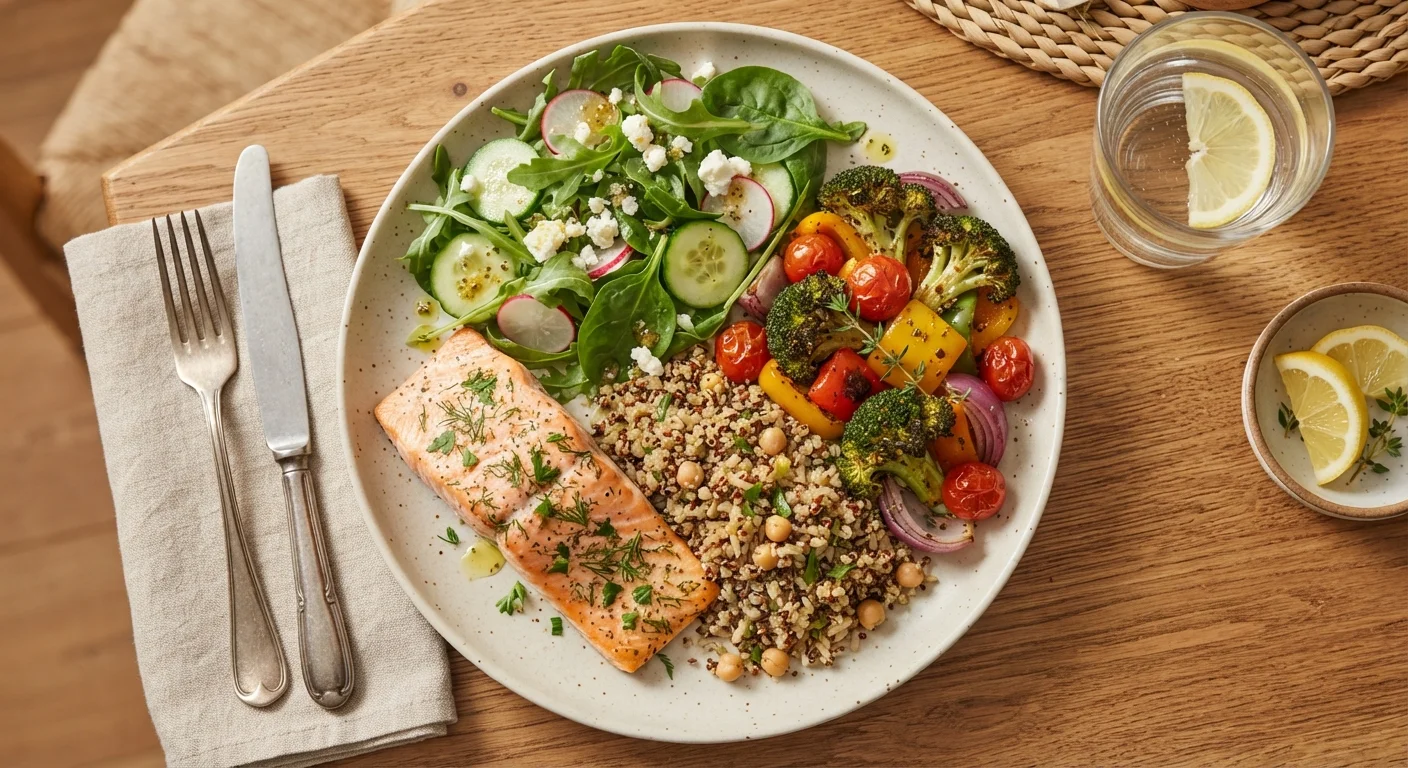
Visually divide your plate in half and dedicate that entire half to non-starchy vegetables - things like leafy greens, broccoli, peppers, carrots, cucumbers, or tomatoes. Fruit can also occupy some of this space, particularly at breakfast. This half should be the most colorful part of the plate; variety in color generally signals variety in nutrients.
Devote One Quarter to Lean or Plant-Based Protein
One of the remaining quarters should hold a protein source. This can be poultry, fish, eggs, legumes, tofu, tempeh, or lean cuts of meat. Aim for preparation methods that don't add excessive saturated fat - baking, grilling, steaming, or pan-cooking with a small amount of oil are all straightforward options.
Use the Final Quarter for Whole Grains or Starchy Vegetables
The last quarter of the plate goes to complex carbohydrates: whole grains such as brown rice, quinoa, whole wheat pasta, or oats, or starchy vegetables like sweet potato, corn, or peas. These provide sustained energy and fiber. When possible, choose less refined versions - whole grain over white, for example - though either is fine in the context of an otherwise varied meal.
Add a Sensible Beverage and Small Healthy Fat
Water is the default beverage recommendation from most nutrition authorities. Low-fat dairy or fortified plant milks are also common accompaniments. For fats, a small amount of olive oil for cooking, sliced avocado, or a handful of unsalted nuts alongside the meal can support nutrient absorption and satiety - just keep portions modest, as fats are energy-dense.
Assess and Adjust Over Time - Not Meal to Meal
No single meal needs to be perfect. The plate method works as a pattern across days and weeks, not a pass/fail test at every sitting. After a week of applying this framework, look at your overall pattern: Are most meals vegetable-heavy? Is protein present? Are you relying primarily on whole-food sources? Adjust based on what you observe, not based on individual exceptions.
One Plate Method, Many Cuisines
The plate method isn't tied to any single culinary tradition. A bowl of dal with brown rice and a side salad, a fish taco plate with slaw and beans, or a stir-fry over quinoa all map naturally onto the same proportions. Think of the framework as a ratio, not a rigid template, and it adapts to virtually any cultural cooking style.
Making This Work Across Your Whole Household
One of the most common worries about structured eating frameworks is that they won't survive a real family dinner - picky eaters, different schedules, and varying preferences all push back against rigid systems. The plate method is flexible enough to adapt. A child's plate can mirror the same proportions even if their specific vegetables or grains differ from an adult's. Similarly, cultural dishes that blend components - stir-fries, stews, grain bowls - can still follow the spirit of the method by eyeballing the rough ratio of vegetables to protein to starch.
Budget is another real-world factor. Eating with nutritional balance in mind doesn't require expensive ingredients. Our piece on eating well for less explores practical ways to maintain food quality while managing costs. And when you're planning for the week ahead, our nutrition-minded grocery checklist can help you shop intentionally without overcomplicating the process.
If your household is curious about plant-forward eating, plant-based protein sources can easily fill the protein quarter of the plate with options like lentils, tofu, or edamame - all affordable and widely available. And if the plate method still feels too structured, it's worth exploring alternative eating frameworks to find what fits your household's rhythm best.
This article is for general informational and educational purposes only and does not constitute medical or dietary advice. Individual nutritional needs vary. Please consult a registered dietitian or qualified healthcare professional before making significant changes to your diet, especially if you have an existing health condition.